Polyclonal Antibodies
Anti-CEBPA Rabbit Polyclonal Antibody for WB, IHC-P, ELISA - P49715
Item Number : CM0016492
Price varies based on specs and customizations
- Application
- WB, IHC-P, ELISA
- Cross Reactivity
- Human, Mouse, Rat
- Protein Weight
- 38kDa

Shipping:
Contact us to get shipping details Enjoy On-time Dispatch Guarantee.
Why Choose Us
Easy ordering process, quality products, and dedicated support for your business success.
Core Product Specifications and Parameters
| Parameter | Value |
|---|---|
| Product Name | CEBPA Rabbit pAb |
| Remarks/Alias | CEBP; C/EBP-alpha; CEBPA |
| Species | Human |
| GeneID (Human) | 1050 |
| GeneID | 1050 |
| Immunogen | Recombinant fusion protein containing a sequence corresponding to amino acids 111-180 of human CEBPA (NP_004355.2). |
| Source | Rabbit |
| Category | Polyclonal Antibodies |
| Application | WB, IHC-P, ELISA |
| Cross Reactivity | Human, Mouse, Rat |
| SWISS | P49715 |
| Protein Weight | 38kDa |
| Shipping | Ice bag |
Biological Background: CEBPA Function and Localization
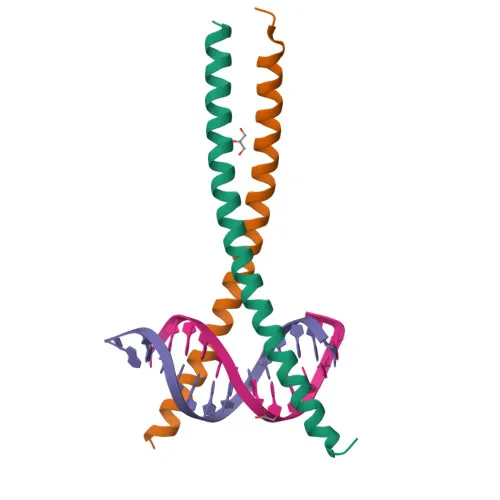
- CEBPA (CCAAT/enhancer-binding protein alpha, also known as C/EBP-alpha) is a transcription factor encoded by the CEBPA gene, acting as a master regulator of proliferation arrest and terminal differentiation in multiple cell types, including myeloid progenitors, adipocytes, and hepatocytes.
- It binds directly to the consensus DNA sequence 5'-T[TG]NNGNAA[TG]-3' and functions as a transcriptional activator on distinct target genes. Related references: PMID:11242107
- During early embryogenesis, CEBPA plays essential and redundant roles with CEBPB, and is critical for the proper development of the liver and lung (by similarity).
- In the hematopoietic system, CEBPA is indispensable for the transition from common myeloid progenitors (CMP) to granulocyte/monocyte progenitors (GMP), a key step in myeloid lineage commitment (by similarity).
- To drive adipocyte and granulocyte terminal differentiation, CEBPA down-regulates genes that maintain an undifferentiated and proliferative state through E2F1 repression, a process that requires functional interaction with the SWI/SNF chromatin remodeling complex. Related references: PMID:14660596
- Alternative translation initiation generates different protein isoforms; isoform 2 acts as a dominant-negative regulator with weaker transactivation activity and inability to inhibit cell proliferation. Related references: PMID:14660596
- CEBPA directly and specifically enhances ribosomal DNA transcription by interacting with RNA polymerase I-specific cofactors and inducing histone acetylation, a function associated with its nucleolar localization.
- It localizes predominantly to the nucleus and nucleolus, consistent with its roles in transcription regulation of both protein-coding and ribosomal genes.
Experimental Guidance and Technical Tips
- The immunogen (amino acids 111–180 of human CEBPA) lies within the transactivation domain and is highly conserved across human, mouse, and rat, supporting the observed cross-reactivity. Consider validating reactivity in your sample system.
- For Western blot (WB), a major band near 38 kDa is expected for the full-length isoform. Due to alternative initiation and post-translational modifications, additional bands may appear. Nuclear extracts from cell lines with active CEBPA pathways (e.g., hepatoma or myeloid cell lines) are recommended.
- In immunohistochemistry (IHC-P), nuclear staining is anticipated in tissues such as liver, adipose tissue, and bone marrow. Antigen retrieval and antibody dilution should be optimized for each tissue type.
- For ELISA applications, this polyclonal antibody can be used as a capture or detection reagent. Pairing with an appropriate detection antibody or secondary conjugate is suggested for sensitive assays.
CamelBio: Your One-Stop Sourcing Bridge
CamelBio provides diagnostic manufacturers, laboratories, and research institutes with a streamlined one-stop access to IVD raw materials, technical services, and consulting. This CEBPA rabbit polyclonal antibody, targeting a critical transcription factor for myeloid differentiation and metabolic regulation, is an excellent tool for WB, IHC-P, and ELISA in human, mouse, and rat samples. Our supply portfolio includes validated antibody pairs, optimized monoclonal/polyclonal antibodies, bulk ancillary reagents, and support for rare target raw-material sourcing—empowering your assay development from concept to clinic.
REQUEST A QUOTE
Our professional team will reply to you within one business day. Please feel free to contact us!