Polyclonal Antibodies
Anti-CDK5 Rabbit Polyclonal Antibody (KO Validated) for WB, ELISA - Q00535
Item Number : CM0022581
Price varies based on specs and customizations
- Application
- WB, ELISA
- Cross Reactivity
- Human, Mouse, Rat

Shipping:
Contact us to get shipping details Enjoy On-time Dispatch Guarantee.
Why Choose Us
Easy ordering process, quality products, and dedicated support for your business success.
Core Product Specifications and Parameters
| Parameter | Value |
|---|---|
| Product Name | [KO Validated] CDK5 Rabbit pAb |
| Remarks/Alias | LIS7; PSSALRE; K5 |
| Species | Human |
| Gene ID | 1020 |
| Immunogen | Recombinant fusion protein containing a sequence corresponding to amino acids 170-289 of human CDK5 (NP_004926.1) |
| Source | Rabbit |
| Category | Polyclonal Antibodies |
| Application | WB, ELISA |
| Cross Reactivity | Human, Mouse, Rat |
| SWISS | Q00535 |
| Protein Weight | 33kDa |
| Shipping | Ice bag |
Biological Background: CDK5 Function and Localization
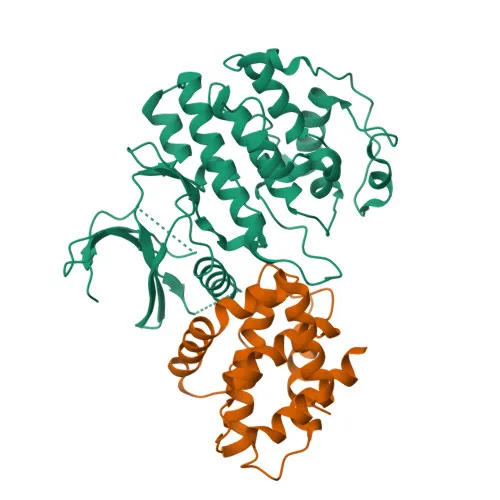
- CDK5 is a proline-directed serine/threonine kinase critical for neuronal cell cycle exit, differentiation, and survival. It is activated by p35/CDK5R1 and p39/CDK5R2, predominantly in postmitotic neurons.
- It phosphorylates a wide array of substrates, including cytoskeletal proteins (MAPT/TAU, MAP1B, MAP2), transcription factors (MEF2A, p53/TP53), and regulators of vesicle trafficking (SYN1, DNM1, AMPH), thereby modulating neurite growth, synaptic plasticity, and neurotransmission.
- CDK5 plays dual roles in cell death: it promotes survival via BCL2 and STAT3 activation, but under stress conditions (genotoxic, oxidative) it can induce apoptosis through p53/TP53 phosphorylation and stabilization, and aberrant activation by p25 leads to neuronal death.
- Subcellular localization includes cytoplasm, nucleus, cell membrane, and neuronal projections such as growth cones and postsynaptic densities, reflecting its diverse functions in signal transduction and cytoskeletal dynamics.
- Keywords associated with CDK5 include ATP-binding, kinase, transferase, phosphoprotein, neurodegeneration, neurogenesis, and biological rhythms, highlighting its involvement in critical cellular and neurological processes.
- Tissue specificity: Ubiquitously expressed, with accumulation in cortical neurons (PubMed:17009320, PubMed:19693690). Also expressed in testis, skeletal muscle, colon, bone marrow, and ovary. Related references: PMID:17009320 PMID:19693690
- Post-translational modifications: Acetylation and phosphorylation regulate its activity and subcellular distribution, contributing to its tight control in normal physiology and disease.
Experimental Guidance and Technical Tips
- The immunogen, corresponding to the kinase domain (aa 170-289) of human CDK5, is conserved across human, mouse, and rat, supporting the reported cross-reactivity; consider sequencing the target region in other species for extension.
- For Western blot, a primary band is expected at ~33 kDa, but note that post-translational modifications or splice variants may produce additional bands; include a positive control (e.g., brain lysate) and perform blocking optimization.
- When using for ELISA, consider coating antigen directly or using a capture antibody pair; validate linearity and sensitivity in the target sample matrix.
- As a polyclonal antibody, lot-to-lot consistency should be monitored; include a reference standard in each run.
- For subcellular localization studies, note CDK5’s presence in cytoplasm, nucleus, and membrane compartments; cellular fractionation or co-staining with organelle markers may aid in result interpretation.
CamelBio: Your One-Stop Sourcing Bridge
CamelBio offers diagnostic developers and researchers a comprehensive portfolio of IVD raw materials, including validated polyclonal and monoclonal antibodies, recombinant proteins, and ancillary reagents. Focusing on key targets like CDK5, CamelBio simplifies procurement from early-stage R&D to clinical application, helping you bridge the gap between concept and clinic. Explore our one-stop sourcing solutions to accelerate your diagnostic assay development.
Product Datasheet
Anti-CDK5 Rabbit Polyclonal Antibody (KO Validated) for WB, ELISA - Q00535
REQUEST A QUOTE
Our professional team will reply to you within one business day. Please feel free to contact us!