Polyclonal Antibodies
Anti-CDK4 Polyclonal Antibody for WB, IF/ICC, IP, ELISA - P11802
Item Number : CM0017007
Price varies based on specs and customizations
- Application
- WB, IF/ICC, IP, ELISA
- Cross Reactivity
- Human, Mouse
- Protein Weight
- 34kDa

Shipping:
Contact us to get shipping details Enjoy On-time Dispatch Guarantee.
Why Choose Us
Easy ordering process, quality products, and dedicated support for your business success.
Core Product Specifications and Parameters
| Parameter | Value |
|---|---|
| Product Name | CDK4 Rabbit pAb |
| Remarks/Alias | CMM3; PSK-J3; CDK4 |
| Species | Human |
| Gene ID (Human) | 1019 |
| Immunogen | Synthetic peptide|A synthetic peptide corresponding to a sequence within amino acids 200-303 of human CDK4 (NP_000066.1). |
| Source | Rabbit |
| Category | Polyclonal Antibodies |
| Application | WB, IF/ICC, IP, ELISA |
| Cross Reactivity | Human, Mouse |
| SWISS | P11802 |
| Protein Weight | 34kDa |
| Shipping | Ice bag |
Biological Background: CDK4 Function and Localization
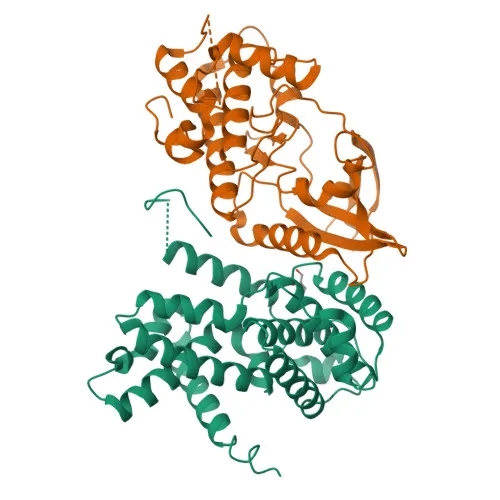
- CDK4 (Cyclin-dependent kinase 4), also known as Cell division protein kinase 4 or PSK-J3, is a serine/threonine-protein kinase encoded by the CDK4 gene. It is a key component of cyclin D-CDK4 complexes that regulate cell cycle progression.
- As part of the cyclin D-CDK4 complex, CDK4 phosphorylates and inhibits members of the retinoblastoma (RB) protein family, including RB1, during the G1/S transition. This phosphorylation leads to the dissociation of the transcription factor E2F from RB/E2F complexes, enabling transcription of E2F target genes required for progression through G1 phase.
- CDK4 hypophosphorylates RB1 in early G1 phase and serves as a major integrator of various mitogenic and antimitogenic signals through its activity in the cyclin D-CDK4 complex.
- CDK4 also phosphorylates SMAD3 in a cell-cycle-dependent manner, repressing its transcriptional activity, highlighting its role beyond RB regulation.
- CDK4 forms a ternary complex with cyclin D and CDKN1B (p27), which is required for nuclear translocation and activity of the cyclin D-CDK4 complex.
- Subcellular localization includes the cytoplasm, nucleus, and nucleus membrane, reflecting its dynamic role in cell cycle regulation.
- Keywords from UniProt indicate involvement in acetylation, alternative splicing, ATP-binding, cell cycle, cell division, and disease variants; it is a phosphoprotein linked to cancer-related pathways.
Experimental Guidance and Technical Tips
- The immunogen corresponds to amino acids 200-303 of human CDK4, a region proximal to the C-terminus. This epitope may influence recognition in certain applications; consider validating in the specific experimental context.
- For Western blot (WB), a band around 34 kDa is expected. Validate in human and mouse cell lysates expressing CDK4, as cross-reactivity is reported for both species.
- For immunofluorescence (IF/ICC), explore both cytoplasmic and nuclear staining patterns, consistent with CDK4’s subcellular localization. Include appropriate fixation and permeabilization steps.
- Immunoprecipitation (IP) with this polyclonal antibody may enrich CDK4 complexes; consider verifying co-precipitation of cyclin D or CDKN1B if studying the ternary complex.
- As a polyclonal antibody, batch-to-batch consistency should be verified for quantitative assays like ELISA. Perform titration experiments to determine optimal working dilutions.
CamelBio: Your One-Stop Sourcing Bridge
CamelBio provides diagnostic manufacturers and researchers with reliable access to IVD raw materials like this CDK4 antibody, supporting cell cycle and oncology-related assay development. Our portfolio includes validated antibody pairs, optimized monoclonal/polyclonal antibodies, bulk ancillary reagents, and sourcing of rare targets to streamline your diagnostic workflows.
REQUEST A QUOTE
Our professional team will reply to you within one business day. Please feel free to contact us!