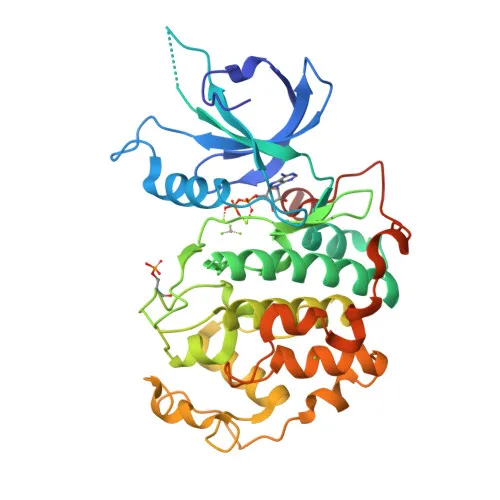
Polyclonal Antibodies
Anti-CDK12 Rabbit pAb for WB, IHC-P, ELISA - Q9NYV4
Item Number : CM0018353
Price varies based on specs and customizations
- Application
- WB, IHC-P, ELISA
- Cross Reactivity
- Human, Mouse, Rat
- Protein Weight
- 164kDa

Shipping:
Contact us to get shipping details Enjoy On-time Dispatch Guarantee.
Why Choose Us
Easy ordering process, quality products, and dedicated support for your business success.
Core Product Specifications and Parameters
| Parameter | Value |
|---|---|
| Product Name | CDK12 Rabbit pAb |
| Remarks/Alias | CRK7, CRKR, CRKRS, CDK12 |
| Species | Human |
| Gene ID (Human) | 51755 |
| Gene ID | 51755 |
| Immunogen | Recombinant Protein | Recombinant fusion protein containing a sequence corresponding to amino acids 1-300 of human CDK12 (NP_057591.2). |
| Source | Rabbit |
| Category | Polyclonal Antibodies |
| Application | WB, IHC-P, ELISA |
| Cross Reactivity | Human, Mouse, Rat |
| SWISS | Q9NYV4 |
| Protein Weight | 164kDa |
| Shipping | Ice bag |
Biological Background: CDK12 Function and Localization
- CDK12 is a cyclin-dependent kinase that acts as a key regulator of transcription elongation by phosphorylating the C-terminal domain (CTD) of the large subunit of RNA polymerase II (POLR2A).
- It preferentially phosphorylates serine-5 of CTD repeats that are already phosphorylated at serine-7, and can also phosphorylate serine-2, modulating RNA polymerase II processivity.
- CDK12 is required for the expression of genes involved in DNA repair, thereby playing a critical role in maintaining genomic stability.
- The kinase also participates in RNA splicing, possibly through phosphorylation of splicing factor SRSF1/SF2, linking transcription elongation to co-transcriptional splicing.
- CDK12 is involved in the regulation of MAP kinase signaling, which may influence the cellular response to estrogen inhibitors.
- Subcellularly, CDK12 localizes predominantly in the nucleus, particularly at nuclear speckles, which are sites of active transcription and splicing.
- The protein is widely expressed across various tissues, reflecting its general role in transcriptional regulation.
Experimental Guidance and Technical Tips
- The immunogen corresponds to the N-terminal region (amino acids 1-300), which may allow detection of multiple CDK12 isoforms if the N-terminus is conserved; verify specificity in your experimental system.
- For Western blot (WB), the predicted molecular weight is approximately 164 kDa; use suitable gel percentage (e.g., 6-8%) and extended transfer times for high-molecular-weight proteins.
- As a polyclonal antibody, it offers robust signal detection but may exhibit lot-to-lot variability; include appropriate positive and negative controls (e.g., CDK12 knockdown or knockout lysates).
- For immunohistochemistry (IHC-P), expect nuclear staining; optimize antigen retrieval conditions (e.g., citrate buffer, pH 6.0) and antibody dilution for your tissue samples.
- Cross-reactivity is reported for human, mouse, and rat; validate performance if using other species.
- The antibody is suitable for ELISA; consider using recombinant CDK12 protein as a standard to determine antibody titer and specificity.
CamelBio: Your One-Stop Sourcing Bridge
CamelBio provides diagnostic manufacturers, laboratories, and research institutes with streamlined access to high-quality IVD raw materials, technical services, and consulting support. This anti-CDK12 rabbit polyclonal antibody is part of our extensive portfolio, serving as a valuable tool for research into transcription regulation, DNA repair, and kinase signaling pathways. Beyond individual antibodies, we offer validated antibody pairs, optimized monoclonal and polyclonal antibodies, bulk ancillary reagents, and custom sourcing for rare-target raw materials—all designed to accelerate your development from concept to clinic.
REQUEST A QUOTE
Our professional team will reply to you within one business day. Please feel free to contact us!