Monoclonal Antibodies
Anti-CDK1 Rabbit Monoclonal Antibody for WB, IP, ELISA - P06493
Item Number : CM0003228
Price varies based on specs and customizations
- Application
- WB, IP, ELISA
- Cross Reactivity
- Human, Mouse
- Protein Weight
- 34kDa

Shipping:
Contact us to get shipping details Enjoy On-time Dispatch Guarantee.
Why Choose Us
Easy ordering process, quality products, and dedicated support for your business success.
Core Product Specifications and Parameters
| Parameter | Value |
|---|---|
| Product Name | CDK1 Rabbit mAb |
| Remarks/Alias | CDC2; CDC28A; P34CDC2; CDK1 |
| Species | Human |
| GeneID | 983 |
| Immunogen | A synthetic peptide corresponding to a sequence within amino acids 198-297 of human CDK1 (NP_001777.1). |
| Source | Rabbit |
| Category | Monoclonal Antibodies |
| Application | WB, IP, ELISA |
| Cross Reactivity | Human, Mouse |
| SWISS | P06493 |
| Protein Weight | 34kDa |
| Shipping | Ice bag |
Biological Background: CDK1 Function and Localization
-
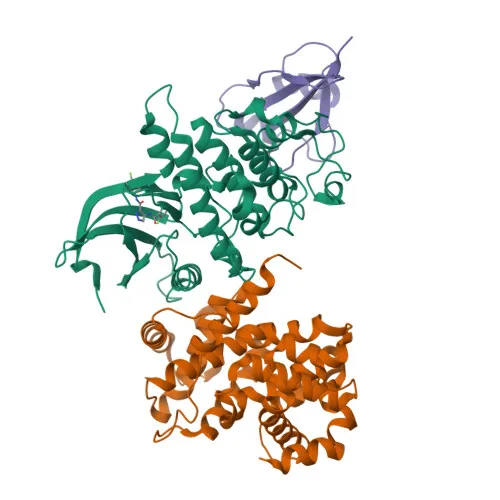
CDK1 (Cyclin-dependent kinase 1), also known as CDC2, is a serine/threonine protein kinase that is essential for cell cycle progression, particularly the G2-M transition and mitotic entry.
Related references: PMID:16407259, PMID:16933150, PMID:17459720 -
CDK1 phosphorylates numerous substrates involved in mitotic events, including nuclear lamins (LMNA, LMNB1, LMNB2) to promote nuclear envelope breakdown, and histone H1 to facilitate chromosome condensation.
Related references: PMID:2188730, PMID:2344612, PMID:37788673 -
It associates with cyclins (particularly cyclin B) to form the M-phase promoting factor (MPF), and its activity is regulated by a cycle of activating dephosphorylation by CDC25 phosphatases and inhibitory phosphorylation by WEE1 and PKMYT1 kinases.
Related references: PMID:18480403, PMID:20360007 -
CDK1 is found in multiple subcellular compartments including the nucleus, cytoplasm, centrosome, and mitotic spindle, reflecting its diverse roles in mitosis.
-
Post-translational modifications such as phosphorylation and ubiquitination tightly control CDK1 activity and stability; keywords include acetylation, isopeptide bond, and Ubl conjugation.
-
Tissue specifically, CDK1 is expressed in breast cancer tissues, linking it to proliferative diseases.
-
Additionally, CDK1 acts as a receptor for hepatitis C virus entry in hepatocytes, highlighting a non-cell cycle role.
Experimental Guidance and Technical Tips
- The immunogen is a synthetic peptide from the conserved region (aa 198-297) of human CDK1, which is predicted to cross-react with mouse CDK1 due to sequence homology. For Western blot, a starting dilution of 1:1000–1:5000 is often effective; however, titrate and validate using your sample type and detection system.
- For immunoprecipitation, optimize the antibody-to-lysate ratio and incubation conditions to ensure specific capture.
- In ELISA, pair this monoclonal antibody with a matched detection antibody or use as a capture/detection reagent, and empirically determine coating concentrations.
CamelBio: Your One-Stop Sourcing Bridge
CamelBio is a dedicated IVD raw material supplier, offering validated CDK1 monoclonal antibodies to support cell cycle and oncology diagnostic development. Beyond antibodies, we provide antibody pairs, recombinant proteins, and bulk ancillary reagents to streamline your assay workflow. Whether you need ready-to-use reagents or custom sourcing of rare targets, CamelBio helps bridge the gap from concept to clinic.
REQUEST A QUOTE
Our professional team will reply to you within one business day. Please feel free to contact us!