Polyclonal Antibodies
Anti-CD59 Polyclonal Antibody for WB, ELISA - P13987
Item Number : CM0013793
Price varies based on specs and customizations
- Application
- WB, ELISA
- Cross Reactivity
- Human
- Protein Weight
- 14kDa

Shipping:
Contact us to get shipping details Enjoy On-time Dispatch Guarantee.
Why Choose Us
Easy ordering process, quality products, and dedicated support for your business success.
Core Product Specifications and Parameters
| Parameter | Value |
|---|---|
| Product Name | CD59 Rabbit pAb |
| Remarks/Alias | 1F5; EJ16; EJ30; EL32; G344; MIN1; MIN2; MIN3; MIRL; HRF20; MACIF; MEM43; MIC11; MSK21; 16.3A5; HRF-20; MAC-IP; p18-20; CD59 |
| Species | Human |
| Gene ID (Human) | 966 |
| Gene ID | 966 |
| Immunogen | Recombinant fusion protein containing a sequence corresponding to amino acids 26-128 of human CD59 (NP_001120695.1). |
| Source | Rabbit |
| Category | Polyclonal Antibodies |
| Application | WB, ELISA |
| Cross Reactivity | Human |
| SWISS | P13987 |
| Protein Weight | 14kDa |
| Shipping | Ice bag |
Biological Background: CD59 Function and Localization
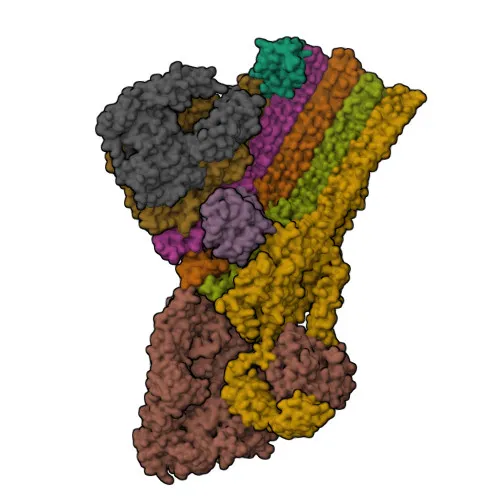
- CD59 glycoprotein (also known as protectin, HRF20, MACIF, MIRL, MAC-IP) is a cell surface inhibitor of the complement membrane attack complex (MAC).
- It potently inhibits MAC assembly by binding to the C8 components (C8A and C8B) and preventing incorporation of C9 into the forming pore, thus protecting human cells from complement-mediated lysis. Related references: PMID:11882685 PMID:1698710 PMID:2475111 PMID:36797260
- A soluble form of CD59, found in urine, retains complement binding but exhibits greatly reduced MAC inhibitory activity on cell membranes.
- CD59 is anchored to the plasma membrane via a glycosylphosphatidylinositol (GPI) linkage and is also detectable as a secreted protein.
- The protein undergoes multiple post-translational modifications, including N-linked glycosylation, disulfide bond formation, and glycation, which contribute to its structural stability and function.
- Genetic deficiency of CD59 is associated with hereditary hemolytic anemia, underscoring its critical role in protecting erythrocytes from complement attack.
- The CD59 gene undergoes alternative splicing, yielding multiple transcript variants that may contribute to functional diversity.
Experimental Guidance and Technical Tips
- The immunogen corresponds to the mature CD59 extracellular domain (aa 26–128), suggesting that the antibody primarily recognizes the native, GPI-anchored form on cell surfaces and soluble forms lacking the GPI anchor.
- For Western blot analysis of human cell or tissue lysates, a band at approximately 14 kDa is anticipated; however, N-glycosylation may result in a broadened band or a slightly higher apparent molecular weight. Consider using reducing conditions and validating with appropriate controls.
- In ELISA applications, this polyclonal antibody can be used for either antigen capture or detection of CD59 in human serum, plasma, or recombinant protein preparations. Titration experiments (e.g., 1–5 µg/mL coating) are recommended to optimize signal-to-noise ratios.
- As a polyclonal reagent, confirm species cross-reactivity experimentally if studying non-human models, and include appropriate negative controls to account for any nonspecific binding.
CamelBio: Your One-Stop Sourcing Bridge
CamelBio supports diagnostic manufacturers and research laboratories with a comprehensive portfolio of IVD raw materials, including validated polyclonal and monoclonal antibodies, antigen pairs, and ancillary reagents. For complement system targets such as CD59, we offer sourcing solutions for rare-antibody raw materials to streamline your assay development from concept to clinic. Contact us to discuss bulk procurement, technical consultation, or tailored supply chain management for your CD59-based diagnostic kits.
REQUEST A QUOTE
Our professional team will reply to you within one business day. Please feel free to contact us!