Polyclonal Antibodies
Anti-CD55 Rabbit Polyclonal Antibody for WB, ELISA - P08174
Item Number : CM0015738
Price varies based on specs and customizations
- Application
- WB, ELISA
- Cross Reactivity
- Human, Mouse
- Protein Weight
- 41kDa

Shipping:
Contact us to get shipping details Enjoy On-time Dispatch Guarantee.
Why Choose Us
Easy ordering process, quality products, and dedicated support for your business success.
Core Product Specifications and Parameters
| Parameter | Value |
|---|---|
| Product Name | CD55 Rabbit pAb |
| Remarks/Alias | CR; TC; DAF; CROM; CHAPLE; CD55 |
| Species | Human |
| GeneID (Human) | 1604 |
| Immunogen | Recombinant fusion protein containing a sequence corresponding to amino acids 40-300 of human CD55 (NP_000565.1). |
| Source | Rabbit |
| Category | Polyclonal Antibodies |
| Application | WB, ELISA |
| Cross Reactivity | Human, Mouse |
| SWISS | P08174 |
| Protein Weight | 41kDa |
| Shipping | Ice bag |
Biological Background: CD55 Function and Localization
- CD55, also known as decay-accelerating factor (DAF), is a GPI-anchored glycoprotein that regulates the complement system by inhibiting the formation and stability of C3 and C5 convertases.
Related references: PMID:7525274 PMID:28657829
- It binds to C4b and C3b fragments, preventing the assembly of C4b2a and C3bBb amplification convertases, thereby protecting host cells from complement-mediated damage.
Related references: PMID:7525274 PMID:28657829
-
CD55 contains four short consensus repeats (SCRs), also known as sushi domains, which mediate its interaction with complement components.
-
The protein is expressed on the plasma membranes of all cell types that are in intimate contact with plasma complement proteins, and soluble forms are found in body fluids.
-
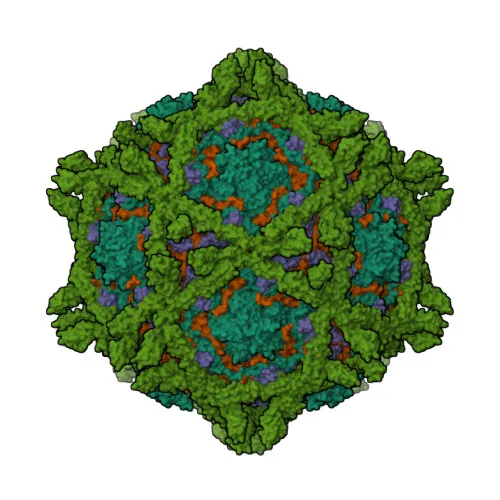
CD55 acts as a receptor for several picornaviruses, including Coxsackievirus A21 and B, Human enterovirus 70 and D68, and echoviruses, facilitating viral entry.
-
Mutations in CD55 cause CHAPLE syndrome, a rare autosomal recessive disorder characterized by early-onset protein-losing enteropathy and complement hyperactivation.
-
Post-translational modifications include N-glycosylation, disulfide bond formation, and addition of a GPI anchor that tethers it to the cell membrane.
-
Alternative splicing generates multiple isoforms, including membrane-bound and secreted variants.
Experimental Guidance and Technical Tips
-
The immunogen (amino acids 40-300) encompasses the extracellular sushi repeat domain; antibodies raised against this region are expected to recognize native CD55 and may be suitable for applications requiring detection of the mature protein.
-
For Western blotting, the predicted molecular weight is 41 kDa, but glycosylation can cause a shift to 50–70 kDa; validate with a relevant positive control, such as human peripheral blood mononuclear cell lysate.
-
The antibody is reported to cross-react with mouse; however, independent validation in the experimental system is recommended.
-
For ELISA, consider using the antibody as a capture or detection reagent in sandwich assays, paired with another CD55-specific antibody to avoid competition for epitopes.
CamelBio: Your One-Stop Sourcing Bridge
CamelBio is a trusted partner for IVD manufacturers and researchers, offering a comprehensive range of raw materials and technical support from concept to clinic. This anti-CD55 polyclonal antibody supports complement biology studies and the development of diagnostic assays for complement-mediated disorders. Beyond this product, CamelBio can source validated antibody pairs, bulk ancillary reagents, and customized raw materials to accelerate your diagnostic pipeline.
REQUEST A QUOTE
Our professional team will reply to you within one business day. Please feel free to contact us!