Monoclonal Antibodies
Anti-CD46 Rabbit Monoclonal Antibody for WB, IHC-P, ELISA - P15529
Item Number : CM0003042
Price varies based on specs and customizations
- Application
- WB, IHC-P, ELISA
- Cross Reactivity
- Human
- Protein Weight
- 44kDa

Shipping:
Contact us to get shipping details Enjoy On-time Dispatch Guarantee.
Why Choose Us
Easy ordering process, quality products, and dedicated support for your business success.
Core Product Specifications and Parameters
| Parameter | Value |
|---|---|
| Product Name | CD46 Rabbit mAb |
| Remarks/Alias | MCP; TLX; AHUS2; MIC10; TRA2.10; CD46 |
| Species | Human |
| GeneID (Human) | 4179 |
| GeneID | 4179 |
| Immunogen | A synthetic peptide corresponding to a sequence within amino acids 1-100 of human CD46 (P15529). |
| Source | Rabbit |
| Category | Monoclonal Antibodies |
| Application | WB, IHC-P, ELISA |
| Cross Reactivity | Human |
| SWISS | P15529 |
| Protein Weight | 44kDa |
| Shipping | Ice bag |
Biological Background: CD46 Function and Localization
- CD46 (Membrane cofactor protein), a type I membrane glycoprotein of the regulators of complement activation (RCA) family, is broadly expressed on all nucleated cells but absent from erythrocytes.
- It acts as a cofactor for factor I, promoting the cleavage of C3b and C4b to protect host cells from complement-mediated lysis.
- Beyond complement regulation, CD46 participates in fertilization (sperm-oocyte fusion) and modulates adaptive immunity by driving differentiation of CD4+ T-cells into IL-10-producing regulatory T cells, which suppress autoimmunity.
- CD46 serves as a receptor for multiple pathogens: it mediates entry for adenoviruses (subgroup B2, Ad3), measles virus, and human herpesvirus 6, and is exploited by bacteria (Neisseria, Streptococcus pyogenes) to induce immunosuppression. Related references: PMID:11260136, PMID:11971006, PMID:7708671
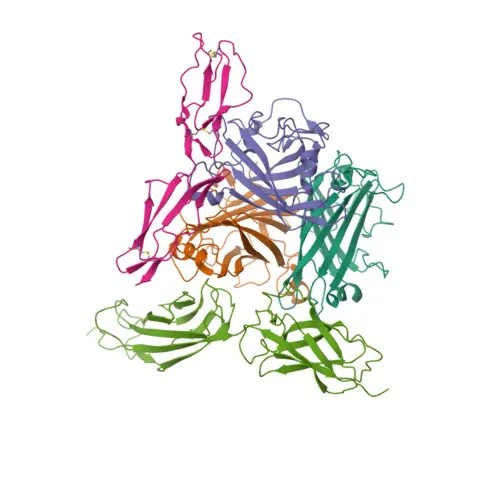
- It also contributes to fiber protein-mediated infection by human adenovirus 55 and 14a. Related references: PMID:32581096
- Subcellularly, CD46 localizes to the cytoplasmic vesicle, secretory vesicle, and acrosome inner membrane, consistent with roles in fertilization and immune modulation.
- The protein undergoes alternative splicing, is heavily N-glycosylated, contains Sushi (CCP) domains, and is linked to atypical hemolytic uremic syndrome when mutated.
Experimental Guidance and Technical Tips
- The immunogen is a synthetic peptide corresponding to the N-terminal region (aa 1-100) of human CD46; the antibody is expected to recognize the extracellular domain. For WB and IHC-P, optimized denaturing and antigen retrieval conditions may be necessary.
- For ELISA, direct coating with the immunogen peptide or recombinant CD46 protein is recommended; perform checkerboard titrations to determine the optimal antibody dilution.
- Cross-reactivity with other species has not been reported; validate specificity in your sample system, particularly when analyzing non-human primate or mouse homologs.
- CD46 is heavily glycosylated, so the apparent molecular weight on WB may differ from the calculated weight (44 kDa) depending on cell type and sample preparation.
- For IHC-P, include appropriate controls (e.g., erythrocytes as a negative control) and be aware that CD46 is widely expressed in tissues.
CamelBio: Your One-Stop Sourcing Bridge
CamelBio is a professional B2B supplier of IVD raw materials, offering a comprehensive portfolio of validated antibodies, antigens, and ancillary reagents to support diagnostic assay development. For researchers targeting complement regulation, viral infection, or immunological modulation, we provide ready-to-use anti-CD46 antibodies, custom monoclonal/polyclonal services, and bulk reagent sourcing to streamline your workflow from concept to clinic.
REQUEST A QUOTE
Our professional team will reply to you within one business day. Please feel free to contact us!