Polyclonal Antibodies
Anti-CD33 Rabbit Polyclonal Antibody for WB, ELISA - P20138
Item Number : CM0031059
Price varies based on specs and customizations
- Application
- WB, ELISA
- Cross Reactivity
- Human
- Protein Weight
- 40kDa

Shipping:
Contact us to get shipping details Enjoy On-time Dispatch Guarantee.
Why Choose Us
Easy ordering process, quality products, and dedicated support for your business success.
Core Product Specifications and Parameters
| Parameter | Value |
|---|---|
| Product Name | CD33 Rabbit pAb |
| Remarks/Alias | p67; SIGLEC3; SIGLEC-3 |
| Species | Human |
| GeneID (human) | 945 |
| GeneID | 945 |
| Immunogen | Synthetic peptide: A synthetic peptide corresponding to a sequence within amino acids 265-364 of human CD33 (NP_001763.3) |
| Source | Rabbit |
| Category | Polyclonal Antibodies |
| Application | WB, ELISA |
| Cross Reactivity | Human |
| SWISS | P20138 |
| Protein Weight | 40kDa |
| Shipping | Ice bag |
Biological Background: CD33 Function and Localization
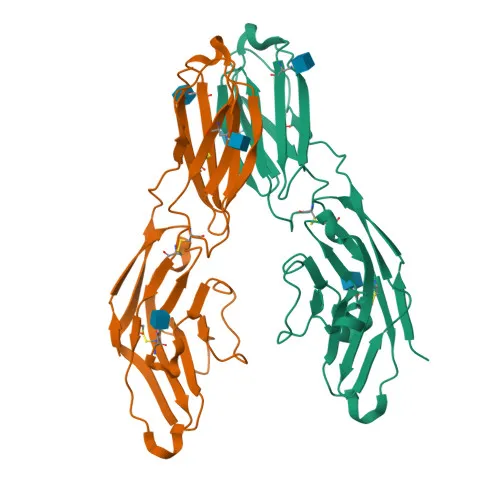
- CD33, also known as Siglec-3 or gp67, is a member of the sialic acid-binding immunoglobulin-like lectin (Siglec) family, characterized by an N-terminal V-set immunoglobulin domain that mediates sialic acid recognition.
- It functions as an inhibitory receptor on myeloid cells, maintaining immune cells in a resting state through ITIM-mediated signaling (PubMed:10611343, PubMed:11320212, PubMed:15597323). Related references: PMID:10611343 PMID:11320212 PMID:15597323
- CD33 preferentially binds alpha-2,3- and alpha-2,6-linked sialic acids, with higher avidity for the latter (PubMed:7718872). Related references: PMID:7718872
- Upon ligand engagement, its cytoplasmic ITIMs are phosphorylated by Src-like kinases, recruiting phosphatases PTPN6/SHP-1 and PTPN11/SHP-2 to downregulate signaling (PubMed:10206955, PubMed:10556798, PubMed:10887109, PubMed:28325905). Related references: PMID:10206955 PMID:10556798 PMID:10887109 PMID:28325905
- CD33 localizes to the cell membrane and peroxisomes, consistent with its roles in cell adhesion and signaling.
- It is expressed specifically on monocytic/myeloid lineage cells and, in the brain, primarily on microglia.
- The protein undergoes alternative splicing, yielding isoforms with potentially distinct functions.
- Post-translational modifications include phosphorylation on ITIM tyrosines and N-linked glycosylation, contributing to its regulatory roles.
Experimental Guidance and Technical Tips
- The immunogen was designed against the cytoplasmic region (aa 265-364), which is conserved between isoforms; this may allow detection of total CD33.
- For Western blotting, consider an initial dilution range of 1:500 to 1:2000 and validate with appropriate positive (e.g., human monocyte lysate) and negative controls.
- For ELISA, the antibody can be employed as a capture or detection reagent; assess cross-reactivity with other Siglecs if multiplexing.
CamelBio: Your One-Stop Sourcing Bridge
CamelBio serves as a comprehensive one-stop sourcing partner for IVD raw materials, offering validated antibody pairs, optimized monoclonal and polyclonal antibodies, bulk ancillary reagents, and customized sourcing for rare targets. This anti-CD33 antibody supports research in myeloid cell biology, immunology, and neuroinflammation. Contact us to discuss how we can streamline your diagnostic development from concept to clinic.
REQUEST A QUOTE
Our professional team will reply to you within one business day. Please feel free to contact us!