Polyclonal Antibodies
Anti-CD304 Rabbit Polyclonal Antibody for WB, ELISA - P97333
Item Number : CM0025310
Price varies based on specs and customizations
- Application
- WB, ELISA
- Cross Reactivity
- Mouse, Rat
- Protein Weight
- 103kDa

Shipping:
Contact us to get shipping details Enjoy On-time Dispatch Guarantee.
Why Choose Us
Easy ordering process, quality products, and dedicated support for your business success.
Core Product Specifications and Parameters
| Parameter | Value |
|---|---|
| Product Name | CD304 Rabbit pAb |
| Remarks/Alias | Nrp; NP-1; Npn1; NPN-1; C530029I03 |
| Species | Mouse |
| GeneID (Human) | 8829 |
| GeneID | 18186 |
| Immunogen | Recombinant protein |
| Source | Rabbit |
| Category | Polyclonal Antibodies |
| Application | WB, ELISA |
| Cross Reactivity | Mouse, Rat |
| SWISS | P97333 |
| Protein Weight | 103kDa |
| Shipping | Ice bag |
Biological Background: Neuropilin-1 Function and Localization
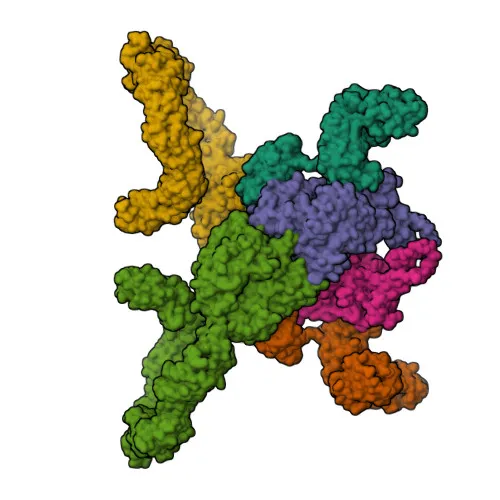
- Neuropilin-1 (NRP1, also known as A5 protein or CD304) is a single-pass transmembrane receptor involved in angiogenesis, cardiovascular development, and neuronal circuit formation.
- It mediates the chemorepulsant activity of semaphorins, specifically binding to semaphorin 3A (SEMA3A), and recognizes a C-end rule (CendR) motif (R/KXXR/K) on ligands leading to cellular internalization and vascular leakage. Related references: PMID:26503042
- NRP1 binds the VEGF165 isoform of VEGFA and VEGFB, and coexpression with KDR (VEGFR2) enhances VEGF165 binding and chemotaxis, thereby regulating VEGF-induced angiogenesis.
- During embryonic development, NRP1 binds VEGFA to initiate signaling required for motor neuron axon guidance and cell body migration, including caudal migration of facial motor neurons. Related references: PMID:26503042
- NRP1 also regulates mitochondrial iron transport through interaction with ABCB8/MITOSUR.
- Subcellular localization includes the mitochondrial membrane, cell membrane, and cytoplasm. It is predominantly expressed in the nervous system.
- Key structural features include disulfide bonds, calcium-binding, heparin-binding, and extensive glycosylation, classifying it as a proteoglycan and glycoprotein.
Experimental Guidance and Technical Tips
- The immunogen spans the majority of the extracellular domain (aa 22–856), so the antibody may recognize both native and denatured forms, making it suitable for WB under reducing conditions and ELISA.
- For western blotting, an observed band around 103 kDa is expected; employ appropriate transfer parameters for high-molecular-weight proteins.
- Given the nervous system expression profile, validate detection in mouse or rat brain lysates as a positive control.
- In ELISA, consider testing serial dilutions of recombinant NRP1 or tissue extracts to establish a standard curve.
CamelBio: Your One-Stop Sourcing Bridge
CamelBio acts as a comprehensive IVD raw-material sourcing partner, offering this anti-CD304 polyclonal antibody along with validated antibody pairs, optimized monoclonal/polyclonal antibodies, and bulk ancillary reagents. For research focused on angiogenesis, neurodevelopment, or related receptor pathways, we provide rapid access to rare target raw materials and custom sourcing solutions. Contact us to streamline your procurement and accelerate assay development.
REQUEST A QUOTE
Our professional team will reply to you within one business day. Please feel free to contact us!