Monoclonal Antibodies
Anti-CD158a/KIR2DL1 Monoclonal Antibody for Flow Cytometry - P43626
Item Number : CM0004705
Price varies based on specs and customizations
- Application
- FC
- Cross Reactivity
- Human
- Protein Weight
- 38kDa/41kDa

Shipping:
Contact us to get shipping details Enjoy On-time Dispatch Guarantee.
Why Choose Us
Easy ordering process, quality products, and dedicated support for your business success.
Core Product Specifications and Parameters
| Parameter | Specification |
|---|---|
| Product Name | Rabbit anti-Human CD158a/KIR2DL1 mAb |
| Remarks/Alias | NKAT; NKAT1; p58.1; CD158A; KIR221; NKAT-1; KIR-K64; KIR2DL3 |
| Species | Human |
| GeneID (Human) | 3802 |
| Immunogen | Recombinant protein/Recombinant fusion protein containing a sequence corresponding to amino acids 22-245 of human CD158a/KIR2DL1 (NP_055033.2) |
| Source | Rabbit |
| Category | Monoclonal Antibodies |
| Application | FC |
| Cross Reactivity | Human |
| SWISS | P43626 |
| Protein Weight | 38kDa/41kDa |
| Shipping | Ice bag |
Biological Background: CD158a/KIR2DL1 Function and Localization
- CD158a/KIR2DL1 (Killer cell immunoglobulin-like receptor 2DL1) is also known as NKAT1, p58.1, CD158A, and several other aliases, reflecting its history as an NK cell-associated transcript and MHC class I receptor.
- It functions as an inhibitory receptor on natural killer (NK) cells, recognizing specific HLA-C alleles (e.g., w4 and w6) and transmitting signals that prevent target cell lysis.
- The protein belongs to the killer cell immunoglobulin-like receptor (KIR) family, characterized by multiple extracellular immunoglobulin domains; alternative splicing generates multiple isoforms.
- Subcellularly, KIR2DL1 is a single-pass transmembrane protein located on the cell membrane, with its ligand-binding domains exposed extracellularly.
- Post-translational modifications include glycosylation and disulfide bond formation, contributing to the observed molecular weight of 38-41 kDa, compared to the predicted 38.6 kDa.
- It is specifically expressed by NK cells and some T-cell subsets, playing a crucial role in immune surveillance and self-tolerance.
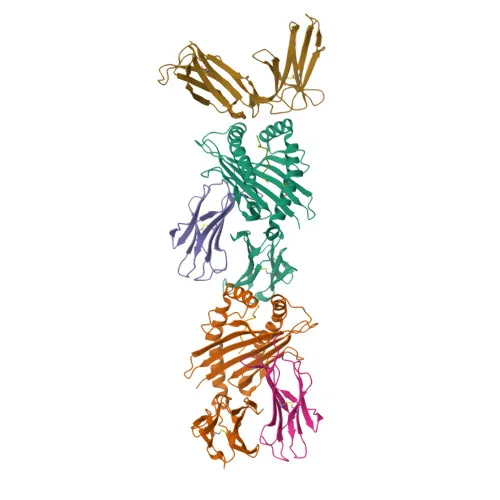
- Structurally resolved in 3D, its specificity for HLA-C is determined by polymorphisms in the extracellular domain, which are key to its inhibitory function.
Experimental Guidance and Technical Tips
- The immunogen (amino acids 22-245) encompasses the entire extracellular region, making the antibody well-suited for detecting native surface receptor by flow cytometry.
- Optimize staining by titrating the antibody on relevant human NK cell lines (e.g., NKL) or primary NK cells to determine the optimal concentration for specific binding.
- Consider co-staining with anti-CD56 and anti-CD3 to precisely gate on NK cells (CD3-CD56+) and distinguish KIR2DL1-positive subsets.
- For functional studies, validate the antibody in the presence of target cells expressing cognate HLA-C ligands to confirm inhibitory signaling blockade.
- Note that cross-reactivity is limited to human; performance in other species has not been tested.
CamelBio: Your One-Stop Sourcing Bridge
As a dedicated IVD raw-material provider, CamelBio streamlines access to high-quality antibodies, recombinant proteins, and ancillary reagents for diagnostic and research applications. For studies in NK cell biology and immuno-oncology, we offer validated anti-KIR2DL1 monoclonal antibodies and can facilitate custom development, bulk supply, and technical consulting to accelerate your projects from concept to clinic.
REQUEST A QUOTE
Our professional team will reply to you within one business day. Please feel free to contact us!