Monoclonal Antibodies
Anti-CD155/PVR Monoclonal Antibody for WB, IHC-P, ELISA - P15151
Item Number : CM0005081
Price varies based on specs and customizations
- Application
- WB, IHC-P, ELISA
- Cross Reactivity
- Human
- Protein Weight
- 45kDa

Shipping:
Contact us to get shipping details Enjoy On-time Dispatch Guarantee.
Why Choose Us
Easy ordering process, quality products, and dedicated support for your business success.
Core Product Specifications and Parameters
| Parameter | Value |
|---|---|
| Product Name | CD155/PVR Rabbit mAb |
| Remarks/Alias | PVS; HVED; CD155; NECL5; TAGE4; Necl-5 |
| Species | Human |
| GeneID (Human) | 5817 |
| GeneID | 5817 |
| Immunogen | Recombinant fusion protein containing a sequence corresponding to amino acids 21-343 of human CD155/PVR (NP_006496.4) |
| Source | Rabbit |
| Category | Monoclonal Antibodies |
| Application | WB, IHC-P, ELISA |
| Cross Reactivity | Human |
| SWISS | P15151 |
| Protein Weight | 45kDa |
| Shipping | Ice bag |
Biological Background: CD155/PVR Function and Localization
- CD155/PVR (Poliovirus Receptor) is also known as Nectin-like protein 5 (NECL-5), a member of the nectin family of immunoglobulin-like adhesion molecules. It exists in multiple isoforms due to alternative splicing, including membrane-bound and secreted forms.
- As a cell adhesion molecule, CD155 mediates NK cell adhesion and triggers NK cell effector functions by binding to NK cell receptors CD96 (TACTILE) and CD226 (DNAM-1). These interactions promote the formation of immunological synapses, leading to cytotoxicity and cytokine secretion.
- In tumor biology, overexpression of CD155 on cancer cells facilitates immune evasion by promoting fratricide of activated NK cells and modulating immune synapses. It also plays a direct role in tumor cell invasion and migration.
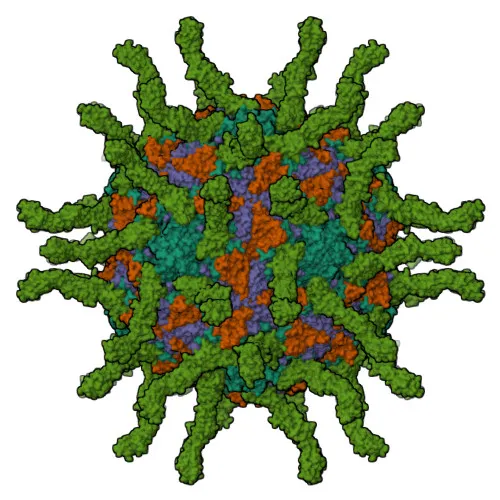
- CD155 acts as the primary receptor for poliovirus entry into host cells, and also serves as a receptor for pseudorabies virus. During poliovirus infection, it targets virion-containing endocytic vesicles to the microtubular network via interaction with dynein light chain Tctex-1, enabling axonal retrograde transport.
- Human cytomegalovirus (HCMV) infection downregulates CD155 surface expression, likely to escape immune recognition by NK cells.
- Subcellular localization: CD155 is predominantly expressed at the cell membrane, but secreted isoforms are also observed. It is a single-pass type I membrane protein with a signal peptide and an extracellular region containing three immunoglobulin-like domains.
- Post-translational modifications include glycosylation, phosphorylation, and disulfide bond formation. The core protein weight is approximately 45.3 kDa, but glycosylation can increase the apparent molecular weight to 70–80 kDa in some cell types.
- Keywords: 3D-structure, Alternative splicing, Cell adhesion, Cell membrane, Disulfide bond, Glycoprotein, Host cell receptor for virus entry, Host-virus interaction, Immunoglobulin domain, Membrane, Phosphoprotein, Proteomics identification, Receptor, Reference proteome, Repeat, Secreted, Signal, Transmembrane, Transmembrane helix.
Experimental Guidance and Technical Tips
- The immunogen used to generate this antibody corresponds to amino acids 21–343 of the human CD155/PVR extracellular domain, which is conserved across major isoforms. It is expected to recognize both membrane-bound and secreted forms.
- For Western blotting, the predicted molecular weight is ~45 kDa based on the core protein sequence; however, due to glycosylation, the apparent band may be observed at higher molecular weights (e.g., 70–80 kDa). Use appropriate positive controls such as HeLa or other human cell lines.
- In immunohistochemistry (IHC-P), antigen retrieval steps (e.g., heat-induced epitope retrieval) are often required. Optimization of primary antibody dilution and detection system is recommended for specific tissue types.
- This antibody has been validated for use in WB, IHC-P, and ELISA. It may also be suitable for other applications such as flow cytometry or immunofluorescence, but end-user optimization is advised.
- As CD155 is a viral receptor, this antibody may be useful in studying host-pathogen interactions. In poliovirus infection models, consider using appropriate biosafety precautions and relevant cell systems.
- No quantitative data or dilution recommendations are provided; optimal working concentrations should be determined empirically by the end user in the relevant sample system.
CamelBio: Your One-Stop Sourcing Bridge
CamelBio partners with diagnostic manufacturers and research laboratories to supply high-quality IVD raw materials, including this anti-CD155/PVR monoclonal antibody for applications in cancer immunology and infectious disease research. We offer validated antibody pairs, optimized monoclonal and polyclonal antibodies, bulk ancillary reagents, and specialized sourcing for rare targets. Whether you need ready-to-use reagents or support from concept to clinic, CamelBio provides a one-stop bridge to accelerate your assay development.
REQUEST A QUOTE
Our professional team will reply to you within one business day. Please feel free to contact us!