Monoclonal Antibodies
Anti-CD152/CTLA-4 Rabbit Monoclonal Antibody for WB and ELISA - P16410
Item Number : CM0007331
Price varies based on specs and customizations
- Application
- WB, ELISA
- Cross Reactivity
- Human
- Protein Weight
- 25kDa

Shipping:
Contact us to get shipping details Enjoy On-time Dispatch Guarantee.
Why Choose Us
Easy ordering process, quality products, and dedicated support for your business success.
Core Product Specifications and Parameters
| Parameter | Value |
|---|---|
| Product Name | CD152/CTLA-4 Rabbit mAb |
| Remarks/Alias | CD; GSE; GRD4; ALPS5; CD152; CTLA-4; IDDM12; CELIAC3; CD152/CTLA-4 |
| Species | Human |
| GeneID | 1493 |
| Immunogen | Recombinant fusion protein containing a sequence corresponding to amino acids 37-162 of human CD152/CTLA-4 (NP_005205.2) |
| Source | Rabbit |
| Category | Monoclonal Antibodies |
| Application | WB, ELISA |
| Cross Reactivity | Human |
| SWISS | P16410 |
| Protein Weight | 25kDa |
| Shipping | Ice bag |
Biological Background: CTLA-4 Function and Localization
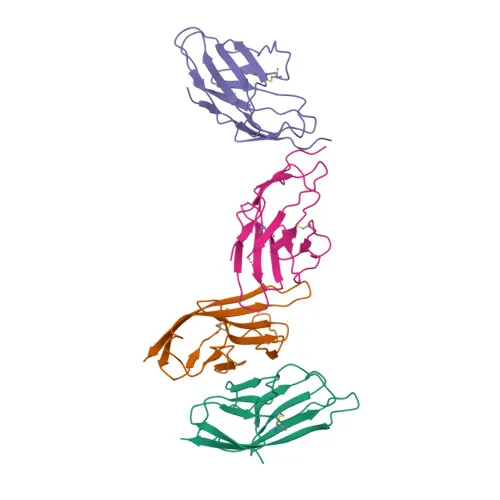
- CTLA-4 (Cytotoxic T-lymphocyte protein 4, CD152) is an inhibitory receptor that functions as a major negative regulator of T-cell immune responses. It binds B7 ligands CD80 and CD86 with significantly higher affinity than the stimulatory receptor CD28, thereby outcompeting CD28 and dampening T-cell activation. Related references: PMID:11279501 PMID:11279502 PMID:16551244
- Acts as a decoy receptor: by sequestering CD80/CD86, it prevents CD28-mediated co-stimulation, crucial for maintaining immune homeostasis and peripheral tolerance.
- Belongs to the immunoglobulin superfamily, featuring a single immunoglobulin V-like domain in its extracellular region.
- Predominantly localized on the cell membrane (single-pass type I transmembrane protein) and may also exist in a soluble splice variant lacking the transmembrane domain.
- Widely expressed, with highest levels in lymphoid tissues; detected on activated T-cells but at 30- to 50-fold lower surface levels compared to CD28.
- Post-translational modifications include disulfide bond formation, N-linked glycosylation, and phosphorylation, which modulate its trafficking and function.
- Genetic variants in CTLA4 are associated with susceptibility to autoimmune diseases such as type 1 diabetes and systemic lupus erythematosus, underscoring its critical role in immune regulation.
Experimental Guidance and Technical Tips
- The recombinant protein immunogen spans residues 37–162, covering the majority of the extracellular domain (excluding the signal peptide). This design may recognize both full-length membrane-bound CTLA-4 and soluble isoforms.
- For Western blot, run samples under reducing conditions; expect a band near 25 kDa. Verify specificity using positive (activated T-cell lysates) and negative controls.
- In ELISA applications, consider using the antibody as a capture or detection reagent. Due to low native expression, sample enrichment (e.g., immunoprecipitation) or high-sensitivity substrates may be necessary.
- Cross-reactivity data is limited to human; for non-human samples, validate binding beforehand.
CamelBio: Your One-Stop Sourcing Bridge
CamelBio partners with IVD manufacturers and research laboratories by providing reliable, one-stop access to critical raw materials. For CTLA-4 immunoassay development, we supply validated monoclonal and polyclonal antibodies, matched antibody pairs, and ancillary reagents. Our global supply network includes rare-target raw material sourcing and bulk-scale support, helping you move efficiently from concept to clinical application.
REQUEST A QUOTE
Our professional team will reply to you within one business day. Please feel free to contact us!