Polyclonal Antibodies
Anti-CD152/CTLA-4 Polyclonal Antibody for WB, IHC-P, ELISA - P16410
Item Number : CM0022324
Price varies based on specs and customizations
- Application
- WB, IHC-P, ELISA
- Cross Reactivity
- Human, Mouse, Rat
- Protein Weight
- 25kDa

Shipping:
Contact us to get shipping details Enjoy On-time Dispatch Guarantee.
Why Choose Us
Easy ordering process, quality products, and dedicated support for your business success.
Core Product Specifications and Parameters
| Parameter | Value |
|---|---|
| Product Name | CD152/CTLA-4 Rabbit pAb |
| Remarks/Alias | CD; GSE; GRD4; ALPS5; CD152; CTLA-4; IDDM12; CELIAC3; CD152/CTLA-4 |
| Species | Human |
| GeneID (Human) | 1493 |
| GeneID | 1493 |
| Immunogen | Recombinant protein |
| Source | Rabbit |
| Category | Polyclonal Antibodies |
| Application | WB, IHC-P, ELISA |
| Cross Reactivity | Human, Mouse, Rat |
| SWISS | P16410 |
| Protein Weight | 25kDa |
| Shipping | Ice bag |
Biological Background: CTLA-4 Function and Localization
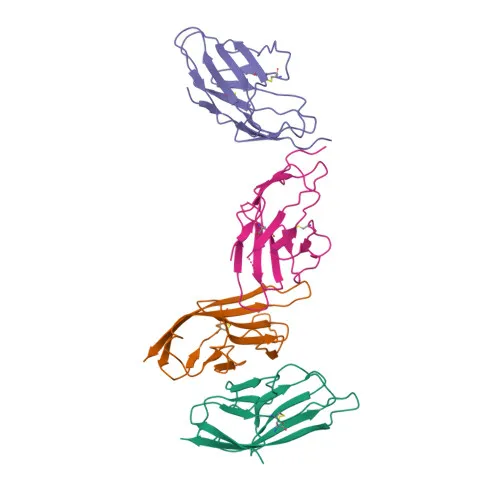
- CTLA-4 (Cytotoxic T-lymphocyte protein 4, also known as CD152) is a transmembrane inhibitory receptor and a member of the immunoglobulin superfamily. It exists as a disulfide-linked homodimer, with alternative splicing generating a soluble isoform lacking the transmembrane domain.
- CTLA-4 functions as a major negative regulator of T-cell responses by acting as a decoy receptor. It competes with the stimulatory co-receptor CD28 for binding to B7 family ligands CD80 and CD86, with considerably higher affinity, thereby attenuating T-cell activation. Related references: PMID:11279501 PMID:11279502 PMID:16551244
- The protein is localized to the cell membrane and is predominantly expressed in lymphoid tissues, with highest levels on activated T-cells. Surface expression on activated T-cells is 30- to 50-fold lower than that of CD28.
- Post-translational modifications include glycosylation and phosphorylation, which modulate its cell surface dynamics and signaling activity. The extracellular domain contains a single IgV-like domain with a conserved disulfide bond.
- CTLA-4 is implicated in autoimmune diseases such as type 1 diabetes mellitus and systemic lupus erythematosus (SLE), and genetic variants are associated with susceptibility to these disorders.
Experimental Guidance and Technical Tips
- The immunogen corresponds to the extracellular domain (amino acids 36-161) of human CTLA-4, making this antibody suitable for detecting the native, membrane-bound receptor. When designing experiments, consider using activated T-cell lysates or tissues with known CTLA-4 expression as positive controls.
- For Western blotting (WB), a band corresponding to approximately 25 kDa (monomeric form) may be observed under reducing conditions; note that the homodimeric form ~50 kDa may also be visible under non-reducing conditions.
- In immunohistochemistry (IHC), antigen retrieval with citrate buffer (pH 6.0) and permeabilization may improve detection. The antibody has been reported to cross-react with mouse and rat CTLA-4; however, optimal working dilutions should be determined empirically.
- For ELISA applications, consider pairing with a suitable detection antibody recognizing a non-overlapping epitope, and validate in the relevant sample matrix.
CamelBio: Your One-Stop Sourcing Bridge
CamelBio streamlines your IVD raw-material supply chain, offering reliable access to validated antibody pairs, bulk ancillary reagents, and specialized immunoreagents for immune checkpoint research. Whether you are developing diagnostic assays for T-cell function or exploring CTLA-4 as a therapeutic biomarker, our one-stop platform connects you with high-quality polyclonal antibodies like this anti-CTLA-4 rabbit pAb and complementary monoclonals, along with technical support to accelerate your project from concept to clinic.
REQUEST A QUOTE
Our professional team will reply to you within one business day. Please feel free to contact us!