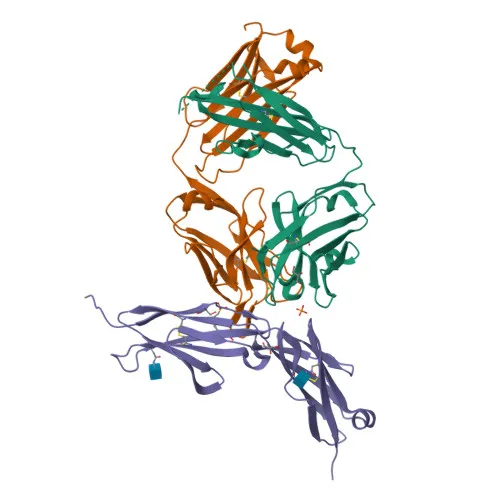
Monoclonal Antibodies
Anti-CD146/MCAM Rabbit Monoclonal Antibody for WB, IHC-P, ELISA - P43121
Item Number : CM0007729
Price varies based on specs and customizations
- Application
- WB, IHC-P, ELISA
- Cross Reactivity
- Human, Mouse, Rat
- Protein Weight
- 72kDa

Shipping:
Contact us to get shipping details Enjoy On-time Dispatch Guarantee.
Why Choose Us
Easy ordering process, quality products, and dedicated support for your business success.
Core Product Specifications and Parameters
| Parameter | Value |
|---|---|
| Product Name | CD146/MCAM Rabbit mAb |
| Remarks/Alias | CD146; MUC18; HEMCAM; METCAM; MelCAM; CD146/MCAM |
| Species | Human |
| Gene ID | 4162 (Human) |
| Immunogen | Synthetic Peptide: A synthetic peptide corresponding to a sequence within amino acids 547-646 of human CD146/MCAM (P43121) |
| Source | Rabbit |
| Category | Monoclonal Antibodies |
| Application | WB, IHC-P, ELISA |
| Cross Reactivity | Human, Mouse, Rat |
| SWISS | P43121 |
| Protein Weight | 72kDa |
| Shipping | Ice bag |
Biological Background: CD146/MCAM Function and Localization
- CD146, also known as MUC18, MEL-CAM, or S-endo 1, is a cell adhesion molecule belonging to the immunoglobulin superfamily.
- It contributes to endothelial monolayer cohesion at intercellular junctions and may facilitate melanoma cell interaction with vascular elements, enhancing hematogenous metastasis.
- Acts as a surface receptor that triggers intracellular signaling upon engagement, including tyrosine phosphorylation of FYN and PTK2/FAK1, and a transient calcium influx.
- The protein is a single-pass type I membrane glycoprotein composed of a signal peptide, five Ig-like domains, a transmembrane helix, and a cytoplasmic region.
- Expressed predominantly in vascular endothelial cells and smooth muscle; upregulated in advanced primary melanomas and metastatic lesions, but rarely detected in benign nevi.
- Post-translational modifications include N-linked glycosylation and stimulus-induced tyrosine phosphorylation.
Experimental Guidance and Technical Tips
- As the immunogen (aa 547-646) lies within the cytoplasmic domain, permeabilization is recommended for IHC-P and cell-surface-inaccessible ELISA formats.
- For Western blotting, a band at approximately 72 kDa is expected under reducing conditions; validate specificity with positive (e.g., HUVEC lysate) and negative controls.
- When performing IHC-P, optimize antigen retrieval and antibody dilution; consider using a polymer-based detection system for sensitivity.
- The antibody's cross-reactivity with mouse and rat offers flexibility for translational studies; verify performance in the relevant species' tissue.
- For ELISA, confirm that the epitope is available in the assay format; direct antigen coating may require denaturation to expose the peptide sequence.
CamelBio: Your One-Stop Sourcing Bridge
CamelBio connects diagnostic developers and researchers with a comprehensive portfolio of validated IVD raw materials, including this CD146/MCAM monoclonal antibody for vascular and cancer biology applications. We supply optimized antibody pairs, bulk ancillary reagents, and offer customized sourcing for rare-target raw materials—supporting your workflow from initial R&D to commercial kit assembly. Partner with us for reliable, end-to-end procurement solutions.
Product Datasheet
Anti-CD146/MCAM Rabbit Monoclonal Antibody for WB, IHC-P, ELISA - P43121
REQUEST A QUOTE
Our professional team will reply to you within one business day. Please feel free to contact us!