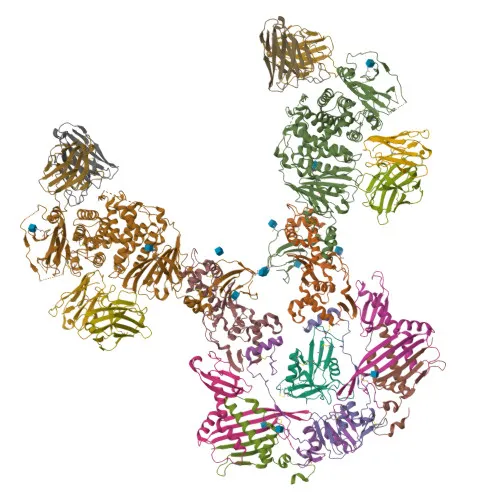
Polyclonal Antibodies
Anti-CD141/Thrombomodulin Polyclonal Antibody for WB, IHC-P, IF/ICC, and ELISA - P07204
Item Number : CM0029856
Price varies based on specs and customizations
- Application
- WB, IHC-P, IF/ICC, ELISA
- Cross Reactivity
- Human, Mouse, Rat
- Protein Weight
- 60kDa

Shipping:
Contact us to get shipping details Enjoy On-time Dispatch Guarantee.
Why Choose Us
Easy ordering process, quality products, and dedicated support for your business success.
Core Product Specifications and Parameters
| Parameter | Value |
|---|---|
| Product Name | CD141/Thrombomodulin Rabbit pAb |
| Remarks/Alias | TM, THRM, AHUS6, BDCA3, CD141, BDCA-3, THPH12, CD141/Thrombomodulin |
| Species | Human |
| GeneID (Human) | 7056 |
| GeneID | 7056 |
| Immunogen | Recombinant fusion protein containing a sequence corresponding to amino acids 19-515 of human CD141/Thrombomodulin (NP_000352.1). |
| Source | Rabbit |
| Category | Polyclonal Antibodies |
| Application | WB, IHC-P, IF/ICC, ELISA |
| Cross Reactivity | Human, Mouse, Rat |
| SWISS | P07204 |
| Protein Weight | 60kDa |
| Shipping | Ice bag |
Biological Background: Thrombomodulin Function and Localization
- Thrombomodulin (also known as CD141 or fetomodulin) is an endothelial cell receptor encoded by the THBD gene.
- It serves as a cofactor for thrombin-mediated activation of protein C on the vascular endothelial surface, initiating the anticoagulant pathway. Related references: PMID:29323190, PMID:33836597, PMID:9395524
- Thrombomodulin accelerates the activation of plasma carboxypeptidase B2 (CPB2), which inhibits fibrinolysis by removing C-terminal basic amino acids from kinins and anaphylatoxins. Related references: PMID:26663133
- The protein suppresses inflammation by sequestering high mobility group box 1 (HMGB1), preventing its engagement with pro-inflammatory receptors such as RAGE. Related references: PMID:15841214
- Endothelial cells are the primary site of thrombomodulin synthesis, highlighting its role in vascular homeostasis.
- It is a membrane glycoprotein characterized by an EGF-like domain, multiple disulfide bonds, glycosylation, and a single transmembrane helix.
- Mutations in THBD are linked to disease variants such as hemolytic uremic syndrome and thrombophilia, underscoring its clinical importance in hemostasis.
Experimental Guidance and Technical Tips
- For Western blotting, expect a predominant band around 60 kDa; consider potential glycosylation-dependent shifts and validate using endothelial cell lysates (e.g., HUVEC).
- In IHC-P, apply optimized antigen retrieval protocols and include positive (e.g., placental or vascular tissue) and negative tissue controls to confirm specificity.
- For IF/ICC, ensure appropriate fixation and permeabilization to preserve membrane localization; co-stain with endothelial markers to verify cellular context.
- ELISA performance may depend on antibody pair compatibility; consider testing with recombinant thrombomodulin as a standard.
CamelBio: Your One-Stop Sourcing Bridge
As a leading B2B partner for IVD raw materials, CamelBio provides validated antibody pairs, optimized polyclonal antibodies, and bulk ancillary reagents to support your thrombomodulin research. Our extensive supply network enables efficient sourcing of rare targets like CD141/THBD for coagulation and inflammation studies. Partner with us to streamline your diagnostic development from concept to clinic.
Product Datasheet
Anti-CD141/Thrombomodulin Polyclonal Antibody for WB, IHC-P, IF/ICC, and ELISA - P07204
REQUEST A QUOTE
Our professional team will reply to you within one business day. Please feel free to contact us!