Polyclonal Antibodies
Anti-CCT5 Polyclonal Antibody for WB, ELISA - P48643
Item Number : CM0026245
Price varies based on specs and customizations
- Application
- WB, ELISA
- Cross Reactivity
- Human, Mouse, Rat
- Protein Weight
- 60kDa

Shipping:
Contact us to get shipping details Enjoy On-time Dispatch Guarantee.
Why Choose Us
Easy ordering process, quality products, and dedicated support for your business success.
Core Product Specifications and Parameters
| Parameter | Value |
|---|---|
| Product Name | CCT5 Rabbit pAb |
| Remarks/Alias | CCTE; HEL-S-69; PNAS-102; CCT-epsilon; TCP-1-epsilon; CCT5 |
| Species | Human |
| GeneID (Human) | 22948 |
| GeneID | 22948 |
| Immunogen | Recombinant fusion protein containing a sequence corresponding to amino acids 1-270 of human CCT5 (NP_036205.1). |
| Source | Rabbit |
| Category | Polyclonal Antibodies |
| Application | WB, ELISA |
| Cross Reactivity | Human, Mouse, Rat |
| SWISS | P48643 |
| Protein Weight | 60kDa |
| Shipping | Ice bag |
Biological Background: CCT5 Function and Localization
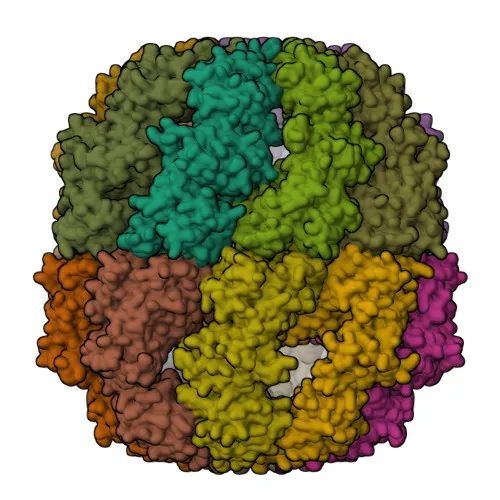
- CCT5 encodes the epsilon subunit of the chaperonin-containing T-complex (TRiC), also known as CCT-epsilon or TCP-1-epsilon.
- As a component of the TRiC complex, CCT5 mediates ATP-dependent folding of actin, tubulin, and other client proteins, essential for cytoskeletal integrity (PubMed:25467444, PubMed:36493755, PubMed:35449234). Related references: PMID:25467444 PMID:36493755 PMID:35449234
- TRiC participates in WRAP53/TCAB1 folding, contributing to telomere maintenance (PubMed:25467444). Related references: PMID:25467444
- The complex is involved in BBSome assembly, a ciliogenesis-related vesicle transport pathway (PubMed:20080638). Related references: PMID:20080638
- CCT5 localizes to the cytoplasm, centrosome, and cytoskeleton, consistent with its chaperone role.
- Post-translational modifications include acetylation and phosphorylation; the protein contains ATP-binding and nucleotide-binding domains.
- Mutations in CCT5 are associated with hereditary sensory neuropathy, highlighting disease relevance.
- Alternative splicing produces multiple transcript variants, potentially affecting epitope recognition.
Experimental Guidance and Technical Tips
- The immunogen covers amino acids 1–270 of human CCT5 (N-terminal region); consider epitope accessibility in native versus denaturing conditions.
- Verify antibody reactivity in your specific sample system, as alternative splicing may affect isoform detection.
- This polyclonal antibody demonstrates cross-reactivity with human, mouse, and rat; validate with appropriate controls when using other species.
- For Western blotting, a band around 60 kDa is expected; optimize loading and transfer conditions for your model.
- In ELISA, consider using recombinant protein as antigen to titer specificity.
CamelBio: Your One-Stop Sourcing Bridge
CamelBio provides a comprehensive range of IVD raw materials, including validated antibody pairs, optimized polyclonal antibodies, and ancillary reagents to streamline your assay development. Explore our catalog for chaperone and cytoskeleton research targets, and let our sourcing expertise connect you with the critical components for your diagnostic projects.
REQUEST A QUOTE
Our professional team will reply to you within one business day. Please feel free to contact us!