Polyclonal Antibodies
Anti-CCT4 Polyclonal Antibody for WB, IF/ICC, ELISA - P50991
Item Number : CM0027398
Price varies based on specs and customizations
- Application
- WB, IF/ICC, ELISA
- Cross Reactivity
- Human, Mouse, Rat
- Protein Weight
- 58kDa

Shipping:
Contact us to get shipping details Enjoy On-time Dispatch Guarantee.
Why Choose Us
Easy ordering process, quality products, and dedicated support for your business success.
Core Product Specifications and Parameters
| Parameter | Value |
|---|---|
| Product Name | CCT4 Rabbit pAb |
| Remarks/Alias | SRB; Cctd; CCT-DELTA; CCT4 |
| Species | Human |
| GeneID (Human) | 10575 |
| GeneID | 10575 |
| Immunogen | Recombinant protein | Recombinant fusion protein containing a sequence corresponding to amino acids 130-390 of human CCT4 (NP_006421.2). |
| Source | Rabbit |
| Category | Polyclonal Antibodies |
| Application | WB, IF/ICC, ELISA |
| Cross Reactivity | Human, Mouse, Rat |
| SWISS | P50991 |
| Protein Weight | 58kDa |
| Shipping | Ice bag |
Biological Background: CCT4 Function and Localization
- CCT4 encodes the delta subunit of the T-complex protein 1 (TCP-1) ring complex (TRiC), a cytosolic chaperonin that mediates ATP-dependent folding of ~10% of the proteome, most notably actin and tubulin. Related references: PMID:25467444, PMID:36493755, PMID:35449234
- TRiC also folds telomerase Cajal body protein 1 (WRAP53/TCAB1), linking CCT4 function to telomere maintenance. Related references: PMID:25467444
- The chaperonin contributes to ciliogenesis by assisting the assembly of the BBSome, a complex critical for vesicle trafficking to cilia. Related references: PMID:20080638
- CCT4 localizes predominantly to the cytoplasm and is concentrated at centrosomes and the basal bodies of cilia, consistent with its role in cytoskeletal protein folding and ciliary transport.
- The protein is subject to multiple post-translational modifications, including acetylation, methylation, and phosphorylation, which may regulate chaperonin activity.
- Alternative splicing yields multiple transcript variants, suggesting functional diversification.
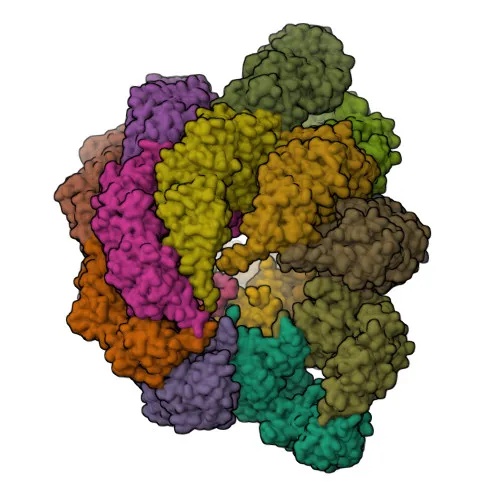
- As a subunit of TRiC, CCT4 is part of a large hetero-oligomeric complex composed of eight different subunits arranged in a double-ring structure.
Experimental Guidance and Technical Tips
- The immunogen spans amino acids 130-390 of human CCT4; binding to epitopes within this region is expected to be specific, but cross-reactivity with other TCP-1 subunits should be ruled out due to sequence homology across the family.
- For Western blot, a starting dilution of 1:1000 is suggested for human, mouse, and rat lysates; a band near 58 kDa is anticipated. Include relevant positive and negative controls.
- In immunofluorescence, CCT4 demonstrates cytoplasmic staining with enrichment at centrosomes and ciliary basal bodies; pre-extraction with detergent may enhance the microtubule and basal body signal.
- For ELISA applications, use the recombinant protein or cell lysates as coating antigen; lot-to-lot variability inherent to polyclonal antibodies should be assessed for quantitative consistency.
- Given the antibody's reactivity across human, mouse, and rat, it is suitable for translational studies in these species.
CamelBio: Your One-Stop Sourcing Bridge
As your dedicated partner for CCT4-related research and assay development, CamelBio offers a comprehensive portfolio of validated antibodies, antibody pairs, and ancillary reagents for studying chaperonin function and folding pathways. From bulk monoclonal and polyclonal antibodies to recombinant proteins and rare-target sourcing, our supply solutions support every phase from feasibility testing to kit manufacturing. Leverage CamelBio’s integrated sourcing to streamline your next diagnostic or research project.
REQUEST A QUOTE
Our professional team will reply to you within one business day. Please feel free to contact us!