Polyclonal Antibodies
Anti-CCT3 Rabbit Polyclonal Antibody for WB, IF/ICC, ELISA - P49368
Item Number : CM0029026
Price varies based on specs and customizations
- Application
- WB, IF/ICC, ELISA
- Cross Reactivity
- Human, Mouse, Rat
- Protein Weight
- 61kDa

Shipping:
Contact us to get shipping details Enjoy On-time Dispatch Guarantee.
Why Choose Us
Easy ordering process, quality products, and dedicated support for your business success.
Core Product Specifications and Parameters
| Parameter | Value |
|---|---|
| Product Name | CCT3 Rabbit pAb |
| Remarks/Alias | CCTG; PIG48; TRIC5; CCT-gamma; TCP-1-gamma; CCT3 |
| Species | Human |
| Gene ID | 7203 (Human) |
| Immunogen | Recombinant fusion protein containing a sequence corresponding to amino acids 1-300 of human CCT3 (NP_005989.3) |
| Source | Rabbit |
| Category | Polyclonal Antibodies |
| Application | WB, IF/ICC, ELISA |
| Cross Reactivity | Human, Mouse, Rat |
| SWISS | P49368 |
| Protein Weight | 61kDa |
| Shipping | Ice bag |
Biological Background: T-complex protein 1 subunit gamma Function and Localization
- CCT3 is a subunit of the chaperonin-containing T-complex (TRiC), which assists the ATP-dependent folding of cytoskeletal proteins such as actin and tubulin. Related references: PMID:25467444, PMID:36493755, PMID:35449234
- The TRiC complex, including CCT3, mediates the folding of WRAP53/TCAB1, a protein essential for telomere maintenance. Related references: PMID:25467444
- CCT3-containing TRiC is involved in the assembly of the BBSome, a complex that regulates vesicle trafficking to the cilia, thereby playing a role in ciliogenesis. Related references: PMID:20080638
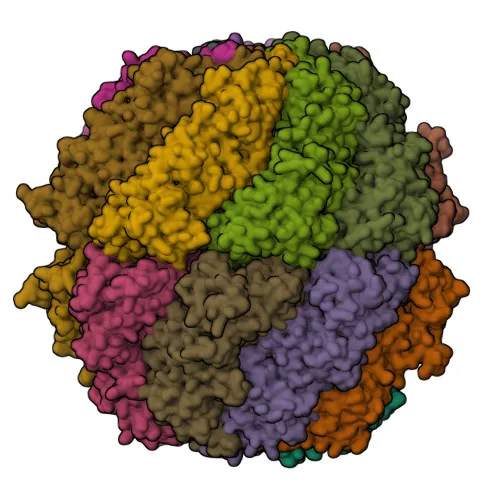
- CCT3 belongs to the CCT (chaperonin containing TCP1) family, consisting of eight different subunits (CCT1–8) that form the TRiC double-ring complex.
- CCT3 is predominantly localized in the cytoplasm, consistent with its role as a molecular chaperone.
- The protein undergoes acetylation and phosphorylation, as indicated by its annotation, and features ATP-binding and nucleotide-binding domains essential for its chaperonin function.
- The theoretical molecular weight of CCT3 is approximately 60.5 kDa (UniProt P49368), which is consistent with the observed band at 61 kDa.
Experimental Guidance and Technical Tips
- The immunogen corresponds to the N-terminal region (amino acids 1-300) of human CCT3. Consider this when evaluating detection of full-length versus potential truncated isoforms.
- For western blotting, expect a band at approximately 61 kDa. Validate the antibody with appropriate positive controls (e.g., HeLa, HEK293, or tissue lysates) and use a standard SDS-PAGE and transfer protocol.
- In immunofluorescence/immunocytochemistry (IF/ICC), optimize fixation (e.g., 4% PFA) and permeabilization (e.g., 0.1% Triton X-100) to ensure accessibility to the cytoplasmic CCT3 antigen. Include appropriate negative controls.
- For ELISA applications, the antibody can be employed as a capture or detection reagent. Titrate the antibody and confirm specificity using recombinant CCT3 or cell lysates.
CamelBio: Your One-Stop Sourcing Bridge
CamelBio streamlines IVD development by offering consolidated access to validated raw materials like this anti-CCT3 antibody, which supports research into chaperonin biology and protein folding disorders. From bulk polyclonal antibodies to custom monoclonal development and ancillary reagents, our supply solutions accelerate your assay pipeline for targets involved in cellular homeostasis and disease.
REQUEST A QUOTE
Our professional team will reply to you within one business day. Please feel free to contact us!