Monoclonal Antibodies
Anti-CCR7 Rabbit Monoclonal Antibody for WB, ELISA - P32248
Item Number : CM0002336
Price varies based on specs and customizations
- Application
- WB, ELISA
- Cross Reactivity
- Human, Mouse, Rat
- Protein Weight
- 43kDa

Shipping:
Contact us to get shipping details Enjoy On-time Dispatch Guarantee.
Why Choose Us
Easy ordering process, quality products, and dedicated support for your business success.
Core Product Specifications and Parameters
| Parameter | Value |
|---|---|
| Product Name | CCR7 Rabbit mAb |
| Remarks/Alias | BLR2; EBI1; CCR-7; CD197; CDw197; CMKBR7; CC-CKR-7; CCR7 |
| Species | Human |
| GeneID (Human) | 1236 |
| GeneID | 1236 |
| Immunogen | Synthetic Peptide. A synthetic peptide corresponding to a sequence within amino acids 1-100 of human CCR7 (P32248). |
| Source | Rabbit |
| Category | Monoclonal Antibodies |
| Application | WB, ELISA |
| Cross Reactivity | Human, Mouse, Rat |
| SWISS | P32248 |
| Protein Weight | 43kDa |
| Shipping | Ice bag |
Biological Background: CCR7 Function and Localization
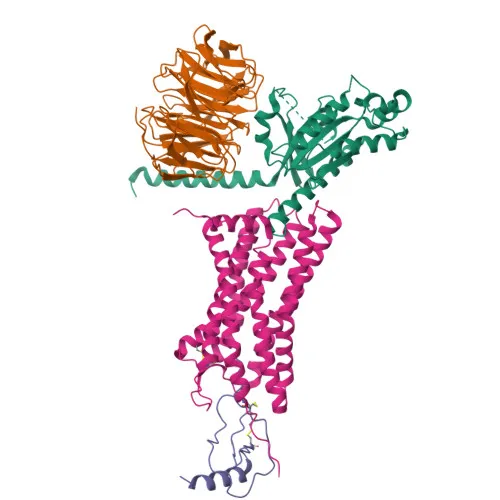
- C-C chemokine receptor type 7 (CCR7, also known as BLR2, CD197, EBI1) is a multi-pass transmembrane receptor belonging to the G protein-coupled receptor family.
- Functions as a specific receptor for the chemokine MIP-3-beta (CCL19) and is implicated in mediating Epstein-Barr virus (EBV) effects on B-lymphocytes and in normal lymphocyte trafficking.
- Plays a central role in guiding dendritic cells and T lymphocytes to secondary lymphoid organs through chemotactic gradients.
- Localizes to the cell membrane where it transduces signals following ligand binding, involving intracellular G protein activation.
- Expression is predominantly observed in lymphoid tissues and on activated B- and T-lymphocytes, with strong upregulation in B-cells infected with EBV and T-cells infected with herpesvirus 6 or 7.
- Contains structural features typical of chemokine receptors including seven transmembrane helices, disulfide bonds, and N-linked glycosylation sites.
- The receptor's molecular weight is approximately 43 kDa (UniProt calculation 42.9 kDa), though post-translational modifications may cause slight variations in SDS-PAGE.
Experimental Guidance and Technical Tips
- The immunogen used is a synthetic peptide from the N-terminal extracellular region (amino acids 1-100) of human CCR7, which may favor detection of surface receptor forms.
- For Western blotting, a band at approximately 43 kDa is expected under reducing conditions; consider using lymphoid tissue lysates or activated lymphocyte extracts as positive controls.
- In ELISA applications, verify coating conditions and antibody concentration in the relevant sample matrix; cross-reactivity with mouse and rat CCR7 has been reported.
- Given the receptor's inducible expression, stimulation protocols (e.g., EBV infection or cytokine treatment) may enhance detection sensitivity in cell-based assays.
- Always validate the antibody in the specific experimental system and confirm specificity with appropriate controls, such as peptide blocking or knockout cell lines.
CamelBio: Your One-Stop Sourcing Bridge
CamelBio serves diagnostic manufacturers, labs, and research institutes with a comprehensive range of IVD raw materials, technical services, and consulting support—from concept to clinic. For chemokine receptor research and immunology applications, CamelBio offers access to validated antibody pairs, optimized monoclonal and polyclonal antibodies, bulk ancillary reagents, and custom raw-material sourcing to streamline your development workflows. Tap into a reliable supply network designed to accelerate your diagnostic and therapeutic innovation.
REQUEST A QUOTE
Our professional team will reply to you within one business day. Please feel free to contact us!