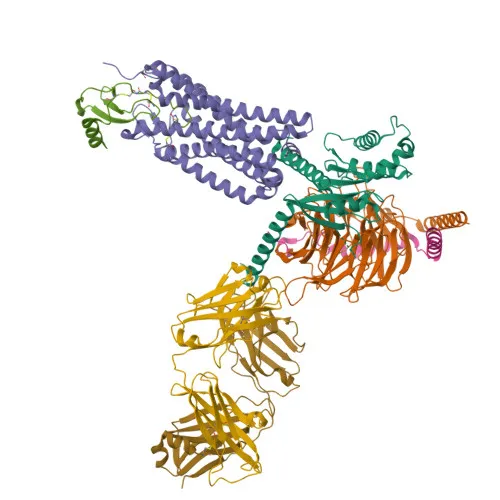
Polyclonal Antibodies
Anti-CCR5 Polyclonal Antibody (Rabbit) for IF-P and ELISA - P51681
Item Number : CM0022605
Price varies based on specs and customizations
- Application
- IF-P, ELISA
- Cross Reactivity
- Mouse
- Protein Weight
- 41kDa

Shipping:
Contact us to get shipping details Enjoy On-time Dispatch Guarantee.
Why Choose Us
Easy ordering process, quality products, and dedicated support for your business success.
Core Product Specifications and Parameters
| Parameter | Specification |
|---|---|
| Product Name | CCR5 Rabbit pAb |
| Remarks/Alias | CKR5; CCR-5; CD195; CKR-5; CCCKR5; CMKBR5; IDDM22; CC-CKR-5; CCR5 |
| Species | Human |
| Gene ID (Human) | 1234 |
| Immunogen | A synthetic peptide corresponding to a sequence within amino acids 1-100 of human CCR5 (NP_000570.1). |
| Source | Rabbit |
| Category | Polyclonal Antibodies |
| Application | IF-P, ELISA |
| Cross Reactivity | Mouse |
| SWISS | P51681 |
| Protein Weight | 41kDa |
| Shipping | Ice bag |
Biological Background: CCR5 Function and Localization
- CCR5, also known as CD195, is a C-C chemokine receptor and member of the G protein-coupled receptor (GPCR) family. It functions as a receptor for several inflammatory chemokines, including CCL3, CCL4, and RANTES, and signals through calcium mobilization (PubMed:30713770). Related references: PMID:30713770
- It plays a role in granulocytic lineage proliferation or differentiation and facilitates T-lymphocyte migration to sites of infection by acting as a chemotactic receptor.
- As a coreceptor with CD4, CCR5 mediates entry of human immunodeficiency virus-1 (HIV-1) into host cells, making it a critical factor in viral pathogenesis.
- The protein is located at the cell membrane and is a multi-pass transmembrane protein.
- It exhibits tissue-specific expression, being highly expressed in spleen, thymus, and on CD4+ and CD8+ T-cells; medium levels in peripheral blood leukocytes and small intestine; and low levels in ovary and lung.
- CCR5 is modified by post-translational modifications including disulfide bonds, glycosylation, palmitoylation, phosphorylation, and sulfation, which are crucial for its function and trafficking.
- It is associated with keywords like host cell receptor for virus entry, diabetes mellitus, and reference proteome, underscoring its biomedical significance.
Experimental Guidance and Technical Tips
- The immunogen is a synthetic peptide corresponding to the N-terminal region (amino acids 1-100) of human CCR5. This linear epitope design may enhance detection of both native and denatured protein forms in applications like ELISA.
- For immunofluorescence, consider using this antibody to stain membrane-localized CCR5 on T-cell lines or primary lymphocytes; acetone or methanol fixation may be suitable.
- Because the antibody cross-reacts with mouse CCR5, it could be evaluated in mouse tissue samples for comparative studies or xenograft models.
- As a polyclonal antibody, it is recommended to validate specificity in your experimental system using appropriate positive (e.g., CCR5-overexpressing cells) and negative controls.
CamelBio: Your One-Stop Sourcing Bridge
CamelBio provides diagnostic manufacturers, labs, and research institutes with one-stop access to IVD raw materials, technical services, and consulting—covering every stage from concept to clinic. Our portfolio includes validated antibody pairs, robust polyclonal and monoclonal antibodies, and ancillary reagents for chemokine receptor targets like CCR5. For bulk procurement or rare target raw-material sourcing, our team offers flexible, scalable supply solutions tailored to your project's needs.
REQUEST A QUOTE
Our professional team will reply to you within one business day. Please feel free to contact us!