Polyclonal Antibodies
Anti-CCNB1IP1 Rabbit Polyclonal Antibody for WB and ELISA - Q9NPC3
Item Number : CM0019169
Price varies based on specs and customizations
- Application
- WB, ELISA
- Cross Reactivity
- Mouse
- Protein Weight
- 32kDa

Shipping:
Contact us to get shipping details Enjoy On-time Dispatch Guarantee.
Why Choose Us
Easy ordering process, quality products, and dedicated support for your business success.
Core Product Specifications and Parameters
| Parameter | Value |
|---|---|
| Product Name | CCNB1IP1 Rabbit pAb |
| Remarks/Alias | HEI10; C14orf18; CCNB1IP1 |
| Species | Human |
| Gene ID (Human) | 57820 |
| Gene ID | 57820 |
| Immunogen | Synthetic Peptide: A synthetic peptide corresponding to a sequence within amino acids 1-50 of human CCNB1IP1 (NP_878269.1). |
| Source | Rabbit |
| Category | Polyclonal Antibodies |
| Application | WB, ELISA |
| Cross Reactivity | Mouse |
| SWISS | Q9NPC3 |
| Protein Weight | 32kDa |
| Shipping | Ice bag |
Biological Background: CCNB1IP1 Function and Localization
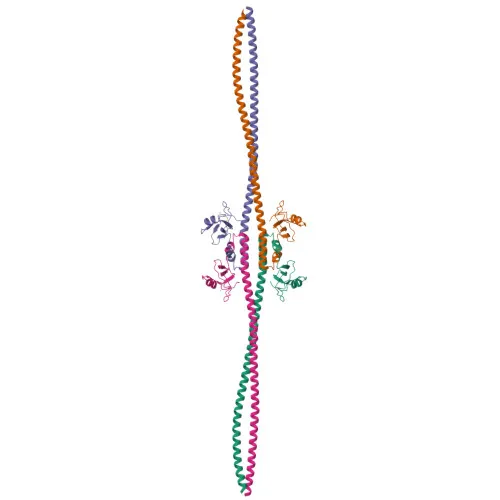
- CCNB1IP1 (Cyclin-B1-interacting protein 1), also known as HEI10, is an E3 ubiquitin-protein ligase belonging to the RING-type ubiquitin transferase family. It contains a zinc-finger domain and participates in protein ubiquitination.
- In meiosis, CCNB1IP1 acts as a limiting factor for crossing-over. It restricts colocalization of RNF212 with MutS-gamma sites during zygonema, promoting differentiation of crossover and non-crossover sites, and later stabilizes at designated crossover sites directed by MutL-gamma (by similarity).
- Beyond its meiotic role, CCNB1IP1 modulates cyclin-B levels and regulates cell cycle progression through the G2 phase; its overexpression delays entry into mitosis.
- The protein localizes to the nucleus and is associated with chromosomes, consistent with its function in meiotic recombination and cell cycle control.
- CCNB1IP1 is highly expressed in heart, with intermediate levels in liver and kidney, and low expression in placenta, brain, and lung.
- Post-translational modifications include phosphorylation, and the protein features a coiled-coil domain and a RING-type zinc finger essential for its E3 ligase activity.
- Key biological processes associated with CCNB1IP1 include meiosis, cell cycle, ubiquitin conjugation, and DNA recombination.
Experimental Guidance and Technical Tips
- The immunogen is a synthetic peptide corresponding to the N-terminal region (amino acids 1-50) of human CCNB1IP1. When designing experiments, consider that this region may influence antibody specificity; cross-reactivity with mouse is reported, but we recommend validating in your specific sample and application.
- For Western blotting, a band near 32 kDa is expected. Optimize antibody dilution and detection conditions using positive control lysates from heart or other high-expression tissues.
- In ELISA, pair this polyclonal antibody with an appropriate secondary detection reagent. Note that polyclonal antibodies may exhibit lot-to-lot variability; we suggest including internal controls across experiments.
- As this product is intended for research use only, any diagnostic or clinical applications require further independent validation and qualification.
CamelBio: Your One-Stop Sourcing Bridge
CamelBio serves as a comprehensive one-stop sourcing platform providing diagnostic manufacturers, laboratories, and research institutes with ready access to IVD raw materials. This anti-CCNB1IP1 antibody supports investigations into meiosis, cell cycle regulation, and ubiquitin ligase biology. Beyond individual antibodies, CamelBio offers validated antibody pairs, optimized monoclonal and polyclonal antibodies, bulk ancillary reagents, and custom sourcing for rare targets—ensuring a streamlined procurement experience from concept to clinic.
REQUEST A QUOTE
Our professional team will reply to you within one business day. Please feel free to contact us!