Polyclonal Antibodies
Anti-CCKAR (CCK1-R) Rabbit Polyclonal Antibody for WB and ELISA - P32238
Item Number : CM0022558
Price varies based on specs and customizations
- Application
- WB, ELISA
- Cross Reactivity
- Mouse
- Protein Weight
- 48kDa

Shipping:
Contact us to get shipping details Enjoy On-time Dispatch Guarantee.
Why Choose Us
Easy ordering process, quality products, and dedicated support for your business success.
Core Product Specifications and Parameters
| Parameter | Value |
|---|---|
| Product Name | CCKAR Rabbit pAb |
| Remarks/Alias | CCK-A; CCK1R; CCKRA; CCK1-R; CCKAR |
| Species | Human |
| Gene ID | 886 (Human) |
| Immunogen | Synthetic peptide corresponding to amino acids 100-200 of human CCKAR (NP_000721.1) |
| Source | Rabbit |
| Category | Polyclonal Antibodies |
| Application | WB, ELISA |
| Cross Reactivity | Mouse |
| SWISS | P32238 |
| Protein Weight | 48kDa |
| Shipping | Ice bag |
Biological Background: CCKAR (Cholecystokinin receptor type A) Function and Localization
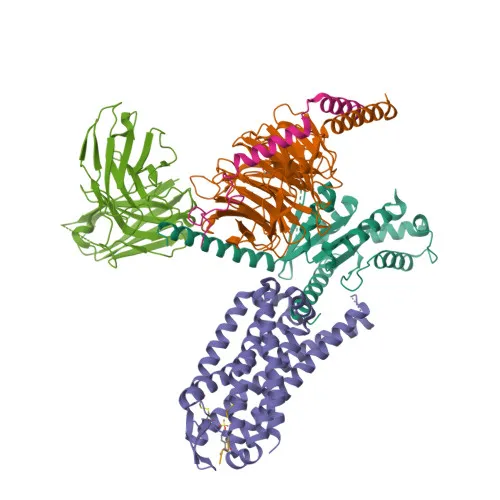
- CCKAR, also known as the cholecystokinin-1 receptor (CCK1-R), is a G protein-coupled receptor encoded by the CCKAR gene in humans.
- It binds cholecystokinin with high affinity, exhibiting approximately 1000-fold greater affinity for CCK over gastrin.
- Upon activation, it mediates pancreatic growth and digestive enzyme secretion, as well as smooth muscle contraction of the gallbladder and stomach.
- In the central and peripheral nervous systems, CCKAR modulates feeding behavior and dopamine-induced behavioral responses.
- Signal transduction occurs via association with G proteins that activate a phosphatidylinositol-calcium second messenger system.
- Localized primarily at the cell membrane, the receptor contains structural features such as transmembrane helices, disulfide bonds, and palmitoylation sites.
Experimental Guidance and Technical Tips
- The immunogen is a synthetic peptide spanning amino acids 100–200 of human CCKAR, which may favor recognition of the denatured or linear epitope.
- For Western blotting, consider using whole cell lysates from human tissues or cell lines known to express CCKAR (e.g., pancreas, gallbladder). A band near 48 kDa is expected, though glycosylation may cause slight shifts.
- For ELISA, the peptide immunogen can be used as a coating antigen, or the antibody may be applied in sandwich formats following pairing validation.
- Cross-reactivity with mouse CCKAR is reported, so the antibody can be tested in mouse models with appropriate controls.
- Optimal working dilutions for WB and ELISA must be determined empirically for each experimental system.
CamelBio: Your One-Stop Sourcing Bridge
CamelBio is a leading one-stop IVD raw-material partner, providing diagnostic manufacturers and research labs with validated antibodies, bulk ancillary reagents, and full technical consulting from concept to clinic. This anti-CCKAR polyclonal antibody complements our portfolio of GPCR and gastrointestinal hormone receptor tools, and our sourcing team can help secure rare-target raw materials, optimized monoclonal/polyclonal pairs, and custom assay development support.
Product Datasheet
Anti-CCKAR (CCK1-R) Rabbit Polyclonal Antibody for WB and ELISA - P32238
REQUEST A QUOTE
Our professional team will reply to you within one business day. Please feel free to contact us!