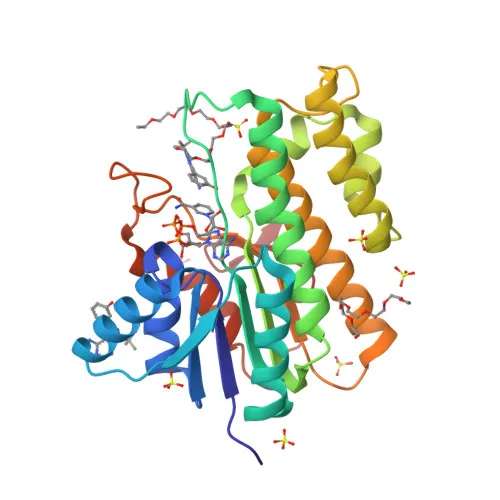
Polyclonal Antibodies
Anti-CBR1 Rabbit Polyclonal Antibody for WB - P16152
Item Number : CM0022013
Price varies based on specs and customizations
- Application
- WB, ELISA
- Cross Reactivity
- Human, Mouse
- Protein Weight
- 30kDa

Shipping:
Contact us to get shipping details Enjoy On-time Dispatch Guarantee.
Why Choose Us
Easy ordering process, quality products, and dedicated support for your business success.
Core Product Specifications and Parameters
| Parameter | Value |
|---|---|
| Product Name | [KO Validated] CBR1 Rabbit pAb |
| Remarks/Alias | CBR; hCBR1; PG-9-KR; SDR21C1; R1 |
| Species | Human |
| GeneID (human) | 873 |
| GeneID | 873 |
| Immunogen | Recombinant fusion protein containing a sequence corresponding to amino acids 1-277 of human CBR1 (NP_001748.1). |
| Source | Rabbit |
| Category | Polyclonal Antibodies |
| Application | WB, ELISA |
| Cross Reactivity | Human, Mouse |
| SWISS | P16152 |
| Protein Weight | 30kDa |
| Shipping | Ice bag |
Biological Background: CBR1 Function and Localization
- CBR1 (Carbonyl Reductase 1) is an NADPH-dependent oxidoreductase belonging to the short-chain dehydrogenase/reductase family 21C (SDR21C1). It is also known as 15-hydroxyprostaglandin dehydrogenase, 20-beta-hydroxysteroid dehydrogenase, and prostaglandin 9-ketoreductase.
- Exhibits broad substrate specificity, reducing various carbonyl compounds including quinones, menadione, prostaglandins, and numerous xenobiotics (PubMed:15799708, PubMed:17344335, PubMed:17912391). Related references: PMID:15799708, PMID:17344335, PMID:17912391
- Catalyzes the NADPH-dependent reduction of the antitumor anthracyclines doxorubicin and daunorubicin to the cardiotoxic metabolites doxorubicinol and daunorubicinol (PubMed:15799708, PubMed:17344335, PubMed:17912391). Related references: PMID:15799708, PMID:17344335, PMID:17912391
- Functions as a prostaglandin E2 9-reductase, converting prostaglandin E to prostaglandin F2-alpha (By similarity).
- Binds glutathione and preferentially reduces glutathione-conjugated substrates, including S-nitrosoglutathione (PubMed:17344335, PubMed:18826943). Related references: PMID:17344335, PMID:18826943
- Involved in glucocorticoid metabolism by reducing cortisol and corticosterone to 20beta-dihydro metabolites, which act as weak agonists of the glucocorticoid receptor (NR3C1) and mineralocorticoid receptor (NR3C2) in adipose tissue (PubMed:28878267). Related references: PMID:28878267
- Predominantly localized in the cytoplasm, and expressed in the kidney at the protein level. Post-translational modifications include acetylation and phosphorylation; multiple isoforms arise from alternative splicing.
Experimental Guidance and Technical Tips
- The immunogen is a recombinant fusion protein spanning the full-length sequence (amino acids 1–277) of human CBR1. The resulting antibody is expected to recognize both native and denatured forms of the target protein.
- In Western blotting, a single band near 30 kDa should be observed under reducing conditions. For optimal results, consider using positive controls such as human kidney tissue lysates or cell lines known to express CBR1.
- The antibody is knockout validated, confirming specific recognition; however, always validate detection in your own experimental models.
- For ELISA, indirect or sandwich formats may be tested. Titrate the antibody concentration and use appropriate blocking and washing steps to minimize background.
- Cross-reactivity with mouse CBR1 is reported, supporting the use of this antibody in mouse models. Confirm cross-reactivity and suitability for your specific application when working with other species.
CamelBio: Your One-Stop Sourcing Bridge
CamelBio provides diagnostic manufacturers, laboratories, and research institutes with one-stop access to IVD raw materials, technical services, and consulting—covering every stage from concept to clinic. This anti-CBR1 polyclonal antibody addresses studies in carbonyl metabolism, drug detoxification, and inflammation, making it a valuable tool for pharmacology and toxicology research. Beyond this product, CamelBio supplies validated antibody pairs, bulk ancillary reagents, and customized sourcing for rare-target raw materials, streamlining your assay development and procurement workflows.
REQUEST A QUOTE
Our professional team will reply to you within one business day. Please feel free to contact us!