Polyclonal Antibodies
Anti-CBR1 Rabbit Polyclonal Antibody for WB, ELISA - P16152
Item Number : CM0027810
Price varies based on specs and customizations
- Application
- WB, ELISA
- Cross Reactivity
- Human, Mouse
- Protein Weight
- 30kDa

Shipping:
Contact us to get shipping details Enjoy On-time Dispatch Guarantee.
Why Choose Us
Easy ordering process, quality products, and dedicated support for your business success.
Core Product Specifications and Parameters
| Parameter | Specification |
|---|---|
| Product Name | CBR1 Rabbit pAb |
| Remarks/Alias | CBR; hCBR1; PG-9-KR; SDR21C1; CBR1 |
| Species | Human |
| GeneID (human) | 873 |
| GeneID | 873 |
| Immunogen | Recombinant protein|Recombinant fusion protein containing a sequence corresponding to amino acids 1-277 of human CBR1 (NP_001748.1). |
| Source | Rabbit |
| Category | Polyclonal Antibodies |
| Application | WB, ELISA |
| Cross Reactivity | Human, Mouse |
| SWISS | P16152 |
| Protein Weight | 30kDa |
| Shipping | Ice bag |
Biological Background: Carbonyl reductase [NADPH] 1 Function and Localization
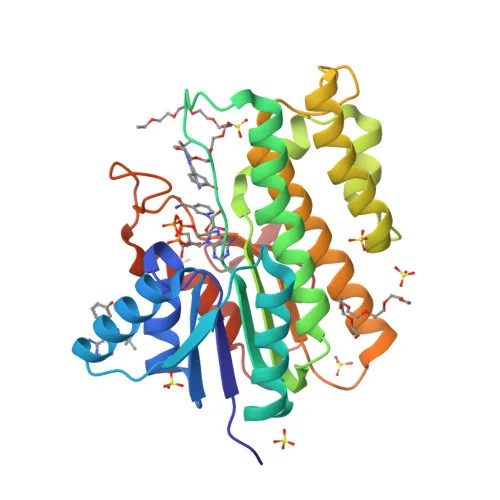
- Carbonyl reductase [NADPH] 1 (CBR1), also referred to as 15-hydroxyprostaglandin dehydrogenase, 20-beta-hydroxysteroid dehydrogenase, PG-9-KR, or SDR21C1, is a member of the short-chain dehydrogenase/reductase family. The gene (CBR1, CRN, SDR21C1) generates multiple isoforms through alternative splicing.
- CBR1 is an NADPH-dependent cytosolic oxidoreductase with broad substrate specificity, reducing various endogenous and exogenous carbonyl compounds including quinones, menadione, and prostaglandins. It can convert prostaglandin E to prostaglandin F2-alpha.
- The enzyme plays a key role in drug metabolism by reducing the antitumor anthracyclines doxorubicin and daunorubicin to their cardiotoxic alcohol metabolites doxorubicinol and daunorubicinol, which is critical in chemotherapy-induced cardiotoxicity. Related references: PMID:15799708, PMID:17344335, PMID:17912391
- CBR1 can bind glutathione and reduce S-nitrosoglutathione, thereby participating in cellular nitric oxide signaling and redox homeostasis. Related references: PMID:17344335, PMID:18826943
- In adipose tissue, CBR1 metabolizes glucocorticoids by catalyzing the NADPH-dependent reduction of cortisol/corticosterone to 20beta-dihydrocortisol (20b-DHF) or 20beta-corticosterone (20b-DHB), which are weak agonists of the glucocorticoid receptor (NR3C1) and mineralocorticoid receptor (NR3C2). Related references: PMID:28878267
- Subcellularly, CBR1 is localized to the cytoplasm, consistent with its role in phase I drug metabolism and lipid metabolism.
- At the protein level, CBR1 is expressed in the kidney, as detected by mass spectrometry-based proteomics.
- The CBR1 protein undergoes post-translational modifications including acetylation and phosphorylation, which may regulate its activity and stability.
Experimental Guidance and Technical Tips
- The polyclonal antibody was generated using a recombinant fusion protein encompassing the full-length human CBR1 (residues 1–277), which may enable recognition of both native and denatured forms. Consider this when selecting application-specific protocols.
- In Western blot, expect a band migrating near 30 kDa in human or mouse tissue lysates. Validate using known positive controls such as kidney lysate, where CBR1 protein expression is confirmed.
- For ELISA, pairing with a matched capture/detection antibody or using the same polyclonal in a direct assay format may yield optimal signal; include appropriate blank and negative control wells.
- While cross-reactivity with mouse has been noted, sequence homology across other relevant species should be assessed; always validate in the intended sample matrix to confirm specificity and lack of off-target binding.
CamelBio: Your One-Stop Sourcing Bridge
CamelBio is a specialized one-stop partner for IVD raw materials, offering validated antibody pairs, optimized polyclonal and monoclonal antibodies, and bulk ancillary reagents to support carbonyl reductase and drug metabolism research. With a focus on bridging discovery and clinical application, we provide flexible sourcing solutions for CBR1-related projects, including rare target material procurement and custom development. Contact us to explore how our comprehensive supply chain can accelerate your diagnostic and translational studies.
REQUEST A QUOTE
Our professional team will reply to you within one business day. Please feel free to contact us!