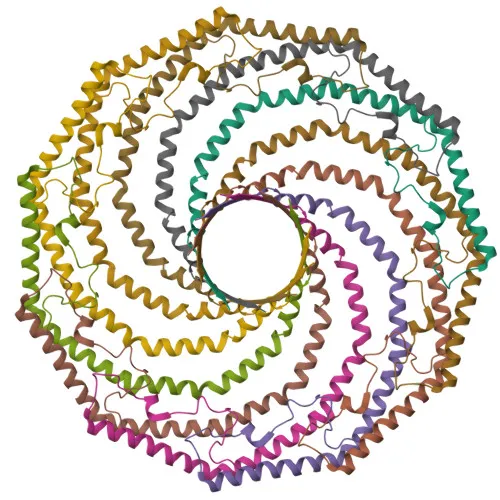
Monoclonal Antibodies
Anti-Caveolin-1 Monoclonal Antibody for WB, IF/ICC, IHC-P, IP, ELISA - Q03135
Item Number : CM0007032
Price varies based on specs and customizations
- Application
- WB, IF/ICC, IHC-P, IP, ELISA
- Cross Reactivity
- Human, Mouse, Rat
- Protein Weight
- 20kDa

Shipping:
Contact us to get shipping details Enjoy On-time Dispatch Guarantee.
Why Choose Us
Easy ordering process, quality products, and dedicated support for your business success.
Core Product Specifications and Parameters
| Parameter | Value |
|---|---|
| Product Name | Caveolin-1 Rabbit mAb |
| Remarks/Alias | CGL3; PPH3; BSCL3; LCCNS; VIP21; MSTP085; Caveolin-1 |
| Species | Human |
| GeneID (Human) | 857 |
| GeneID | 857 |
| Immunogen | Recombinant protein|Recombinant fusion protein containing a sequence corresponding to amino acids 1-80 of human Caveolin-1 (NP_001744.2). |
| Source | Rabbit |
| Category | Monoclonal Antibodies |
| Application | WB, IF/ICC, IHC-P, IP, ELISA |
| Cross Reactivity | Human, Mouse, Rat |
| SWISS | Q03135 |
| Protein Weight | 20kDa |
| Shipping | Ice bag |
Biological Background: Caveolin-1 Function and Localization
- Caveolin-1 (CAV1), also known as CGL3, PPH3, BSCL3, LCCNS, VIP21, or MSTP085, is the principal structural component of caveolae, small plasma membrane invaginations involved in endocytosis, signal transduction, and cholesterol transport.
- It acts as a scaffolding protein within caveolar membranes, organizing signaling molecules and forming heterooligomeric complexes with CAV2 to drive caveolae biogenesis. Related references: PMID:11751885 PMID:19262564
- Caveolin-1 belongs to the caveolin family (CAV1, CAV2, CAV3), with CAV1 broadly expressed and highly abundant in adipocytes, endothelial cells, and fibroblasts.
- Subcellularly, Caveolin-1 localizes to the plasma membrane, caveolae, membrane rafts, the Golgi apparatus (including trans-Golgi network), and cytoplasm, reflecting its dynamic trafficking and scaffolding functions.
- It undergoes post-translational modifications including palmitoylation, phosphorylation, acetylation, and ubiquitin conjugation, which regulate its membrane association and signaling activities.
- Caveolin-1 participates in T-cell receptor signaling by binding DPP4, which induces T-cell proliferation and NF-κB activation. Related references: PMID:17287217
- It negatively regulates TGF-β/SMAD signaling by internalizing TGFBR1 from membrane rafts for degradation. Related references: PMID:25893292
- Tissue expression includes skeletal muscle, liver, stomach, lung, kidney, heart, and brain, as confirmed at the protein level.
Experimental Guidance and Technical Tips
- The immunogen (amino acids 1-80) targets the N-terminus of Caveolin-1, a region conserved across human, mouse, and rat, supporting the observed cross-reactivity.
- For Western blotting, the expected band is around 20kDa; consider using low-fat milk or BSA for blocking and TBST for washing.
- In immunofluorescence/ICC and IHC-P, antigen retrieval (e.g., citrate buffer) may improve epitope accessibility; optimize fixation and permeabilization conditions.
- For immunoprecipitation, test different lysis buffer stringencies to confirm efficient capture of Caveolin-1 complexes.
- ELISA applications can be used to quantify Caveolin-1 in cell lysates or serum, but appropriate standard curves and blocking should be established.
CamelBio: Your One-Stop Sourcing Bridge
CamelBio is a trusted one-stop sourcing partner for IVD raw materials, offering this Anti-Caveolin-1 Rabbit mAb alongside validated antibody pairs, bulk ancillary reagents, and custom monoclonal antibody development. From caveolae research to diagnostic assay development, we support your workflow with reliable and scalable supply solutions. Contact us for expert consultation on integrating this reagent into your next-generation IVD platform.
Product Datasheet
Anti-Caveolin-1 Monoclonal Antibody for WB, IF/ICC, IHC-P, IP, ELISA - Q03135
REQUEST A QUOTE
Our professional team will reply to you within one business day. Please feel free to contact us!