Monoclonal Antibodies
Anti-Cation-independent M6PR (IGF2R) Rabbit Monoclonal Antibody for WB, IHC-P, ELISA - P11717
Item Number : CM0002801
Price varies based on specs and customizations
- Application
- WB, IHC-P, ELISA
- Cross Reactivity
- Human, Rat
- Protein Weight
- 274kDa

Shipping:
Contact us to get shipping details Enjoy On-time Dispatch Guarantee.
Why Choose Us
Easy ordering process, quality products, and dedicated support for your business success.
Core Product Specifications and Parameters
| Parameter | Value |
|---|---|
| Product Name | Cation-independent M6PR (IGF2R) Rabbit mAb |
| Remarks/Alias | MPR1; MPRI; CD222; CIMPR; M6P-R; MPR300; CI-M6PR; MPR 300; M6P/IGF2R; Cation-independent M6PR (IGF2R) |
| Species | Human |
| GeneID (Human) | 3482 |
| GeneID | 3482 |
| Immunogen | Recombinant fusion protein containing a sequence corresponding to amino acids 2140-2300 of human Cation-independent M6PR (IGF2R) (NP_000867.3). |
| Source | Rabbit |
| Category | Monoclonal Antibodies |
| Application | WB, IHC-P, ELISA |
| Cross Reactivity | Human, Rat |
| SWISS | P11717 |
| Protein Weight | 274kDa |
| Shipping | Ice bag |
Biological Background: Cation-independent M6PR (IGF2R) Function and Localization
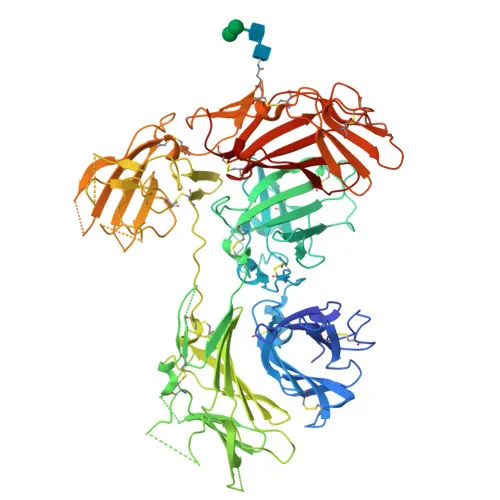
- Cation-independent M6PR (IGF2R), also designated 300 kDa mannose 6-phosphate receptor (MPR300) or insulin-like growth factor 2 receptor, is a large transmembrane glycoprotein encoded by the IGF2R gene.
- It mediates the transport of phosphorylated lysosomal enzymes from the Golgi complex and the cell surface to lysosomes. Lysosomal enzymes bearing phosphomannosyl residues bind specifically to the receptor, and the receptor-ligand complex is internalized, dissociating in the acidic pre-lysosomal compartment. The receptor is then recycled back to the Golgi via the retromer complex. Related references: PMID:18817523, PMID:2963003
- In addition to its M6P-dependent trafficking role, IGF2R binds insulin-like growth factor 2 (IGF2) with high affinity, functioning as a clearance receptor that regulates extracellular IGF2 levels. Related references: PMID:18046459
- IGF2R acts as a positive regulator of T-cell coactivation by binding dipeptidyl peptidase 4 (DPP4). Related references: PMID:10900005
- The receptor cycles dynamically between the Golgi apparatus membrane and endosomal compartments, a localization essential for its sorting and transport functions.
- IGF2R is extensively post-translationally modified, featuring glycosylation, disulfide bonds, acetylation, methylation, palmitoylation, and phosphorylation. Its structure includes a signal peptide, 15 extracytoplasmic repeats, a single transmembrane helix, and a short cytoplasmic tail.
- The mature protein has a predicted molecular weight of approximately 274 kDa, consistent with its designation as MPR300.
Experimental Guidance and Technical Tips
- The immunogen corresponds to a C-terminal region (aa 2140-2300), which may favor detection of full-length IGF2R. Consider using lysosome-rich tissue or cell line lysates (e.g., liver, placenta, or fibroblasts) as positive controls for Western blotting.
- Due to the large protein size (274 kDa), use a low-percentage (6–8%) polyacrylamide gel and extended wet transfer conditions (e.g., overnight at 4°C) onto a PVDF membrane. Include pre-stained high molecular weight markers to monitor transfer efficiency.
- For IHC-P, perform appropriate antigen retrieval and optimize primary antibody dilution. Include positive and negative tissue controls to validate staining specificity in both human and rat samples.
- ELISA applications may benefit from recombinant protein standards to establish quantitative assays. If experimental designs involve rodent models, validate cross-reactivity in rat systems.
- Always validate the antibody in your specific experimental context, as performance may vary with sample preparation and assay conditions.
CamelBio: Your One-Stop Sourcing Bridge
CamelBio empowers diagnostic manufacturers, research laboratories, and institutions with one-stop access to high-quality IVD raw materials, technical services, and consulting from concept to clinic. This anti-Cation-independent M6PR (IGF2R) antibody exemplifies our commitment to supplying validated monoclonal antibodies for challenging targets in lysosomal biology and growth factor signaling. Beyond single reagents, we offer bulk ancillary reagents, rare-target sourcing, and customized solutions to streamline your assay development pipeline.
Product Datasheet
Anti-Cation-independent M6PR (IGF2R) Rabbit Monoclonal Antibody for WB, IHC-P, ELISA - P11717
REQUEST A QUOTE
Our professional team will reply to you within one business day. Please feel free to contact us!