Polyclonal Antibodies
Anti-Cation-independent M6PR (IGF2R) Polyclonal Antibody for WB, IF/ICC, ELISA - P11717
Item Number : CM0018199
Price varies based on specs and customizations
- Application
- WB, IF/ICC, ELISA
- Cross Reactivity
- Human, Mouse, Rat
- Protein Weight
- 274kDa

Shipping:
Contact us to get shipping details Enjoy On-time Dispatch Guarantee.
Why Choose Us
Easy ordering process, quality products, and dedicated support for your business success.
Core Product Specifications and Parameters
| Parameter | Value |
|---|---|
| Product Name | Cation-independent M6PR (IGF2R) Rabbit pAb |
| Remarks/Alias | MPR1; MPRI; CD222; CIMPR; M6P-R; MPR300; CI-M6PR; MPR 300; M6P/IGF2R; Cation-independent M6PR (IGF2R) |
| Species | Human |
| Gene ID (Human) | 3482 |
| Immunogen | Recombinant fusion protein containing a sequence corresponding to amino acids 2327-2491 of human Cation-independent M6PR (IGF2R) (NP_000867.2) |
| Source | Rabbit |
| Category | Polyclonal Antibodies |
| Application | WB, IF/ICC, ELISA |
| Cross Reactivity | Human, Mouse, Rat |
| SWISS | P11717 |
| Protein Weight | 274kDa |
| Shipping | Ice bag |
Biological Background: Cation-independent M6PR (IGF2R) Function and Localization
- The cation-independent mannose-6-phosphate receptor (CI-M6PR), also known as insulin-like growth factor 2 receptor (IGF2R), CD222, or MPR300, is encoded by the IGF2R gene in humans. It is a large multifunctional transmembrane receptor that plays critical roles in lysosomal enzyme trafficking and growth factor clearance.
- Mediates the transport of newly synthesized phosphorylated lysosomal enzymes from the Golgi complex to lysosomes. It binds phosphomannosyl residues on these enzymes, and the receptor-ligand complex is delivered to an acidic prelysosomal compartment where dissociation occurs. The receptor is then recycled back to the Golgi via the retromer complex. Related references: PMID:18817523 PMID:2963003
- Binds insulin-like growth factor 2 (IGF2) with high affinity, leading to internalization and lysosomal degradation of IGF2. This function negatively regulates IGF signaling and limits fetal growth. Loss of imprinting or mutations in IGF2R have been associated with cancer and developmental disorders. Related references: PMID:18046459
- Acts as a positive regulator of T-cell coactivation by binding dipeptidyl peptidase 4 (DPP4/CD26) on the cell surface, providing a link between metabolic and immune functions. Related references: PMID:10900005
- Localizes primarily to the Golgi apparatus membrane and endosome membrane, where it cycles between the trans-Golgi network, endosomes, and the plasma membrane to capture cargo intracellularly and at the cell surface.
- Undergoes several post-translational modifications including acetylation, phosphorylation, palmitoylation, and methylation. It contains disulfide bonds, is heavily glycosylated, and is anchored to membranes via a single transmembrane helix. These features are critical for its stability, trafficking, and ligand-binding functions.
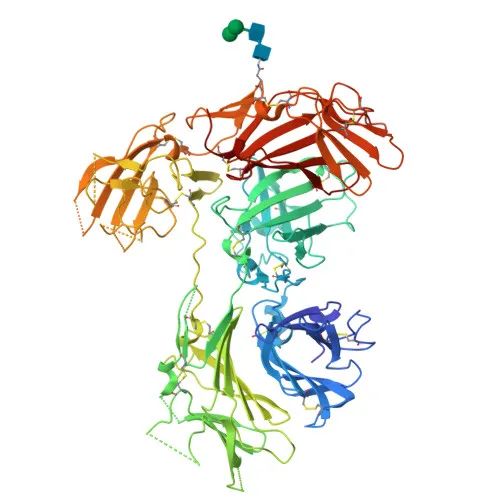
- The mature protein has an apparent molecular weight of approximately 274 kDa, consistent with the predicted mass from its amino acid sequence. Its large extracellular domain is composed of 15 repeating units, which are involved in mannose-6-phosphate and IGF2 binding.
Experimental Guidance and Technical Tips
- The immunogen used was a recombinant fusion protein spanning amino acids 2327–2491, which lies within the C-terminal region of the receptor. This design may favor recognition of full-length CI-M6PR (IGF2R) in its native conformation.
- Given the high molecular weight (~274 kDa), consider using low-percentage SDS-PAGE gels (e.g., 6% resolving gel) and extended transfer times or wet transfer methods to ensure efficient blotting of the target protein.
- This antibody is a rabbit polyclonal; it may detect additional bands due to recognition of multiple epitopes. Validate specificity by comparing signal intensities between control and IGF2R knockdown/knockout lysates.
- For immunofluorescence, confirm that the staining pattern overlaps with established Golgi/endosome markers. Permeabilization conditions should be optimized as the epitope is intracellular.
- In ELISA applications, use the recombinant immunogen as a positive control to assess binding activity. Do not extrapolate quantitative detection limits from product specifications alone; empirical titration is recommended.
CamelBio: Your One-Stop Sourcing Bridge
CamelBio provides diagnostic manufacturers, laboratories, and research institutes with one-stop access to IVD raw materials, technical services, and consulting—covering every stage from concept to clinic. This rabbit polyclonal antibody against Cation-independent M6PR (IGF2R) is part of a growing portfolio of high-quality immunological reagents for lysosomal storage disease research, growth factor signaling, and immune coactivation studies. Beyond individual antibodies, CamelBio can supply validated antibody pairs, optimized monoclonal/polyclonal antibodies, bulk ancillary reagents, and assist in sourcing rare or custom targets to accelerate your assay development and manufacturing workflows.
Product Datasheet
Anti-Cation-independent M6PR (IGF2R) Polyclonal Antibody for WB, IF/ICC, ELISA - P11717
REQUEST A QUOTE
Our professional team will reply to you within one business day. Please feel free to contact us!