Monoclonal Antibodies
Anti-Cathepsin L Monoclonal Antibody for WB, IHC-P, ELISA - P07711
Item Number : CM0006462
Price varies based on specs and customizations
- Application
- WB, IHC-P, ELISA
- Cross Reactivity
- Human
- Protein Weight
- 38kDa

Shipping:
Contact us to get shipping details Enjoy On-time Dispatch Guarantee.
Why Choose Us
Easy ordering process, quality products, and dedicated support for your business success.
Core Product Specifications and Parameters
| Parameter | Value |
|---|---|
| Product Name | Cathepsin L Rabbit mAb |
| Remarks/Alias | MEP; CATL; CTSL1; Cathepsin L |
| Species | Human |
| GeneID | 1514 |
| Immunogen | Recombinant protein|Recombinant fusion protein containing a sequence corresponding to amino acids 100-200 of human Cathepsin L (NP_001903.1). |
| Source | Rabbit |
| Category | Monoclonal Antibodies |
| Application | WB, IHC-P, ELISA |
| Cross Reactivity | Human |
| SWISS | P07711 |
| Protein Weight | 38kDa |
| Shipping | Ice bag |
Biological Background: Cathepsin L Function and Localization
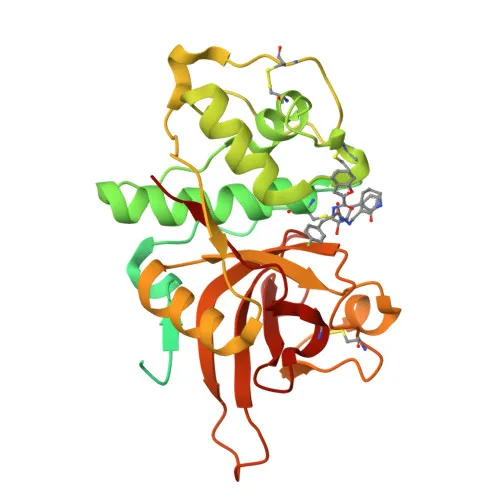
- Procathepsin L (Cathepsin L1/MEP) is a lysosomal thiol protease that plays a central role in protein degradation, antigen processing, and bone remodeling (Probable).
- Alternative translation initiation produces nuclear isoforms that cleave the CUX1 transcription factor, regulating cell cycle progression. Related references: PMID:15099520
- In the thyroid, it solubilizes thyroglobulin for T4 hormone release; in neuroendocrine cells, it processes proenkephalin to enkephalin.
- Secreted Cathepsin L generates endostatin from collagen XVIII, and as an elastase, it degrades extracellular matrix in inflammation. Related references: PMID:10716919
- Facilitates entry of SARS-CoV, SARS-CoV-2, and other viruses by proteolytically activating spike glycoproteins in lysosomes. Related references: PMID:32142651, PMID:16339146, PMID:18562523
- Subcellularly, it is found in lysosomes, secretory vesicles, apical cell membrane, extracellular space, and nucleus; active as a mature enzyme after proteolytic removal of the propeptide.
- Belongs to the papain family (C1) of cysteine proteases; it is a glycoprotein with disulfide bonds, synthesized as a zymogen and activated by low pH or other proteases.
Experimental Guidance and Technical Tips
- The immunogen (aa 100–200) is located in the N-terminal region of human procathepsin L; the epitope may be exposed in both the proenzyme and mature enzyme, but users should confirm specificity for the desired form.
- For Western blot, the primary band is expected at ~38 kDa (procathepsin L); under reducing conditions, the mature heavy chain (~25 kDa) may also be detected. Optimize loading and lysis conditions to minimize autolysis.
- In IHC-P, use heat-induced antigen retrieval (e.g., citrate buffer pH 6.0) and validate with positive tissues known to express Cathepsin L (e.g., liver, placenta). Include isotype control.
- For ELISA, consider pairing with a different monoclonal or polyclonal antibody to the target to build a sandwich assay, and validate linearity and recovery in your matrix.
CamelBio: Your One-Stop Sourcing Bridge
For researchers developing assays for Cathepsin L—a key player in cancer invasion, immune function, and SARS-CoV-2 infection—CamelBio offers reliable monoclonal antibodies, matched antibody pairs, and bulk production support. Our one-stop sourcing platform extends to specialized ancillary reagents and hard-to-find targets, enabling seamless transition from development to commercial IVD kits.
REQUEST A QUOTE
Our professional team will reply to you within one business day. Please feel free to contact us!