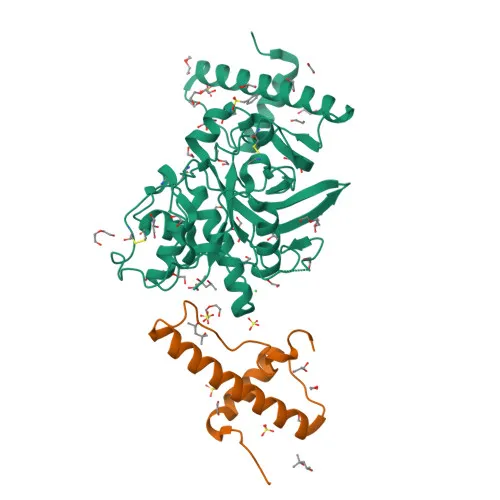
Polyclonal Antibodies
Anti-Cathepsin K (CTSK) Polyclonal Antibody for WB and ELISA - P43235
Item Number : CM0020961
Price varies based on specs and customizations
- Application
- WB, ELISA
- Cross Reactivity
- Human, Mouse
- Protein Weight
- 37kDa

Shipping:
Contact us to get shipping details Enjoy On-time Dispatch Guarantee.
Why Choose Us
Easy ordering process, quality products, and dedicated support for your business success.
Core Product Specifications and Parameters
| Parameter | Value |
|---|---|
| Product Name | CTSK Rabbit pAb |
| Remarks/Alias | CTSO; PKND; PYCD; CTS02; CTSO1; CTSO2; CTSK |
| Species | Human |
| GeneID (Human) | 1513 |
| GeneID | 1513 |
| Immunogen | Recombinant fusion protein containing a sequence corresponding to amino acids 115-329 of human CTSK (NP_000387.1) |
| Source | Rabbit |
| Category | Polyclonal Antibodies |
| Application | WB, ELISA |
| Cross Reactivity | Human, Mouse |
| SWISS | P43235 |
| Protein Weight | 37kDa |
| Shipping | Ice bag |
Biological Background: Cathepsin K Function and Localization
- Cathepsin K (CTSK), also known as cathepsin O, O2, or X, is a lysosomal cysteine protease of the papain family, synthesized as an inactive zymogen that undergoes proteolytic activation.
- It plays a critical role in osteoclastic bone resorption by degrading bone matrix proteins, including type I collagen, and is essential for normal bone remodeling.
- CTSK exhibits potent endoprotease activity against fibrinogen at acidic pH, suggesting a role in extracellular matrix degradation beyond bone.
- In the thyroid, CTSK is involved in the release of thyroid hormone thyroxine (T4) through limited proteolysis of thyroglobulin in the thyroid follicle lumen (PubMed:11082042). Related references: PMID:11082042
- The protein is predominantly expressed in osteoclasts (PubMed:7805878) and thyroid epithelial cells (PubMed:11082042). Related references: PMID:7805878, PMID:11082042
- Subcellularly, CTSK localizes to lysosomes, is secreted into the extracellular space, and can associate with the apical cell membrane in polarized cells.
- Post-translational modifications include glycosylation and disulfide bond formation, which are important for stability and activity; the mature enzyme is a glycoprotein.
- Mutations in CTSK are associated with pycnodysostosis, an autosomal recessive skeletal dysplasia characterized by dense bones (osteosclerosis).
Experimental Guidance and Technical Tips
- Since the immunogen was generated against a recombinant fragment (aa 115-329) encompassing the mature catalytic domain, the antibody is expected to recognize both the pro-form and the active mature CTSK in denaturing Western blot (WB) conditions; however, detection of endogenous protein may require optimization depending on tissue expression levels.
- For Western blot analysis, consider using reducing conditions and include protease inhibitors during sample preparation to prevent CTSK degradation. The predicted molecular weight of the pro-enzyme is ~37 kDa, but mature cleaved forms may appear smaller.
- The reported cross-reactivity with mouse suggests utility for translational studies using mouse models of bone metabolism. Validate cross-reactivity in your specific experimental system.
- For ELISA, consider pairing this antibody with a capture antibody or directly conjugating it for detection; note that as a polyclonal, lot-to-lot consistency should be verified.
- Acidic buffer conditions may enhance antibody-antigen interaction for applications such as immunohistochemistry or enzyme activity assays, given CTSK's acidic pH optimum.
CamelBio: Your One-Stop Sourcing Bridge
CamelBio offers diagnostic manufacturers, laboratories, and research institutes a comprehensive sourcing platform for IVD raw materials, from concept validation to clinical application. For bone metabolism and protease research, we provide validated antibody pairs, recombinant proteins, and bulk ancillary reagents to accelerate your CTSK assay development. Leverage our integrated supply chain and technical expertise to secure rare target raw materials and streamline your diagnostic workflow.
Product Datasheet
Anti-Cathepsin K (CTSK) Polyclonal Antibody for WB and ELISA - P43235
REQUEST A QUOTE
Our professional team will reply to you within one business day. Please feel free to contact us!