Polyclonal Antibodies
Anti-Cathepsin E (CTSE) Rabbit Polyclonal Antibody for WB, IHC-P, ELISA - P14091
Item Number : CM0025433
Price varies based on specs and customizations
- Application
- WB, IHC-P, ELISA
- Cross Reactivity
- Human, Mouse, Rat
- Protein Weight
- 43kDa

Shipping:
Contact us to get shipping details Enjoy On-time Dispatch Guarantee.
Why Choose Us
Easy ordering process, quality products, and dedicated support for your business success.
Core Product Specifications and Parameters
| Parameter | Value |
|---|---|
| Product Name | Cathepsin E (CTSE) Rabbit pAb |
| Remarks/Alias | CATE; Cathepsin E (CTSE) |
| Species | Human |
| Gene ID (Human) | 1510 |
| Gene ID | 1510 |
| Immunogen | Recombinant fusion protein containing a sequence corresponding to amino acids 132-244 of human Cathepsin E (CTSE) (P14091) |
| Source | Rabbit |
| Category | Polyclonal Antibodies |
| Application | WB, IHC-P, ELISA |
| Cross Reactivity | Human, Mouse, Rat |
| SWISS | P14091 |
| Protein Weight | 43kDa |
| Shipping | Ice bag |
Biological Background: Cathepsin E Function and Localization
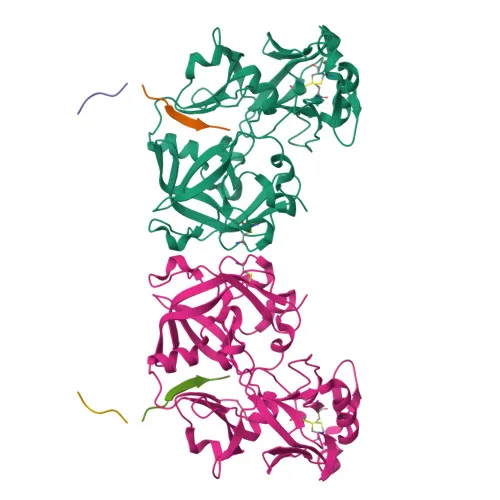
- Cathepsin E, also known as CATE, is an aspartyl protease that belongs to the A1 family of peptidases. It is produced as a zymogen and activated by autocatalytic cleavage under acidic conditions.
- The primary function of Cathepsin E is in immune responses, where it likely processes antigenic peptides for MHC class II-mediated antigen presentation, playing a key role in adaptive immunity.
- In the thymus, Cathepsin E may contribute to activation-induced lymphocyte depletion, influencing T-cell development and central tolerance.
- Beyond the immune system, Cathepsin E is implicated in neuronal degeneration and glial cell activation in the brain, suggesting roles in neuroinflammatory and neurodegenerative processes.
- Subcellularly, Cathepsin E localizes to the endosome, consistent with its function in antigen processing within the endolysosomal pathway.
- The protein is abundantly expressed in the stomach, Clara cells of the lung, and activated B-lymphocytes, with lower levels in lymph nodes, skin, and spleen. It is not detected in resting B-lymphocytes, indicating activation-dependent expression.
- Post-translational modifications include N-glycosylation and the formation of two intramolecular disulfide bonds, critical for structural stability and enzymatic activity.
- Alternative splicing generates multiple transcript variants, potentially increasing functional diversity. The mature protein has a molecular weight of approximately 43 kDa.
Experimental Guidance and Technical Tips
- The immunogen corresponds to amino acids 132–244, which lies within the mature enzyme region. This region may be conserved across species, consistent with the observed cross-reactivity with mouse and rat.
- For Western blot (WB), the predicted molecular weight is 43 kDa. Verify with appropriate cell or tissue lysates; consider using activated B-lymphocyte or stomach extracts as positive controls.
- In immunohistochemistry (IHC-P), antigen retrieval conditions may be required due to the subcellular localization in endosomes. Validate in tissue sections known to express Cathepsin E, such as stomach or lung.
- For ELISA, the antibody can be used for capture or detection; however, optimal working dilutions should be empirically determined using purified protein or recombinant standards.
- Because the antibody is a polyclonal, lot-to-lot consistency should be monitored. We recommend validating each new batch in the intended application with relevant controls.
CamelBio: Your One-Stop Sourcing Bridge
CamelBio supports diagnostic manufacturers and research laboratories with a comprehensive portfolio of IVD raw materials, including validated antibodies for immune function and antigen processing targets like Cathepsin E. Our sourcing capabilities extend to matched antibody pairs, bulk ancillary reagents, and customized development for rare targets, ensuring you can move from concept to clinic with a single reliable partner. Whether you need optimized polyclonal antibodies or specialized reagents for neuroinflammation studies, CamelBio streamlines your procurement process.
Product Datasheet
Anti-Cathepsin E (CTSE) Rabbit Polyclonal Antibody for WB, IHC-P, ELISA - P14091
REQUEST A QUOTE
Our professional team will reply to you within one business day. Please feel free to contact us!