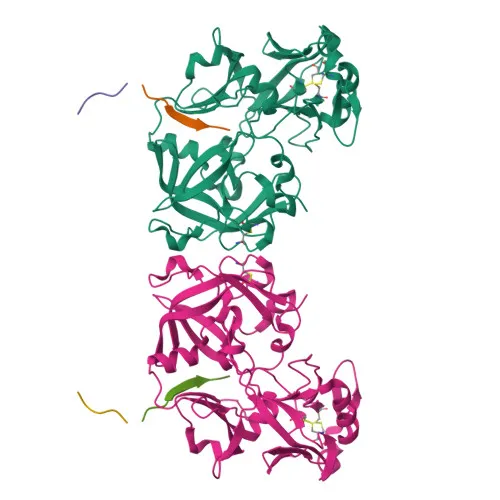
Monoclonal Antibodies
Anti-Cathepsin E (CTSE) Monoclonal Antibody for WB, ELISA - P14091
Item Number : CM0006663
Price varies based on specs and customizations
- Application
- WB, ELISA
- Cross Reactivity
- Human, Mouse, Rat
- Protein Weight
- 43 kDa

Shipping:
Contact us to get shipping details Enjoy On-time Dispatch Guarantee.
Why Choose Us
Easy ordering process, quality products, and dedicated support for your business success.
Core Product Specifications and Parameters
| Parameter | Value |
|---|---|
| Product Name | Cathepsin E (CTSE) Rabbit mAb |
| Remarks/Alias | CATE; Cathepsin E (CTSE) |
| Species | Human |
| Gene ID (Human) | 1510 |
| Gene ID | 1510 |
| Immunogen | Recombinant fusion protein containing a sequence corresponding to amino acids 132-244 of human Cathepsin E (CTSE) (NP_001901.1). |
| Source | Rabbit |
| Category | Monoclonal Antibodies |
| Application | WB, ELISA |
| Cross Reactivity | Human, Mouse, Rat |
| SWISS | P14091 |
| Protein Weight | 43 kDa |
| Shipping | Ice bag |
Biological Background: Cathepsin E Function and Localization
- Cathepsin E is an aspartyl protease belonging to the pepsin family, encoded by the CTSE gene; alternative splicing yields multiple isoforms.
- It plays a role in immune function, likely participating in antigenic peptide processing during MHC class II-mediated antigen presentation.
- In the thymus, it may contribute to activation-induced lymphocyte depletion; in the brain, it has been implicated in neuronal degeneration and glial cell activation.
- The protein localizes primarily to endosomes.
- Expression is abundant in the stomach, Clara cells of the lung, and activated B-lymphocytes, with lower levels in lymph nodes, skin, and spleen; it is absent from resting B-lymphocytes.
- Synthesized as an inactive zymogen, it undergoes autocatalytic cleavage to become active; the mature enzyme is a glycoprotein with disulfide bonds.
- The molecular weight of the mature enzyme is approximately 43 kDa (precursor ~42.8 kDa).
Experimental Guidance and Technical Tips
- The immunogen (aa 132-244 of human CTSE) likely targets the mature enzyme; consider using the antibody to detect both precursor and active forms.
- For Western blot, expect a band near 43 kDa under reducing conditions; use positive controls such as stomach or lung tissue lysates.
- When performing ELISA, validate conditions with recombinant protein or lysates from tissues expressing CTSE.
- Cross-reactivity with mouse and rat enables use in rodent models for studying immune response or neurodegeneration.
- As cathepsin E activity is optimal at acidic pH, sample preparation and buffer choice may influence detection; consider optimizing lysis buffers.
CamelBio: Your One-Stop Sourcing Bridge
CamelBio is your comprehensive one-stop sourcing partner for IVD raw materials, connecting diagnostic manufacturers and research institutes with high-quality reagents. For studies on cathepsin E in immune function and antigen presentation, we supply validated antibody pairs, optimized monoclonal/polyclonal antibodies, and bulk ancillary reagents to support your entire workflow. From routine catalog products to rare target raw material sourcing, CamelBio’s extensive supply network ensures a reliable path from concept to clinic.
REQUEST A QUOTE
Our professional team will reply to you within one business day. Please feel free to contact us!