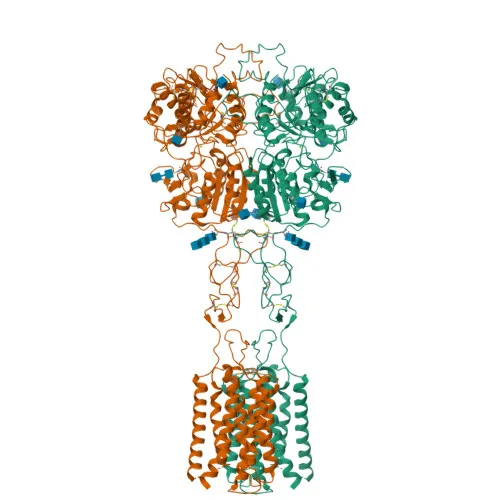
Polyclonal Antibodies
Anti-CASR Polyclonal Antibody for WB, IHC-P, ELISA - P41180
Item Number : CM0018461
Price varies based on specs and customizations
- Application
- WB, IHC-P, ELISA
- Cross Reactivity
- Human, Mouse, Rat
- Protein Weight
- 121kDa

Shipping:
Contact us to get shipping details Enjoy On-time Dispatch Guarantee.
Why Choose Us
Easy ordering process, quality products, and dedicated support for your business success.
Core Product Specifications and Parameters
| Parameter | Value |
|---|---|
| Product Name | CASR Rabbit pAb |
| Remarks/Alias | CAR; FHH; FIH; HHC; EIG8; HHC1; NSHPT; PCAR1; hCasR; GPRC2A; HYPOC1; CASR |
| Species | Human |
| GeneID (Human) | 846 |
| GeneID | 846 |
| Immunogen | Recombinant fusion protein containing a sequence corresponding to amino acids 180-536 of human CASR (NP_000379.3) |
| Source | Rabbit |
| Category | Polyclonal Antibodies |
| Application | WB, IHC-P, ELISA |
| Cross Reactivity | Human, Mouse, Rat |
| SWISS | P41180 |
| Protein Weight | 121kDa |
| Shipping | Ice bag |
Biological Background: CASR Function and Localization
- The extracellular calcium-sensing receptor (CASR), also known as parathyroid cell calcium-sensing receptor 1 (PCaR1), is encoded by the CASR gene (alternative names: GPRC2A, PCAR1) and belongs to the G protein-coupled receptor family. Alternative splicing gives rise to multiple isoforms.
- CASR acts as a key regulator of systemic calcium homeostasis by sensing fluctuations in extracellular calcium concentration. In the parathyroid gland, elevated circulating calcium activates CASR, leading to decreased parathyroid hormone (PTH) secretion. In the kidney, it modulates renal tubular calcium resorption. Related references: PMID:17555508 PMID:19789209 PMID:21566075
- Upon ligand binding, CASR undergoes conformational changes that trigger signaling through multiple G protein subtypes. It can couple to G(q)/G(11) to activate phospholipase C-beta (generating DAG and IP3) and to G(i)/G(o) to inhibit adenylate cyclase, with the specific pathway depending on cellular context. Related references: PMID:38632411 PMID:7759551
- Full receptor activation follows a co-agonist mechanism where aromatic amino acids (e.g., Trp, Phe) act concertedly with divalent cations like calcium or magnesium. Related references: PMID:27386547 PMID:27434672 PMID:32817431
- Beyond calcium sensing, CASR has been shown to activate the NLRP3 inflammasome via G(i)/G(o)-mediated down-regulation of cAMP, which relieves NLRP3 inhibition. Related references: PMID:32843625
- The receptor is predominantly localized to the cell membrane, consistent with its role in detecting extracellular signals.
- Tissue expression is broad, with detection in the temporal lobe, frontal lobe, parietal lobe, hippocampus, cerebellum, kidney, lung, liver, heart, skeletal muscle, and placenta.
- Key post-translational modifications and structural features include disulfide bonds, glycosylation, phosphorylation, and ubiquitin conjugation, which may influence receptor trafficking and function. It contains a signal peptide and seven transmembrane helices characteristic of GPCRs.
Experimental Guidance and Technical Tips
- The immunogen corresponds to amino acids 180–536 of human CASR, a region within the large extracellular domain that is critical for ligand binding. This design likely generates antibodies that recognize the native receptor.
- For Western blotting (WB), the predicted molecular weight of CASR is approximately 121 kDa. However, extensive glycosylation and other modifications may result in a higher apparent molecular weight. Validate the band of interest using appropriate controls and consider deglycosylation experiments if needed.
- In immunohistochemistry (IHC-P), antigen retrieval methods may be required to unmask epitopes in formalin-fixed, paraffin-embedded tissues. Optimize staining conditions with positive and negative control tissues.
- The antibody is expected to cross-react with CASR from human, mouse, and rat. When working with animal models, confirm reactivity in the relevant species by testing a control sample.
- For ELISA applications, the polyclonal nature of this antibody can provide high sensitivity. It may be used as either a capture or detection antibody, but performance should be verified with recombinant or native protein standards.
CamelBio: Your One-Stop Sourcing Bridge
CamelBio serves as a comprehensive B2B sourcing partner for IVD raw materials, supporting every stage from concept to clinic. This anti-CASR polyclonal antibody is one component of our extensive portfolio, which includes validated antibody pairs, optimized monoclonal/polyclonal antibodies, bulk ancillary reagents, and rare target sourcing. Whether you are developing assays for calcium homeostasis disorders or other CASR-related indications, our supply chain can help secure the high-quality raw materials you need.
REQUEST A QUOTE
Our professional team will reply to you within one business day. Please feel free to contact us!