Monoclonal Antibodies
Anti-CaSR (Extracellular calcium-sensing receptor) Rabbit Monoclonal Antibody for WB, IF-P, IHC-P, ELISA - P41180
Item Number : CM0007936
Price varies based on specs and customizations
- Application
- WB, IF-P, IHC-P, ELISA
- Cross Reactivity
- Human, Mouse, Rat
- Protein Weight
- 121 kDa

Shipping:
Contact us to get shipping details Enjoy On-time Dispatch Guarantee.
Why Choose Us
Easy ordering process, quality products, and dedicated support for your business success.
Core Product Specifications and Parameters
| Parameter | Specification |
|---|---|
| Product Name | CaSR Rabbit mAb |
| Remarks/Alias | CAR; FHH; FIH; HHC; EIG8; HHC1; NSHPT; PCAR1; hCasR; GPRC2A; HYPOC1 |
| Species | Human |
| Gene ID (Human) | 846 |
| Immunogen | Synthetic peptide corresponding to a sequence within amino acids 211-310 of human CaSR (NP_000379.3) |
| Source | Rabbit |
| Category | Monoclonal Antibodies |
| Application | WB, IF-P, IHC-P, ELISA |
| Cross Reactivity | Human, Mouse, Rat |
| SWISS | P41180 |
| Protein Weight | 121 kDa |
| Shipping | Ice bag |
Biological Background: CaSR (Extracellular calcium-sensing receptor) Function and Localization
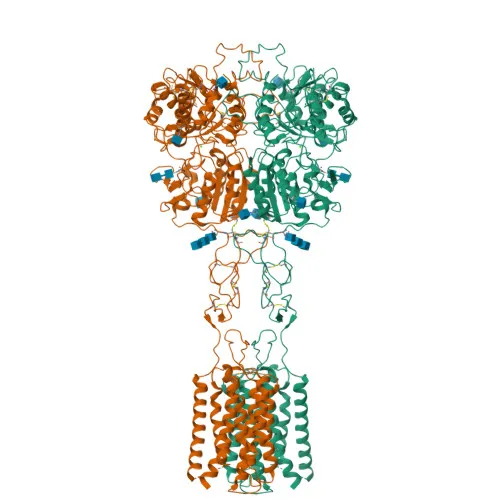
- CaSR is a G protein-coupled receptor that senses extracellular calcium fluctuations and maintains systemic calcium homeostasis.
Related references: PMID:17555508, PMID:19789209, PMID:21566075 - In the parathyroid glands, activated CaSR suppresses parathyroid hormone (PTH) secretion; in the kidney, it regulates tubular calcium reabsorption.
- Ligand binding triggers signaling via multiple G protein subtypes (G(q)/11, G(i)/o, G(s)), modulating phospholipase C and adenylate cyclase pathways.
Related references: PMID:38632411 - G(q)/11 coupling activates phospholipase C-beta to generate IP3 and DAG; G(i)/o coupling inhibits cAMP production.
Related references: PMID:38632411, PMID:7759551 - Full activation requires a co-agonist mechanism: aromatic amino acids (Trp, Phe) act with divalent cations (Ca²⁺, Mg²⁺).
Related references: PMID:27386547, PMID:27434672, PMID:32817431 - CaSR activates the NLRP3 inflammasome via G(i)/o-mediated reduction of cAMP.
Related references: PMID:32843625 - The receptor localizes to the cell membrane and is expressed in brain (temporal, frontal, parietal lobes, hippocampus, cerebellum), kidney, lung, liver, heart, skeletal muscle, and placenta.
- Post-translational modifications include glycosylation and phosphorylation; mutations are linked to calcium-sensing disorders (e.g., epilepsy, familial hypocalciuric hypercalcemia).
Experimental Guidance and Technical Tips
- The immunogen (aa 211–310) resides in the extracellular N‑terminal domain, making the antibody suitable for detecting both surface and total CaSR.
- For WB, use human, mouse, or rat kidney/parathyroid lysates as positive controls; verify a band at ~121 kDa.
- For IHC‑P, antigen retrieval is often required; optimize using human kidney sections.
- For IF‑P, permeabilization yields total receptor staining; omit permeabilization to assess surface expression.
- For ELISA, consider using recombinant CaSR extracellular domain or peptide as the capture antigen and validate coating conditions.
CamelBio: Your One-Stop Sourcing Bridge
CamelBio is your dedicated one-stop sourcing partner for IVD raw materials, offering validated monoclonal antibodies like this anti-CaSR clone for calcium‑sensing receptor research and diagnostic assay development. We provide customized antibody pairs, bulk ancillary reagents, and rare‑target sourcing services to accelerate your calcium metabolism and endocrine disorder assay pipelines.
Product Datasheet
Anti-CaSR (Extracellular calcium-sensing receptor) Rabbit Monoclonal Antibody for WB, IF-P, IHC-P, ELISA - P41180
REQUEST A QUOTE
Our professional team will reply to you within one business day. Please feel free to contact us!