Polyclonal Antibodies
Anti-CAND1 Polyclonal Antibody for WB, IHC-P, ELISA - Q86VP6
Item Number : CM0016049
Price varies based on specs and customizations
- Application
- WB, IHC-P, ELISA
- Cross Reactivity
- Human, Mouse, Rat
- Protein Weight
- 136kDa

Shipping:
Contact us to get shipping details Enjoy On-time Dispatch Guarantee.
Why Choose Us
Easy ordering process, quality products, and dedicated support for your business success.
Core Product Specifications and Parameters
| Parameter | Value |
|---|---|
| Product Name | CAND1 Rabbit pAb |
| Remarks/Alias | TIP120; TIP120A; CAND1 |
| Species | Human |
| GeneID (Human) | 55832 |
| GeneID | 55832 |
| Immunogen | Recombinant fusion protein containing a sequence corresponding to amino acids 750-980 of human CAND1 (NP_060918.2) |
| Source | Rabbit |
| Category | Polyclonal Antibodies |
| Application | WB, IHC-P, ELISA |
| Cross Reactivity | Human, Mouse, Rat |
| SWISS | Q86VP6 |
| Protein Weight | 136kDa |
| Shipping | Ice bag |
Biological Background: CAND1 Function and Localization
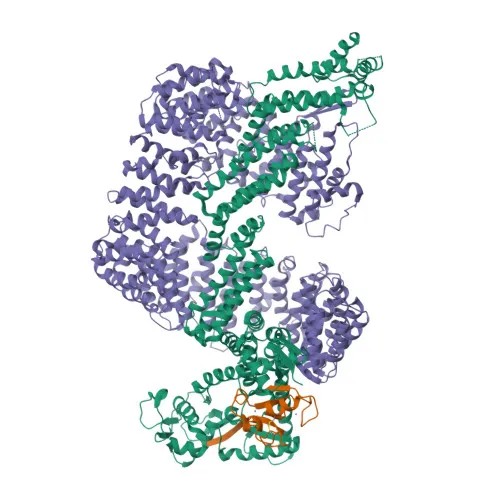
- Protein identity: Cullin-associated NEDD8-dissociated protein 1 (CAND1), also known as TIP120, TIP120A, or p120 CAND1, is encoded by the CAND1 gene (GeneID: 55832) in humans.
- Core function: Acts as a key assembly factor for SCF (SKP1-CUL1-F-box protein) E3 ubiquitin ligase complexes, promoting the exchange of substrate-recognition F-box subunits and thereby regulating the cellular repertoire of SCF complexes.
- Exchange mechanism: Functions as an F-box protein exchange factor; its activity is coupled with cycles of neddylation – in the deneddylated state, CAND1 binds CUL1-RBX1, increasing dissociation of SCF and facilitating F-box exchange.
- Broader role: Likely plays a similar role in other cullin-RING E3 ubiquitin ligase complexes.
- Subcellular localization: Localizes to both the cytoplasm and nucleus.
- Post-translational modifications: Subject to acetylation and phosphorylation, as indicated by proteomics data.
- Structural features: Contains repetitive sequence motifs (UniProt keyword: Repeat), potentially HEAT repeats, which may mediate protein-protein interactions.
Experimental Guidance and Technical Tips
- Western Blotting (WB): Expect a band at approximately 136 kDa corresponding to full-length CAND1. Use appropriate protein ladders and verify specificity with positive controls (e.g., human, mouse, or rat cell lysates). Optimize blocking and antibody dilution for your system.
- Immunohistochemistry (IHC-P): For paraffin-embedded tissues, consider standard antigen retrieval methods (e.g., heat-induced epitope retrieval in citrate buffer, pH 6.0). Validate staining specificity with negative controls and confirm cytoplasmic/nuclear localization.
- ELISA: Can be used in standard ELISA protocols. For sandwich assays, consider pairing with a detection antibody against a different epitope. Validate linearity and sensitivity using recombinant CAND1 protein.
- Cross-reactivity: Predicted to cross-react with mouse and rat CAND1 based on immunogen sequence homology, but independent validation in target species is recommended.
- General: As a polyclonal antibody, lot-to-lot consistency may vary; consider including internal reference standards in your assays.
CamelBio: Your One-Stop Sourcing Bridge
CamelBio is your dedicated B2B partner for IVD raw material procurement, offering CAND1 antibodies and related reagents for ubiquitin-proteasome research and clinical assay development. From validated antibody pairs and optimized monoclonal/polyclonal antibodies to bulk ancillary reagents and rare target sourcing, we streamline your supply chain from discovery to diagnostic deployment. Contact us to discuss custom sourcing solutions for your next project.
REQUEST A QUOTE
Our professional team will reply to you within one business day. Please feel free to contact us!