Polyclonal Antibodies
Anti-CALHM1 Rabbit Polyclonal Antibody for WB, IHC-P, ELISA - Q8IU99
Item Number : CM0025147
Price varies based on specs and customizations
- Application
- WB, IHC-P, ELISA
- Cross Reactivity
- Human, Rat
- Protein Weight
- 38kDa

Shipping:
Contact us to get shipping details Enjoy On-time Dispatch Guarantee.
Why Choose Us
Easy ordering process, quality products, and dedicated support for your business success.
Core Product Specifications and Parameters
| Parameter | Value |
|---|---|
| Product Name | CALHM1 Rabbit pAb |
| Remarks/Alias | FAM26C; CALHM1 |
| Species | Human |
| GeneID (Human) | 255022 |
| GeneID | 255022 |
| Immunogen | Recombinant protein |
| Source | Rabbit |
| Category | Polyclonal Antibodies |
| Application | WB, IHC-P, ELISA |
| Cross Reactivity | Human, Rat |
| SWISS | Q8IU99 |
| Protein Weight | 38kDa |
| Shipping | Ice bag |
Biological Background: CALHM1 Function and Localization
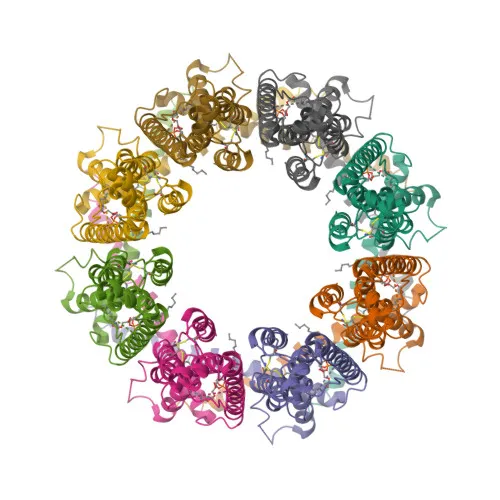
- CALHM1 (Calcium homeostasis modulator protein 1), also known as FAM26C, is a pore-forming subunit of voltage-gated ion channels critical for sensory taste perception.
- With CALHM3, it forms a fast-activating voltage-gated ATP-release channel in type II taste bud cells, mediating sweet, bitter, and umami taste transduction. Related references: PMID:23467090
- Acts as a voltage-gated and calcium-activated ion channel with a wide pore (~14 Å), permeating small ions (Ca2+, Na+, K+, Cl-) and larger molecules like ATP. Related references: PMID:22711817, PMID:23300080, PMID:32832629
- Mediates Ca2+ influx and downstream activation of the ERK1/ERK2 cascade in neurons, impacting neuronal excitability. Related references: PMID:23345406
- Triggers endoplasmic reticulum stress by reducing ER Ca2+ content, implicating it in cellular stress responses. Related references: PMID:21574960
- May indirectly control amyloid precursor protein (APP) proteolysis and aggregated amyloid-beta levels in a Ca2+-dependent manner, suggesting a link to Alzheimer's disease. Related references: PMID:18585350
- Localizes to the cell membrane, endoplasmic reticulum membrane, and basolateral cell membrane.
- Predominantly expressed in adult brain; also detected in retinoic acid-differentiated SH-SY5Y cells and specifically in circumvallate taste bud cells.
- Post-translationally modified by palmitoylation, disulfide bond formation, and glycosylation, features important for its channel function and trafficking.
Experimental Guidance and Technical Tips
- The immunogen corresponds to amino acids 202–346, covering the C-terminal region. Consider this when analyzing domain-specific interactions or splice variants.
- For Western blot, the predicted molecular weight is 38 kDa. Validate band specificity using appropriate positive and negative controls.
- In IHC-P, optimize antigen retrieval and antibody dilution using human brain or taste bud tissue sections. Cross-reactivity with rat should be verified in your specific tissue model.
- ELISA performance may depend on coating antigen and detection format; include a standard curve and negative control for reliable quantification.
CamelBio: Your One-Stop Sourcing Bridge
CamelBio supports diagnostic manufacturers and research labs with comprehensive IVD raw-material solutions, including validated antibody pairs, optimized monoclonal and polyclonal antibodies, and bulk ancillary reagents. For targets like CALHM1, involved in taste transduction and neurological research, CamelBio can facilitate sourcing of rare-target raw materials and provide technical consultation to help streamline your assay development from concept to clinic.
REQUEST A QUOTE
Our professional team will reply to you within one business day. Please feel free to contact us!