Polyclonal Antibodies
Anti-CADPS Polyclonal Antibody for WB, ELISA - Q9ULU8
Item Number : CM0013407
Price varies based on specs and customizations
- Application
- WB, ELISA
- Cross Reactivity
- Mouse, Rat
- Protein Weight
- 153kDa

Shipping:
Contact us to get shipping details Enjoy On-time Dispatch Guarantee.
Why Choose Us
Easy ordering process, quality products, and dedicated support for your business success.
Core Product Specifications and Parameters
| Parameter | Specification |
|---|---|
| Product Name | CADPS Rabbit pAb |
| Remarks/Alias | CAPS; CAPS1; CADPS1; UNC-31; CADPS |
| Species | Human |
| Gene ID (Human) | 8618 |
| Gene ID | 8618 |
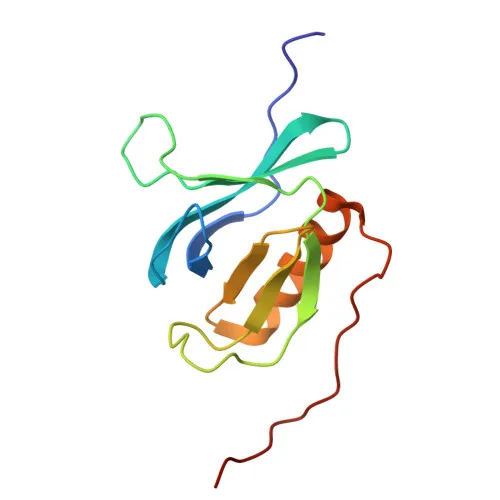
| Immunogen | Recombinant protein|Recombinant fusion protein containing a sequence corresponding to amino acids 1020-1100 of human CADPS (NP_899630.1). |
| Source | Rabbit |
| Category | Polyclonal Antibodies |
| Application | WB, ELISA |
| Cross Reactivity | Mouse, Rat |
| SWISS | Q9ULU8 |
| Protein Weight | 153kDa |
| Shipping | Ice bag |
Biological Background: CADPS Function and Localization
- CADPS encodes Calcium-dependent secretion activator 1 (CAPS-1), a calcium-binding protein essential for Ca²⁺-triggered exocytosis of dense-core vesicles (DCVs) containing neurotransmitters and neuropeptides.
- It acts upstream of membrane fusion, likely contributing to biogenesis or maintenance of mature secretory vesicles and regulating catecholamine loading into DCVs.
- CAPS-1 specifically mediates Ca²⁺-dependent exocytosis of large dense-core vesicles by binding phosphatidylinositol 4,5-bisphosphate (PtdIns(4,5)P2) and functioning at a prefusion step after ATP-dependent priming.
- Beyond DCVs, CADPS may also participate in small clear synaptic vesicle (SV) exocytosis, although its precise role in Ca²⁺ triggering remains to be fully elucidated.
- The protein localizes to the synapse, cytoplasmic vesicle membranes, and neuronal dense core vesicle membranes, consistent with its role in regulated secretion.
- Tissue expression is enriched in neural and endocrine secretory tissues, with highest levels in brain and pancreas and lower levels in heart; it is also detected in fetal cerebellum, cerebral cortex, medulla, and spinal cord.
- UniProt annotations highlight alternative splicing, calcium and lipid binding, phosphorylation, and involvement in protein transport, underscoring its multifunctional regulation in secretory pathways.
Experimental Guidance and Technical Tips
- The immunogen corresponds to a C-terminal fragment (aa 1020-1100) of human CADPS; for Western blotting, expect a band near 153 kDa and consider using reducing SDS-PAGE with appropriate positive and negative controls.
- For ELISA applications, optimize coating antigen and antibody dilution using recombinant CADPS protein or peptide to ensure sensitivity and specificity.
- Reported cross-reactivity with mouse and rat makes this antibody suitable for rodent model studies; nonetheless, confirm species-specific reactivity in your own experimental system.
CamelBio: Your One-Stop Sourcing Bridge
CamelBio equips diagnostic manufacturers, laboratories, and research institutes with one-stop access to IVD raw materials, technical services, and consulting—from concept to clinic. For neuroscience and endocrine secretion research, we supply validated antibody pairs, optimized polyclonal antibodies like this anti-CADPS product, bulk ancillary reagents, and tailored sourcing for rare targets. Our integrated supply chain ensures reliable procurement to accelerate your assay development and biomarker discovery.
REQUEST A QUOTE
Our professional team will reply to you within one business day. Please feel free to contact us!