Polyclonal Antibodies
Anti-CACNA1D Rabbit Polyclonal Antibody for WB and ELISA - Q01668
Item Number : CM0019544
Price varies based on specs and customizations
- Application
- WB, ELISA
- Cross Reactivity
- Human, Rat
- Protein Weight
- 245kDa

Shipping:
Contact us to get shipping details Enjoy On-time Dispatch Guarantee.
Why Choose Us
Easy ordering process, quality products, and dedicated support for your business success.
Core Product Specifications and Parameters
| Parameter | Value |
|---|---|
| Product Name | CACNA1D Rabbit pAb |
| Remarks/Alias | CACH3; CACN4; PASNA; SANDD; Cav1.3; CCHL1A2; CACNL1A2; CACNA1D |
| Species | Human |
| Gene ID (Human) | 776 |
| Gene ID | 776 |
| Immunogen | Recombinant fusion protein containing a sequence corresponding to amino acids 1882-2181 of human CACNA1D (NP_000711.1) |
| Source | Rabbit |
| Category | Polyclonal Antibodies |
| Application | WB, ELISA |
| Cross Reactivity | Human, Rat |
| SWISS | Q01668 |
| Protein Weight | 245kDa |
| Shipping | Ice bag |
Biological Background: CACNA1D Function and Localization
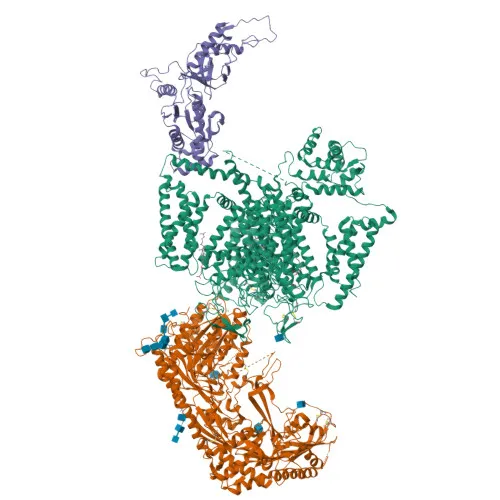
- CACNA1D encodes the alpha-1D subunit (Cav1.3), a pore-forming component of voltage-dependent L-type calcium channels.
- Mediates L-type calcium currents critical for muscle contraction, hormone/neurotransmitter secretion, gene expression, and cell excitability; sensitive to dihydropyridine blockers.
- Belongs to the high-voltage activated (HVA) calcium channel family; alternative splicing generates multiple isoforms with distinct functional properties.
- Localizes to the plasma membrane, serving as an integral membrane protein in excitable cells.
- Robustly expressed in pancreatic islets (involved in insulin secretion) and brain regions such as cerebral cortex, hippocampus, and basal ganglia; absent in skeletal muscle.
- Undergoes post-translational modifications including glycosylation and phosphorylation, which regulate channel trafficking and activity.
- Mutations in CACNA1D are associated with deafness, epilepsy, and other neurodevelopmental disorders (disease variants per UniProt).
Experimental Guidance and Technical Tips
- The immunogen targets the C-terminal intracellular region (amino acids 1882-2181), suitable for detecting total CACNA1D protein.
- For Western blot, expect a band near 245 kDa; use low-percentage SDS-PAGE gels and extended transfer times to resolve high-molecular-weight proteins.
- Confirm antibody specificity by testing in CACNA1D-expressing tissues or cell lines (e.g., brain, pancreatic islets); include appropriate negative controls.
- When performing ELISA, coat with recombinant CACNA1D protein or tissue/cell lysates and validate linearity and sensitivity.
- This antibody cross-reacts with rat; verify cross-reactivity in other species if required for your experimental model.
CamelBio: Your One-Stop Sourcing Bridge
CamelBio streamlines your IVD development by providing validated polyclonal antibodies like this anti-CACNA1D (Cav1.3) for studying L-type calcium channels. With a comprehensive portfolio of monoclonal/polyclonal antibodies, recombinant proteins, and ancillary reagents, we support diagnostic manufacturers from concept to clinic. Reach out for bulk orders or custom raw-material sourcing tailored to your assay needs.
REQUEST A QUOTE
Our professional team will reply to you within one business day. Please feel free to contact us!