Polyclonal Antibodies
Anti-c-Jun Rabbit Polyclonal Antibody for WB, IF/ICC, ELISA - P05412
Item Number : CM0018659
Price varies based on specs and customizations
- Application
- WB, IF/ICC, ELISA
- Cross Reactivity
- Human, Mouse
- Protein Weight
- 36kDa

Shipping:
Contact us to get shipping details Enjoy On-time Dispatch Guarantee.
Why Choose Us
Easy ordering process, quality products, and dedicated support for your business success.
Core Product Specifications and Parameters
| Parameter | Value |
|---|---|
| Product Name | c-Jun Rabbit pAb |
| Remarks/Alias | AP1; p39; AP-1; cJUN; c-Jun |
| Species | Human |
| Gene ID (Human) | 3725 |
| Gene ID | 3725 |
| Immunogen | Recombinant fusion protein containing a sequence corresponding to amino acids 90-230 of c-Jun (NP_002219.1) |
| Source | Rabbit |
| Category | Polyclonal Antibodies |
| Application | WB, IF/ICC, ELISA |
| Cross Reactivity | Human, Mouse |
| SWISS | P05412 |
| Protein Weight | 36kDa |
| Shipping | Ice bag |
Biological Background: c-Jun Function and Localization
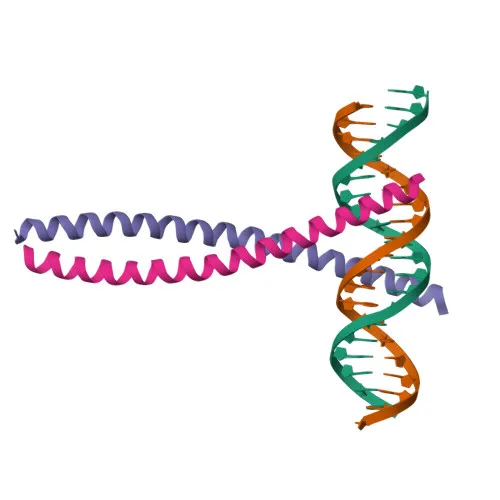
- c-Jun is a transcription factor and a core component of the Activator Protein-1 (AP-1) complex, which recognizes the consensus motif 5'-TGA[GC]TCA-3' and regulates gene expression in response to various stimuli (PubMed:10995748, PubMed:22083952). Related references: PMID:10995748 PMID:22083952
- Heterodimerization with FOS family proteins enhances DNA binding and transcriptional activity of the AP-1 complex, playing critical roles in cell proliferation, differentiation, and apoptosis.
- c-Jun contributes to activation-induced cell death (AICD) of T cells by binding to the AP-1 site of the FASLG/CD95L promoter and inducing its transcription upon TCR/CD3 signaling (PubMed:12618758). Related references: PMID:12618758
- Phosphorylation by HIPK3 promotes the activity of NR5A1, leading to increased steroidogenic gene expression in response to cAMP signaling (PubMed:17210646). Related references: PMID:17210646
- In colorectal cancer, activated KRAS-mediated transcriptional activation of USP28 involves c-Jun binding to the USP28 promoter, highlighting its oncogenic role (PubMed:24623306). Related references: PMID:24623306
- As a proto-oncogene, c-Jun is subject to multiple post-translational modifications including phosphorylation, acetylation, and ubiquitination, which regulate its stability and activity.
- It localizes predominantly to the nucleus, consistent with its role as a transcription factor.
- c-Jun is expressed in developing and adult prostate, as well as prostate cancer cells, and can be hijacked during Epstein-Barr virus infection to activate viral gene expression.
Experimental Guidance and Technical Tips
- The immunogen (aa 90–230) spans a region critical for DNA binding and dimerization; consider testing antibody reactivity against relevant post-translational modifications or variants.
- For western blotting, a band near 36 kDa is expected; however, extensive phosphorylation may cause slight shifts in migration. Optimize blocking and antibody dilution for target cell lines.
- In immunofluorescence/ICC, a predominantly nuclear signal is anticipated. Include appropriate controls (e.g., knockout or knockdown) to confirm specificity.
- Cross-reactivity with mouse c-Jun is reported; verify reactivity in your experimental model if using other species.
CamelBio: Your One-Stop Sourcing Bridge
CamelBio provides integrated access to premium IVD raw materials, including this c-Jun polyclonal antibody, supporting research in oncology, transcriptional regulation, and AP-1 signaling. Our portfolio encompasses validated antibody pairs, optimized monoclonal and polyclonal antibodies, and ancillary reagents for bulk procurement. Leverage our sourcing expertise to accelerate assay development with rare-target and custom raw-material solutions.
REQUEST A QUOTE
Our professional team will reply to you within one business day. Please feel free to contact us!