Polyclonal Antibodies
Anti-c-Abl Rabbit Polyclonal Antibody for WB, IHC-P, IF/ICC, ELISA - P00519
Item Number : CM0017688
Price varies based on specs and customizations
- Application
- WB, IHC-P, IF/ICC, ELISA
- Cross Reactivity
- Human, Mouse, Rat
- Protein Weight
- 123kDa

Shipping:
Contact us to get shipping details Enjoy On-time Dispatch Guarantee.
Why Choose Us
Easy ordering process, quality products, and dedicated support for your business success.
Core Product Specifications and Parameters
| Parameter | Value |
|---|---|
| Product Name | c-Abl Rabbit pAb |
| Remarks/Alias | ABL; JTK7; p150; c-ABL; v-abl; CHDSKM; c-ABL1; BCR-ABL; bcr/abl; c-Abl |
| Species | Human |
| GeneID (Human) | 25 |
| GeneID | 25 |
| Immunogen | Recombinant fusion protein containing a sequence corresponding to amino acids 1000-1130 of human c-Abl (NP_005148.2). |
| Source | Rabbit |
| Category | Polyclonal Antibodies |
| Application | WB, IHC-P, IF/ICC, ELISA |
| Cross Reactivity | Human, Mouse, Rat |
| SWISS | P00519 |
| Protein Weight | 123kDa |
| Shipping | Ice bag |
Biological Background: c-Abl Function and Localization
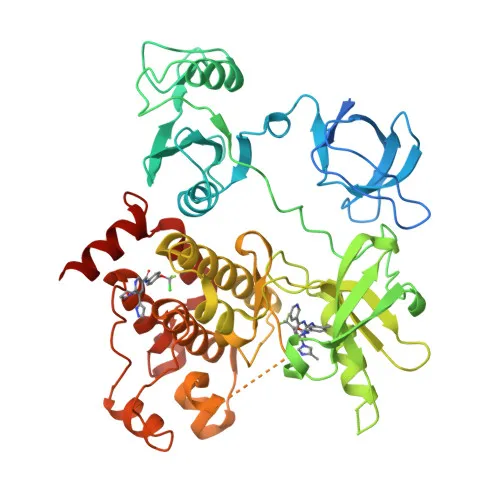
- c-Abl (ABL1) is a non-receptor tyrosine-protein kinase, also known as p150, belonging to the Abelson family. It plays a central role in signal transduction pathways governing cell growth, proliferation, and survival.
- ABL1 coordinates actin cytoskeleton remodeling through phosphorylation of proteins like WASF3, ANXA1, DBN1, DBNL, CTTN, RAPH1, ENAH, MAPT, and PXN, and regulates cell adhesion and motility by phosphorylating BCAR1, CRK, CRKL, DOK1, EFS, and NEDD9. Related references: PMID:22810897
- In response to oxidative stress, ABL1 localizes to mitochondria, phosphorylates PRKD2 at Tyr-717, leading to mitochondrial dysfunction and cell death. Related references: PMID:28428613
- The protein shuttles between cytoplasm (including cytoskeleton), nucleus, mitochondria, and nuclear membrane, enabling context-dependent signaling in DNA damage repair, endocytosis, and apoptosis.
- ABL1 is involved in DNA damage response: it translocates to the nucleus and phosphorylates DNA repair proteins (DDB1, DDB2, ERCC3, ERCC6, RAD9A, RAD51, RAD52, WRN) and pro-apoptotic factors (TP73, CASP9) to direct repair or apoptosis.
- It phosphorylates receptor tyrosine kinases (EGFR, PDGFRB, MUSK) and endocytic regulators (CBL, CAV1, RIN1) to control receptor endocytosis and degradation, and positively regulates lysosomal trafficking during autophagy.
- Alternative splicing and chromosomal rearrangements produce isoforms such as the oncogenic BCR-ABL fusion, which is implicated in chronic myeloid leukemia.
- Pathogens like Vaccinia virus, pathogenic E. coli, H. pylori, and A. phagocytophilum exploit ABL1 by injecting tyrosine-phosphorylated substrates (A36R, Tir, CagA, AnkA) to reorganize the host actin cytoskeleton.
Experimental Guidance and Technical Tips
- The immunogen corresponds to the C-terminal region (aa 1000–1130) of human c-Abl (NP_005148.2). The resulting polyclonal antibody is expected to recognize multiple isoforms and species variants.
- For Western blotting, a band of ~123 kDa is predicted; validate the antibody in your specific sample system and consider that alternative isoforms or fusion proteins (e.g., BCR-ABL) may yield additional bands.
- In IHC-P and IF/ICC, optimize fixation and antigen retrieval conditions; using appropriate controls (e.g., knockout or siRNA-treated samples) is recommended to confirm specificity.
- The antibody can be used for ELISA-based assays; titration experiments are essential to determine the optimal working dilution.
- Cross-reactivity with mouse and rat allows cross-species studies, but always verify performance in the target tissue or cell line.
CamelBio: Your One-Stop Sourcing Bridge
CamelBio supports diagnostic manufacturers and research laboratories with a comprehensive portfolio of IVD raw materials, technical services, and consulting—from concept to clinic. For c-Abl/ABL1 research, we offer validated antibody pairs, optimized monoclonal and polyclonal antibodies, bulk ancillary reagents, and can source rare-target raw materials to accelerate your assay development and biomarker studies. Partner with us to streamline your procurement and bring your projects to market efficiently.
Product Datasheet
Anti-c-Abl Rabbit Polyclonal Antibody for WB, IHC-P, IF/ICC, ELISA - P00519
REQUEST A QUOTE
Our professional team will reply to you within one business day. Please feel free to contact us!