Polyclonal Antibodies
Anti-Butyrylcholinesterase Rabbit Polyclonal Antibody for WB, ELISA - P06276
Item Number : CM0018494
Price varies based on specs and customizations
- Application
- WB, ELISA
- Cross Reactivity
- Human, Mouse, Rat
- Protein Weight
- 68kDa

Shipping:
Contact us to get shipping details Enjoy On-time Dispatch Guarantee.
Why Choose Us
Easy ordering process, quality products, and dedicated support for your business success.
Core Product Specifications and Parameters
| Parameter | Value |
|---|---|
| Product Name | Butyrylcholinesterase Rabbit pAb |
| Remarks/Alias | E1; CHE1; CHE2; BCHED; Butyrylcholinesterase |
| Species | Human |
| Gene ID (Human) | 590 |
| Gene ID | 590 |
| Immunogen | Recombinant protein |
| Source | Rabbit |
| Category | Polyclonal Antibodies |
| Application | WB, ELISA |
| Cross Reactivity | Human, Mouse, Rat |
| SWISS | P06276 |
| Protein Weight | 68kDa |
| Shipping | Ice bag |
Biological Background: Butyrylcholinesterase Function and Localization
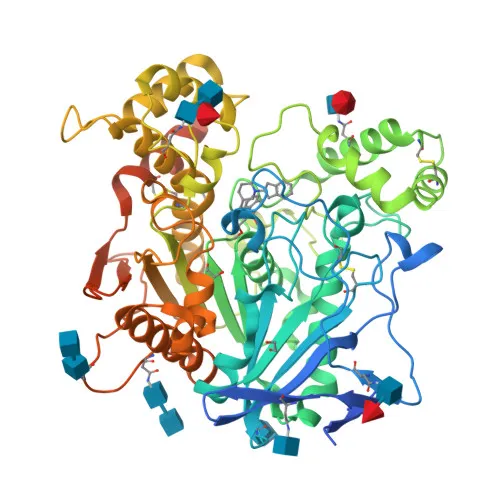
- Butyrylcholinesterase (BCHE), also referred to as pseudocholinesterase or choline esterase II, is a serine esterase encoded by the BCHE gene. It exhibits broad substrate specificity toward choline-based esters.
- The primary function of BCHE is to hydrolyze and inactivate the neurotransmitter acetylcholine, playing a role in modulating cholinergic neural transmission.
- BCHE also detoxifies neurotoxic organophosphate esters, thereby providing defense against certain pesticides and chemical nerve agents.
- This enzyme is secreted and is abundant in blood plasma; it is expressed in most tissues and cell types, with the notable exception of erythrocytes.
- Post-translational modifications include glycosylation with sialic acid, disulfide bond formation, and phosphorylation, contributing to its stability and enzymatic activity.
- Clinically, BCHE variants are linked to prolonged apnea after succinylcholine administration and other disorders, highlighting its pharmacogenetic importance.
Experimental Guidance and Technical Tips
- The immunogen used to generate this antibody corresponds to the N-terminal region (aa 29-270) of human BCHE, which encompasses the catalytic domain. This design may favor recognition of the mature, secreted form of the protein.
- For Western blotting (WB), consider using reducing conditions in your sample preparation to assess the monomeric form (predicted ~68 kDa). The antibody may also detect dimers or multimers depending on experimental conditions.
- In ELISA applications, validate the antibody with recombinant protein or native analyte to confirm sensitivity and specificity, particularly when cross-reactivity with mouse or rat BCHE is exploited.
- Since this is a polyclonal antibody, batch-to-batch consistency should be verified in critical quantitative assays. Consider initial titration experiments to optimize working concentrations for your specific assay format.
CamelBio: Your One-Stop Sourcing Bridge
CamelBio supports diagnostic manufacturers and research laboratories with comprehensive access to IVD raw materials, including this butyrylcholinesterase antibody, which is well-suited for neurobiology and toxicology assay development. Our platform offers validated antibody pairs, optimized monoclonal and polyclonal antibodies, bulk ancillary reagents, and custom sourcing for rare targets. Whether you need this rabbit polyclonal antibody for routine ELISA or are exploring novel cholinergic biomarkers, CamelBio streamlines procurement from concept to clinic.
Product Datasheet
Anti-Butyrylcholinesterase Rabbit Polyclonal Antibody for WB, ELISA - P06276
REQUEST A QUOTE
Our professional team will reply to you within one business day. Please feel free to contact us!