Monoclonal Antibodies
Anti-BTN2A1 Rabbit Monoclonal Antibody for WB, ELISA - Q7KYR7
Item Number : CM0007340
Price varies based on specs and customizations
- Application
- WB, ELISA
- Cross Reactivity
- Human
- Protein Weight
- 60kDa

Shipping:
Contact us to get shipping details Enjoy On-time Dispatch Guarantee.
Why Choose Us
Easy ordering process, quality products, and dedicated support for your business success.
Core Product Specifications and Parameters
| Parameter | Value |
|---|---|
| Product Name | BTN2A1 Rabbit mAb |
| Remarks/Alias | BTF1; BT2.1; BTN2.1; DJ3E1.1; BK14H9.1; BTN2A1 |
| Species | Human |
| GeneID (human) | 11120 |
| Immunogen | Recombinant fusion protein containing a sequence corresponding to amino acids 1-100 of human BTN2A1 (NP_008980.1) |
| Source | Rabbit |
| Category | Monoclonal Antibodies |
| Application | WB, ELISA |
| Cross Reactivity | Human |
| SWISS | Q7KYR7 |
| Protein Weight | 60kDa |
| Shipping | Ice bag |
Biological Background: BTN2A1 Function and Localization
- BTN2A1 (Butyrophilin subfamily 2 member A1) is a single-pass type I transmembrane protein encoded by the BTN2A1 gene (aliases: BT2.1, BTF1, BTN2.1, DJ3E1.1, BK14H9.1) on human chromosome 6.
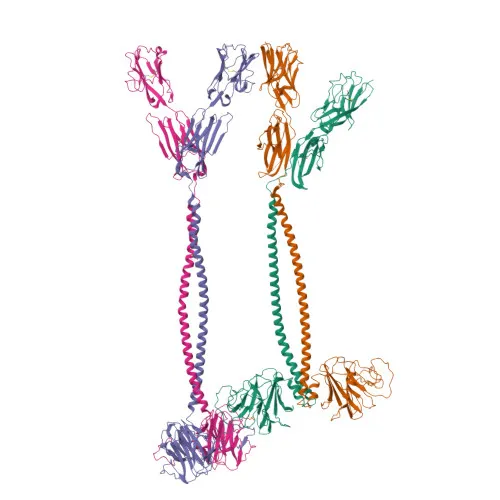
- The full-length protein consists of an N-terminal signal peptide, two immunoglobulin-like domains (IgV and IgC1), a transmembrane helix, and a cytoplasmic coiled-coil domain (UniProt Keywords: Immunoglobulin domain, Coiled coil, Transmembrane helix, Glycoprotein, Disulfide bond).
- BTN2A1 is primarily localized to the plasma membrane (SUBCELLULAR LOCATION: Membrane).
- Tissue expression is broad and highest in the brain, bone marrow, small intestine, muscle, spleen, and pancreas; moderate expression is observed in lung, liver, and kidney.
- Post-translational modifications include N-linked glycosylation and intrachain disulfide bonds, which are important for protein folding and stability.
- Alternative splicing generates multiple transcript variants, potentially producing isoforms with distinct functional properties.
Experimental Guidance and Technical Tips
- The immunogen covers the N-terminal 100 residues (extracellular region), so the antibody likely recognizes an epitope in the IgV-like domain. For Western blotting, expect a specific band around 60 kDa in human cell lysates; reducing conditions are recommended. Validate using positive controls such as HeLa, THP-1, or Jurkat cells.
- In ELISA, the antibody can be employed as capture or detection reagent for human BTN2A1. Titration experiments are necessary to determine the optimal coating concentration and detection dilution.
- The antibody cross-reacts with human BTN2A1; cross-reactivity with other butyrophilin family members (e.g., BTN2A2, BTN3A1) has not been tested and should be verified if multiplexed assays are planned.
- For functional studies, note that the antibody binds the extracellular domain; therefore, it may interfere with ligand–receptor interactions. Include appropriate isotype controls.
- If weak signals are obtained, consider using high-expression cell models (e.g., BTN2A1-overexpressing HEK293T) or enrichment of membrane fractions.
CamelBio: Your One-Stop Sourcing Bridge
CamelBio serves as a specialized one-stop sourcing bridge for IVD raw materials, supporting diagnostic manufacturers and research laboratories from target discovery to assay commercialization. Our catalog includes validated monoclonal antibodies like anti-BTN2A1 rabbit mAb, along with optimized antibody pairs, bulk ancillary reagents, and custom development of rare target materials. By streamlining procurement and technical support, CamelBio accelerates the translation of butyrophilin-family biomarkers into high-performance immunoassays.
REQUEST A QUOTE
Our professional team will reply to you within one business day. Please feel free to contact us!