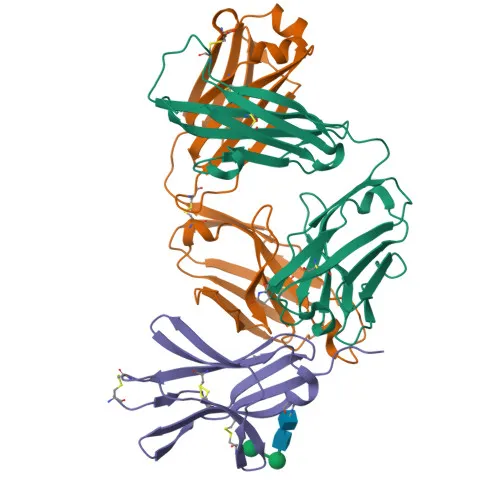
Polyclonal Antibodies
Anti-BTLA (CD272) Polyclonal Antibody for WB, ELISA - Q7Z6A9
Item Number : CM0017589
Price varies based on specs and customizations
- Application
- WB, ELISA
- Cross Reactivity
- Human, Mouse
- Protein Weight
- 33kDa

Shipping:
Contact us to get shipping details Enjoy On-time Dispatch Guarantee.
Why Choose Us
Easy ordering process, quality products, and dedicated support for your business success.
Core Product Specifications and Parameters
| Parameter | Value |
|---|---|
| Product Name | BTLA Rabbit pAb |
| Remarks/Alias | BTLA1; CD272; BTLA |
| Species | Human |
| Gene ID (Human) | 151888 |
| Gene ID | 151888 |
| Immunogen | Recombinant fusion protein containing a sequence corresponding to amino acids 31-241 of human BTLA (NP_001078826.1). |
| Source | Rabbit |
| Category | Polyclonal Antibodies |
| Application | WB, ELISA |
| Cross Reactivity | Human, Mouse |
| SWISS | Q7Z6A9 |
| Protein Weight | 33kDa |
| Shipping | Ice bag |
Biological Background: BTLA Function and Localization
- BTLA (B- and T-lymphocyte attenuator), also designated CD272 or BTLA1, is an immunoglobulin superfamily inhibitory receptor expressed on lymphocytes.
- It negatively regulates T-cell and B-cell antigen receptor signaling by recruiting the phosphatases SHP-1 and SHP-2, thus modulating immune response thresholds.
Related references:
PMID:12796776
PMID:14652006
PMID:15568026 - BTLA engages its ligand TNFRSF14 (HVEM) in both cis (on the same cell) and trans (between cells) configurations. Cis interactions maintain naive T-cell quiescence, whereas trans interactions support effector T-cell survival during adaptive responses.
Related references:
PMID:19915044 - The protein is localized at the cell membrane and contains a single transmembrane helix.
- Post-translational modifications include glycosylation and phosphorylation, and the extracellular domain harbors a disulfide bond; alternative splicing generates multiple isoforms.
- As an immune checkpoint molecule, BTLA plays critical roles in maintaining immune homeostasis and tolerance.
Experimental Guidance and Technical Tips
- The immunogen spans amino acids 31–241, covering the entire extracellular domain. This design may enable recognition of both the glycosylated and unglycosylated receptor forms in native and denatured conditions.
- For Western blotting, validate the antibody with cell lines known to express BTLA (e.g., Jurkat or Raji) and include appropriate negative controls (e.g., knockdown or knockout samples). Optimize protein loading and antibody concentration for clear band detection near 33 kDa.
- For ELISA applications, consider using the recombinant immunogen as a positive control; note that the polyclonal nature can contribute to batch variability, so performance should be confirmed for each new lot.
- The antibody’s cross-reactivity with mouse BTLA expands its utility to murine models, but independent verification in the relevant species tissue is advisable.
CamelBio: Your One-Stop Sourcing Bridge
CamelBio serves as a comprehensive partner for IVD raw-material procurement, technical services, and consulting—from concept to clinic. This anti-BTLA polyclonal antibody is part of our portfolio supporting immune checkpoint research and diagnostic assay development. We provide validated antibody pairs, recombinant proteins, and ancillary reagents with scalable supply capabilities to streamline your R&D and commercial IVD production.
REQUEST A QUOTE
Our professional team will reply to you within one business day. Please feel free to contact us!