Polyclonal Antibodies
Anti-BMX Polyclonal Antibody for WB, ELISA - P51813
Item Number : CM0025857
Price varies based on specs and customizations
- Application
- WB, ELISA
- Cross Reactivity
- Human, Mouse
- Protein Weight
- 78kDa

Shipping:
Contact us to get shipping details Enjoy On-time Dispatch Guarantee.
Why Choose Us
Easy ordering process, quality products, and dedicated support for your business success.
Core Product Specifications and Parameters
| Parameter | Value |
|---|---|
| Product Name | BMX Rabbit pAb |
| Remarks/Alias | ETK; PSCTK2; PSCTK3; BMX |
| Species | Human |
| GeneID (human) | 660 |
| GeneID | 660 |
| Immunogen | Recombinant fusion protein containing a sequence corresponding to amino acids 1-120 of human BMX (NP_001712.1) |
| Source | Rabbit |
| Category | Polyclonal Antibodies |
| Application | WB, ELISA |
| Cross Reactivity | Human, Mouse |
| SWISS | P51813 |
| Protein Weight | 78kDa |
| Shipping | Ice bag |
Biological Background: BMX Function and Localization
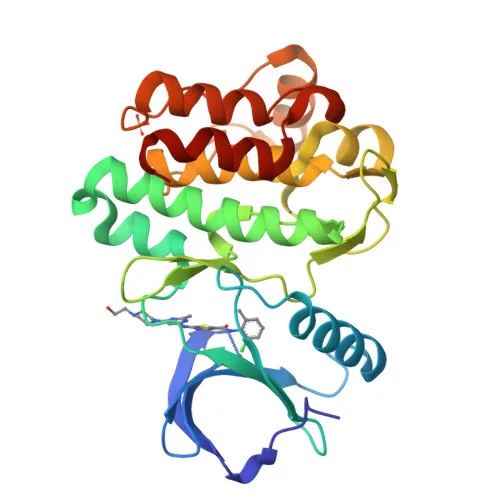
- BMX is a non-receptor tyrosine kinase that plays central modulatory roles in actin reorganization, cell migration, proliferation, survival, adhesion, and apoptosis.
- It participates in signal transduction downstream of growth factor receptors, cytokine receptors, G protein-coupled receptors, antigen receptors, and integrins.
- BMX mediates integrin signaling by inducing tyrosine phosphorylation of BCAR1, and its activation by integrins requires PTK2/FAK1.
- It is critical for TNF-induced angiogenesis and is implicated in TEK and FLT1 receptor signaling, essential for angiogenesis.
- BMX is required for STAT3 phosphorylation and activation, contributing to cell differentiation; it is also involved in IL6-induced differentiation.
- The kinase plays a role in adaptive cytoprotection against extracellular stress in various cell types, including salivary epithelial, brain endothelial, and dermal fibroblasts.
- BMX may regulate endocytosis via interaction with RUFY1 and has roles in hematopoietic cell growth/differentiation and endothelial cell signal transduction.
- It is localized to the cytoplasm and is highly expressed in cells with high migratory potential, such as endothelial cells and metastatic carcinoma cell lines.
Experimental Guidance and Technical Tips
- The immunogen corresponds to the N-terminal region (amino acids 1-120) of human BMX; consider epitope conservation when used with mouse samples.
- For WB, use whole-cell lysates from human or mouse endothelial or hematopoietic cell lines; the predicted molecular weight is 78kDa.
- Validate antibody specificity with appropriate positive (e.g., endothelial cell lysates) and negative controls (e.g., BMX knockdown or knockout samples).
- For ELISA, standard indirect or sandwich protocols may be employed; perform titration to determine optimal antibody concentration.
CamelBio: Your One-Stop Sourcing Bridge
CamelBio provides diagnostic manufacturers and research laboratories with a one-stop sourcing platform for IVD raw materials, including validated antibodies such as this anti-BMX polyclonal antibody. Our portfolio covers optimized antibody pairs, bulk ancillary reagents, and rare-target raw-material procurement, supporting your projects in signal transduction, angiogenesis, and oncology research from concept to clinic.
REQUEST A QUOTE
Our professional team will reply to you within one business day. Please feel free to contact us!