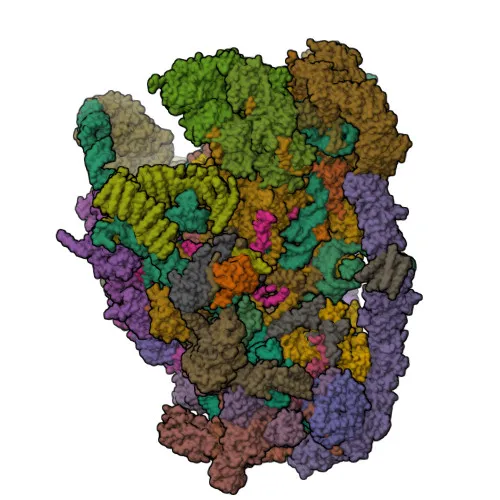
Polyclonal Antibodies
Anti-BMS1 Rabbit Polyclonal Antibody for WB, ELISA - Q14692
Item Number : CM0016441
Price varies based on specs and customizations
- Application
- WB, ELISA
- Cross Reactivity
- Human, Mouse, Rat
- Protein Weight
- 146kDa

Shipping:
Contact us to get shipping details Enjoy On-time Dispatch Guarantee.
Why Choose Us
Easy ordering process, quality products, and dedicated support for your business success.
Core Product Specifications and Parameters
| Parameter | Value |
|---|---|
| Product Name | BMS1 Rabbit pAb |
| Remarks/Alias | ACC; BMS1L; BMS1 |
| Species | Human |
| GeneID (Human) | 9790 |
| GeneID | 9790 |
| Immunogen | Recombinant fusion protein containing a sequence corresponding to amino acids 600-900 of human BMS1 (NP_055568.3) |
| Source | Rabbit |
| Category | Polyclonal Antibodies |
| Application | WB, ELISA |
| Cross Reactivity | Human, Mouse, Rat |
| SWISS | Q14692 |
| Protein Weight | 146kDa |
| Shipping | Ice bag |
Biological Background: BMS1 Function and Localization
- BMS1 (Ribosome biogenesis protein BMS1 homolog, also known as BMS1L, ACC) is a GTPase essential for the synthesis of the 40S ribosomal subunit in humans.
- It plays a critical role in pre-ribosomal RNA (pre-rRNA) processing at sites A0, A1, and A2, driving the early steps of ribosome maturation.
- BMS1 controls access of pre-rRNA intermediates to the endonuclease RCL1 by binding RCL1 in a GTP-dependent manner, delivering it to pre-ribosomes and inducing conformational changes for substrate recognition.
- The protein is required for the nuclear import of RCL1, thus coordinating key enzymatic events within the assembling ribosomal particle.
- It is predominantly localized in the nucleolus, the subnuclear compartment where ribosomal RNA transcription and processing occur.
- Post-translational modifications of BMS1 include phosphorylation, isopeptide bond formation, and ubiquitin-like conjugation, as cataloged in UniProt.
- Mutations in BMS1 have been associated with ectodermal dysplasia, a genetic disorder affecting the development of teeth, hair, nails, and sweat glands (UniProt keyword: Disease variant, Ectodermal dysplasia).
Experimental Guidance and Technical Tips
- The immunogen corresponds to amino acids 600–900 of human BMS1 (NP_055568.3). Given its polyclonal nature, the antibody may recognize multiple epitopes within this region; consider verifying specificity via peptide blocking or knockout validation in your system.
- For Western blot analysis of BMS1, a protein of approximately 146 kDa, use a suitable molecular weight marker and optimize transfer conditions (e.g., prolonged transfer time or low-porosity membrane) to ensure efficient detection of this high-molecular-weight target.
- This antibody cross-reacts with mouse and rat BMS1 based on supplier data, making it a potential tool for studies in rodent models. Confirm reactivity in your sample matrix before quantitative applications.
- In ELISA, polyclonal antibodies often provide high sensitivity. Perform serial dilutions to determine the optimal working concentration for your specific assay format.
CamelBio: Your One-Stop Sourcing Bridge
CamelBio serves as a comprehensive sourcing partner for IVD raw materials, offering rapid access to validated antibody pairs, optimized monoclonal and polyclonal antibodies, and bulk ancillary reagents. For researchers investigating ribosome biogenesis or the role of BMS1 in disease, CamelBio can supply high-quality anti-BMS1 clones and related reagents to accelerate your diagnostic or assay development. Our platform supports every stage from concept to clinic, ensuring a steady supply of critical tools for ribosome research.
REQUEST A QUOTE
Our professional team will reply to you within one business day. Please feel free to contact us!