Monoclonal Antibodies
Anti-beta glucuronidase (GUSB) Rabbit Monoclonal Antibody for WB and ELISA - P08236
Item Number : CM0002563
Price varies based on specs and customizations
- Application
- WB, ELISA
- Cross Reactivity
- Human
- Protein Weight
- 75kDa

Shipping:
Contact us to get shipping details Enjoy On-time Dispatch Guarantee.
Why Choose Us
Easy ordering process, quality products, and dedicated support for your business success.
Core Product Specifications and Parameters
| Parameter | Value |
|---|---|
| Product Name | beta glucuronidase (GUSB) Rabbit mAb |
| Remarks/Alias | BG; MPS7; beta glucuronidase (GUSB) |
| Species | Human |
| GeneID (Human) | 2990 |
| GeneID | 2990 |
| Immunogen | Synthetic peptide corresponding to a sequence within amino acids 1-100 of human beta-glucuronidase (GUSB) (NP_000172.2) |
| Source | Rabbit |
| Category | Monoclonal Antibodies |
| Application | WB, ELISA |
| Cross Reactivity | Human |
| SWISS | P08236 |
| Protein Weight | 75kDa |
| Shipping | Ice bag |
Biological Background: beta-glucuronidase (GUSB) Function and Localization
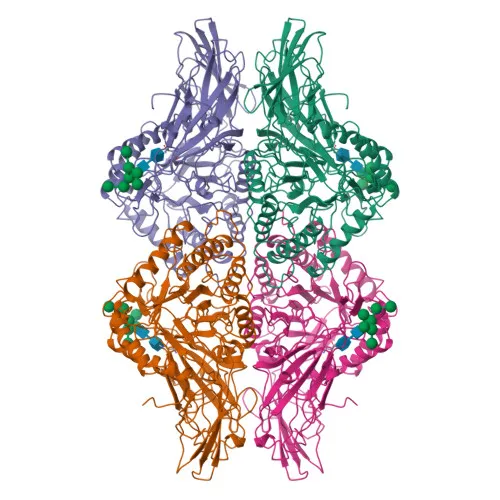
- Beta-glucuronidase (GUSB) is a lysosomal glycosidase enzyme that catalyzes the hydrolysis of glucuronide moieties from glycosaminoglycans, playing an essential role in the degradation of dermatan and keratan sulfates.
- This protein is encoded by the GUSB gene, which gives rise to multiple isoforms through alternative splicing.
- GUSB is localized to the lysosome, where it functions in the acidic environment to break down complex carbohydrates.
- As a glycoprotein, GUSB undergoes post-translational modifications including N-linked glycosylation, which is critical for its enzymatic activity and lysosomal targeting.
- Mutations in the GUSB gene are associated with mucopolysaccharidosis type VII (MPS VII, Sly syndrome), a lysosomal storage disorder characterized by the accumulation of dermatan and keratan sulfates.
- The enzyme has been identified through direct protein sequencing and proteomics, confirming its presence in multiple tissues.
- The reference proteome molecular weight of the unprocessed precursor is approximately 74.7 kDa, while the mature protein migrates at around 75 kDa on SDS-PAGE.
Experimental Guidance and Technical Tips
- The immunogen is a synthetic peptide spanning the N-terminal region (amino acids 1–100). For Western blot analysis, denaturing and reducing conditions are typically suitable for exposing this linear epitope. Consider using a standard SDS-PAGE and PVDF membrane transfer protocol.
- For ELISA applications, the antibody may be used as a capture or detection antibody. It is recommended to titrate the antibody to determine the optimal working concentration for your specific assay format.
- Because the antibody is reactive with human GUSB, ensure your samples are of human origin (e.g., cell lines, tissue lysates). Cross-reactivity with other species has not been determined, so validation in non-human systems is not recommended without experimental verification.
- The predicted molecular weight of mature GUSB is ~75 kDa; a band of this size should be observed in Western blot. Use appropriate molecular weight markers and consider loading controls.
CamelBio: Your One-Stop Sourcing Bridge
CamelBio streamlines your IVD raw material procurement by providing a unified supply channel for high-quality antibodies, antigens, and ancillary reagents. This monoclonal antibody against human beta-glucuronidase (GUSB) supports research into lysosomal storage diseases and glycobiology. Beyond individual antibodies, we offer validated antibody pairs, bulk production options, and sourcing assistance for rare-target raw materials, enabling your diagnostic development from concept to clinic.
Product Datasheet
Anti-beta glucuronidase (GUSB) Rabbit Monoclonal Antibody for WB and ELISA - P08236
REQUEST A QUOTE
Our professional team will reply to you within one business day. Please feel free to contact us!