Polyclonal Antibodies
Anti-BCL2A1 Rabbit Polyclonal Antibody for WB, IF/ICC, ELISA - Q16548
Item Number : CM0017410
Price varies based on specs and customizations
- Application
- WB, IF/ICC, ELISA
- Cross Reactivity
- Human
- Protein Weight
- 20kDa

Shipping:
Contact us to get shipping details Enjoy On-time Dispatch Guarantee.
Why Choose Us
Easy ordering process, quality products, and dedicated support for your business success.
Core Product Specifications and Parameters
| Parameter | Value |
|---|---|
| Product Name | BCL2A1 Rabbit pAb |
| Remarks/Alias | GRS, ACC1, ACC2, BFL1, ACC-1, ACC-2, HBPA1, BCL2L5, BCL2A1 |
| Species | Human |
| GeneID (Human) | 597 |
| GeneID | 597 |
| Immunogen | Synthetic peptide corresponding to a sequence within amino acids 70-150 of human BCL2A1 (NP_004040.1). |
| Source | Rabbit |
| Category | Polyclonal Antibodies |
| Application | WB, IF/ICC, ELISA |
| Cross Reactivity | Human |
| SWISS | Q16548 |
| Protein Weight | 20kDa |
| Shipping | Ice bag |
Biological Background: BCL2A1 Function and Localization
- BCL2A1 (Bcl-2-related protein A1), also known as Bfl-1, GRS, or ACC-1, is a member of the Bcl-2 protein family and has several aliases including ACC-2, HBPA1, and BCL2L5.
- It functions as an anti-apoptotic protein, retarding apoptosis induced by IL-3 deprivation and potentially maintaining endothelial survival during infection.
- BCL2A1 can inhibit apoptosis triggered by serum starvation in mammary epithelial cells (by similarity), highlighting its role in cell survival signaling.
- The protein is primarily localized in the cytoplasm, consistent with its role in regulating mitochondrial outer membrane permeabilization.
- Expression of BCL2A1 is largely restricted to the hematopoietic compartment, with high levels in peripheral blood, spleen, and bone marrow, and lower levels in lung, small intestine, and testis.
- It is also expressed in vascular smooth muscle cells and hematopoietic malignancies, suggesting involvement in both normal hematopoiesis and oncogenesis.
- The BCL2A1 gene undergoes alternative splicing, producing multiple transcript variants that may have distinct functional properties.
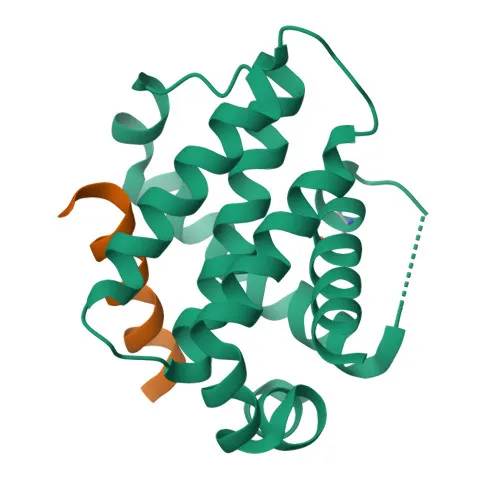
- Keywords associated with this protein include apoptosis, cytoplasm, alternative splicing, and 3D-structure.
Experimental Guidance and Technical Tips
- The antibody was raised against a synthetic peptide spanning amino acids 70–150 of human BCL2A1 (NP_004040.1). It may recognize both full-length and potentially truncated forms.
- For Western blot (WB), a predominant band at ~20 kDa is expected in human cell lysates; consider optimizing loading controls and blocking conditions.
- In immunofluorescence/immunocytochemistry (IF/ICC), a diffuse cytoplasmic staining pattern is anticipated; include appropriate negative controls to assess specificity.
- For ELISA applications, the antibody can be used for direct or capture/detection formats; validate linearity and sensitivity with recombinant protein or peptide standards.
- Cross-reactivity is reported for human only; when working with other species, verify reactivity empirically or choose an appropriate control.
- As a polyclonal antibody, lot-to-lot variability may occur; consider using peptide competition assays to confirm band identity in critical experiments.
CamelBio: Your One-Stop Sourcing Bridge
CamelBio provides diagnostic manufacturers, laboratories, and research institutes with one-stop access to high-quality IVD raw materials. Our BCL2A1 polyclonal antibody is supplied as part of a comprehensive apoptosis and oncology portfolio, including validated antibody pairs, optimized monoclonal/polyclonal antibodies, bulk ancillary reagents, and rare target sourcing. From initial concept to clinical application, CamelBio bridges your supply chain with reliable, research-grade reagents.
Product Datasheet
Anti-BCL2A1 Rabbit Polyclonal Antibody for WB, IF/ICC, ELISA - Q16548
REQUEST A QUOTE
Our professional team will reply to you within one business day. Please feel free to contact us!