Polyclonal Antibodies
Anti-Bcl-W Polyclonal Antibody for WB, ELISA - Q92843
Item Number : CM0018341
Price varies based on specs and customizations
- Application
- WB, ELISA
- Cross Reactivity
- Mouse, Rat
- Protein Weight
- 21kDa

Shipping:
Contact us to get shipping details Enjoy On-time Dispatch Guarantee.
Why Choose Us
Easy ordering process, quality products, and dedicated support for your business success.
Core Product Specifications and Parameters
| Parameter | Value |
|---|---|
| Product Name | Bcl-W Rabbit pAb |
| Remarks/Alias | BCLW; BCL-W; PPP1R51; BCL2-L-2; Bcl-W |
| Species | Human |
| Gene ID (Human) | 599 |
| Gene ID | 599 |
| Immunogen | Synthetic peptide; A synthetic peptide corresponding to a sequence within amino acids 1-193 of human Bcl-W (NP_004041.2) |
| Source | Rabbit |
| Category | Polyclonal Antibodies |
| Application | WB, ELISA |
| Cross Reactivity | Mouse, Rat |
| SWISS | Q92843 |
| Protein Weight | 21kDa |
| Shipping | Ice bag |
Biological Background: Bcl-W Function and Localization
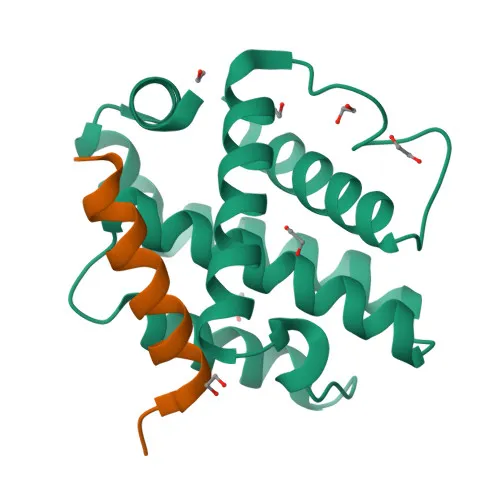
- Bcl-W (BCL2L2) is a member of the Bcl-2 protein family, functioning as an apoptosis regulator that promotes cell survival by blocking dexamethasone-induced apoptosis.
- It localizes to the mitochondrial membrane, where it mediates the survival of postmitotic Sertoli cells by suppressing the death-promoting activity of BAX.
- The protein undergoes alternative splicing, producing multiple isoforms, and is subject to post-translational modifications including acetylation, methylation, and phosphorylation.
- Bcl-W is widely expressed at the protein level, with highest levels in brain, spinal cord, testis, pancreas, heart, spleen, and mammary glands; moderate levels in thymus, ovary, and small intestine; and undetectable in salivary gland, muscle, or liver.
- It is also expressed in cell lines of myeloid, fibroblast, and epithelial origin but absent in most lymphoid cell lines, indicating a tissue- and cell-type-specific regulation.
- Keywords associated with Bcl-W include 3D-structure, alternative splicing, apoptosis, membrane, methylation, mitochondrion, and phosphoprotein, reflecting its multifaceted roles in cellular homeostasis.
Experimental Guidance and Technical Tips
- The immunogen is a synthetic peptide covering the N-terminal region (amino acids 1–193) of human Bcl-W; therefore, the antibody may recognize multiple isoforms if they share this epitope.
- For Western blotting, consider using positive controls from tissues or cell lines with high endogenous Bcl-W expression, such as brain or testis lysates.
- ELISA applications may require optimization of coating antigen and antibody dilution; pairing with a validated detection antibody could improve signal specificity.
- Cross-reactivity with mouse and rat is indicated; however, verify performance in your specific model system as sequence homology may vary.
CamelBio: Your One-Stop Sourcing Bridge
CamelBio serves as a comprehensive sourcing partner for IVD raw materials, providing diagnostic manufacturers and research laboratories with reliable access to validated antibodies like this anti-Bcl-W polyclonal antibody for apoptosis research. We offer one-stop supply solutions including optimized antibody pairs, bulk monoclonal/polyclonal antibodies, ancillary reagents, and custom sourcing for rare targets, supporting your projects from development to clinical application.
REQUEST A QUOTE
Our professional team will reply to you within one business day. Please feel free to contact us!