Polyclonal Antibodies
Anti-BCKDHA Rabbit Polyclonal Antibody for WB, IF/ICC, ELISA - P12694
Item Number : CM0018885
Price varies based on specs and customizations
- Application
- WB, IF/ICC, ELISA
- Cross Reactivity
- Human, Mouse, Rat
- Protein Weight
- 50kDa

Shipping:
Contact us to get shipping details Enjoy On-time Dispatch Guarantee.
Why Choose Us
Easy ordering process, quality products, and dedicated support for your business success.
Core Product Specifications and Parameters
| Parameter | Value |
|---|---|
| Product Name | BCKDHA Rabbit pAb |
| Remarks/Alias | MSU; MSUD1; OVD1A; BCKDE1A; BCKDHA |
| Species | Human |
| Gene ID (Human) | 593 |
| Gene ID | 593 |
| Immunogen | Recombinant fusion protein containing a sequence corresponding to amino acids 276-445 of human BCKDHA (NP_000700.1) |
| Source | Rabbit |
| Category | Polyclonal Antibodies |
| Application | WB, IF/ICC, ELISA |
| Cross Reactivity | Human, Mouse, Rat |
| SWISS | P12694 |
| Protein Weight | 50kDa |
| Shipping | Ice bag |
Biological Background: BCKDHA Function and Localization
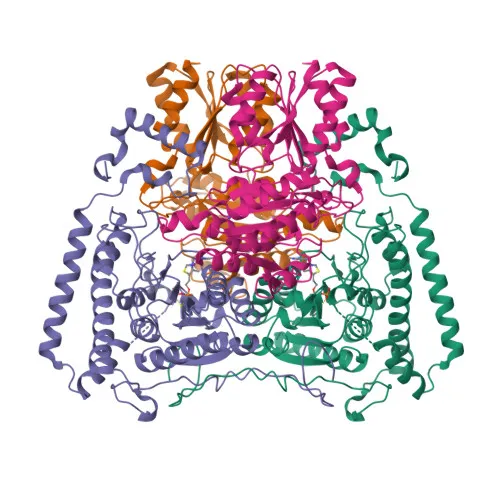
- BCKDHA encodes the mitochondrial 2-oxoisovalerate dehydrogenase subunit alpha, also known as BCKDE1A or BCKDH E1-alpha.
- Together with BCKDHB, it forms the heterotetrameric E1 component of the branched-chain alpha-ketoacid dehydrogenase (BCKD) complex.
- The BCKD complex catalyzes the oxidative decarboxylation of alpha-ketoacids derived from valine, leucine, and isoleucine, producing CO2 and acyl-CoA for energy production.
- The E1 subunit performs the initial decarboxylation step, forming an enzyme-bound intermediate that is subsequently transferred by the lipoylamide cofactor of E2.
- BCKDHA localizes to the mitochondrial matrix, consistent with its role in branched-chain amino acid catabolism.
- Mutations in BCKDHA are associated with maple syrup urine disease, highlighting its clinical significance.
- Post-translational modifications include acetylation and phosphorylation; the enzyme also requires thiamine pyrophosphate and potassium ion cofactors for activity.
- Alternative splicing generates multiple transcript variants, which may influence tissue-specific regulation.
Experimental Guidance and Technical Tips
- The immunogen (aa 276-445) is highly conserved among human, mouse, and rat, supporting the antibody's cross-reactivity; species-specific sequence alignment may aid in predicting reactivity with other species.
- For Western blot analysis, a band at approximately 50 kDa is expected; using mitochondrial-enriched lysates can enhance the target signal.
- In immunofluorescence and IF/ICC, BCKDHA localizes to mitochondria; co-staining with mitochondrial markers (e.g., MitoTracker or anti-TOM20) is recommended to confirm specificity.
- For ELISA-based applications, proper antigen folding and coating optimization may be necessary to achieve optimal antibody binding.
CamelBio: Your One-Stop Sourcing Bridge
CamelBio serves as a single-source provider of high-quality IVD raw materials, including the BCKDHA antibody featured here, supporting the development of diagnostic assays for metabolic disorders. Our catalog includes validated antibody pairs, recombinant proteins, and ancillary reagents, complemented by technical consultation. We streamline sourcing from early-stage research to clinical application, enabling you to scale with confidence.
Product Datasheet
Anti-BCKDHA Rabbit Polyclonal Antibody for WB, IF/ICC, ELISA - P12694
REQUEST A QUOTE
Our professional team will reply to you within one business day. Please feel free to contact us!