Polyclonal Antibodies
Anti-BAIAP2L1 Rabbit Polyclonal Antibody for WB, ELISA - Q9UHR4
Item Number : CM0027450
Price varies based on specs and customizations
- Application
- WB, ELISA
- Cross Reactivity
- Human, Mouse
- Protein Weight
- 57kDa

Shipping:
Contact us to get shipping details Enjoy On-time Dispatch Guarantee.
Why Choose Us
Easy ordering process, quality products, and dedicated support for your business success.
Core Product Specifications and Parameters
| Parameter | Value |
|---|---|
| Product Name | BAIAP2L1 Rabbit pAb |
| Remarks/Alias | IRTKS; BAIAP2L1 |
| Species | Human |
| Gene ID (Human) | 55971 |
| Gene ID | 55971 |
| Immunogen | Recombinant protein | Recombinant fusion protein containing a sequence corresponding to amino acids 198-388 of human BAIAP2L1 (NP_061330.2). |
| Source | Rabbit |
| Category | Polyclonal Antibodies |
| Application | WB, ELISA |
| Cross Reactivity | Human, Mouse |
| SWISS | Q9UHR4 |
| Protein Weight | 57kDa |
| Shipping | Ice bag |
Biological Background: BAIAP2L1 Function and Localization
- BAIAP2L1 (also designated IRTKS) is a BAR/IMD domain-containing adapter protein of the BAIAP2 family, characterized by an N-terminal BAR domain and a C-terminal SH3 domain.
- It functions as a scaffolding protein, linking membrane dynamics to actin cytoskeleton reorganization through its BAR and SH3 domains.
- The protein promotes the formation of actin bundles and plays a direct role in actin clustering, essential for cellular morphology and motility.
- In response to bacterial infection, BAIAP2L1 reorganizes the actin cytoskeleton, facilitating pathogen-induced membrane ruffling and internalization.
- BAIAP2L1 localizes predominantly to the cytoplasm and associates with the cytoskeleton, consistent with its actin-binding activity (keyword: Actin-binding).
- Post-translational phosphorylation (keyword: Phosphoprotein) may modulate its adapter functions and interaction networks.
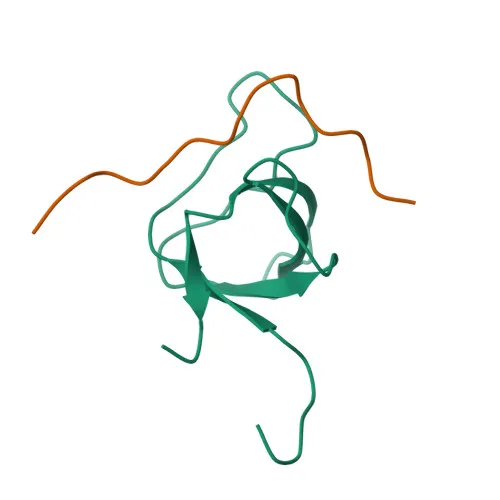
- The solved 3D-structure of its domains (keyword: 3D-structure) provides a framework for understanding its molecular recognition and membrane curvature sensing.
Experimental Guidance and Technical Tips
- The immunogen spans amino acids 198–388, located within the central region containing the BAR domain; this region is highly conserved between human and mouse, supporting observed cross-reactivity.
- For Western blot, a specific band at approximately 57 kDa is expected; inclusion of a positive control (e.g., HeLa cell lysate) and a negative control (e.g., BAIAP2L1 knockdown) is advisable for validation.
- The antibody’s reported cross-reactivity with mouse allows its use in mouse tissue and cell models, but in-species optimization of dilution and blocking conditions is recommended.
- In ELISA, the polyclonal nature provides high avidity, making it suitable for capture or detection formats; a checkerboard titration is suggested to determine optimal working concentrations.
- Because BAIAP2L1 associates with the cytoskeleton, lysis buffers containing mild detergents (e.g., NP-40) may improve solubilization and detection.
CamelBio: Your One-Stop Sourcing Bridge
CamelBio provides diagnostic manufacturers, labs, and research institutes with one-stop access to IVD raw materials, technical services, and consulting—covering every stage from concept to clinic. This anti-BAIAP2L1 antibody supports investigations into cytoskeletal dynamics and host-pathogen interactions, and our portfolio includes validated antibody pairs, bulk polyclonal antibodies, and ancillary reagents for seamless assay development. Partner with CamelBio to source rare targets, scale up reagents, and accelerate your IVD projects with expert support.
REQUEST A QUOTE
Our professional team will reply to you within one business day. Please feel free to contact us!